
ByteDance Challenges AlphaFold with Open-Source Protein Prediction Breakthrough

ByteDance Takes on AlphaFold with Open-Source Molecular Modeling Tool

In a move that could democratize computational biology, ByteDance has released Protenix-v1, an open-source model that matches the capabilities of DeepMind's proprietary AlphaFold3 system. This development marks a significant shift in how researchers worldwide might access advanced biomolecular prediction tools.
Image

Breaking Down the Technology Barrier

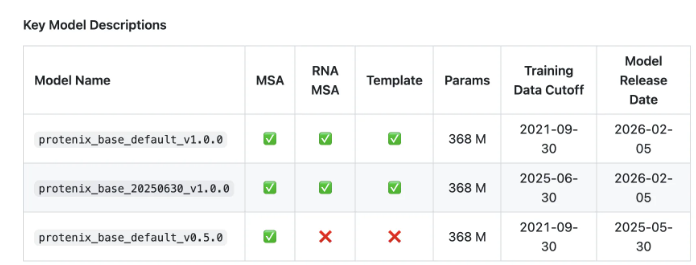
The new model demonstrates remarkable accuracy in predicting full-atom 3D structures across various biological components - from proteins and nucleic acids to small molecule ligands. What makes Protenix-v1 particularly noteworthy is its performance parity with AlphaFold3 despite being freely available under the Apache 2.0 license.

"This isn't just about replicating existing technology," explains Dr. Li Wei, a computational biologist at Peking University. "By open-sourcing both the code and model parameters, ByteDance is removing significant barriers to innovation in fields like drug development."

Setting New Standards for Evaluation

Recognizing the importance of reproducible research, ByteDance simultaneously launched PXMeter v1.0.0, an evaluation toolkit containing over 6,000 complex molecular samples. This comprehensive benchmark allows researchers to validate results and compare different modeling approaches transparently.

The company also introduced a browser-based Web server, enabling scientists without specialized computing resources to conduct interactive research. This accessibility feature could prove particularly valuable for researchers in developing countries or at smaller institutions.

Implications for Scientific Discovery

The open availability of Protenix-v1 could accelerate progress in several cutting-edge areas:

  • Drug discovery: Faster identification of potential drug candidates
  • Synthetic biology: Improved design of novel biological systems
  • Basic research: Enhanced understanding of molecular interactions

While AlphaFold3 remains a powerful tool, the emergence of a comparable open-source alternative may encourage more collaborative development in computational biology. As the field continues to evolve, Protenix-v1 represents both a technological achievement and a philosophical statement about open science.

Key Points:

  • ByteDance releases Protenix-v1, an open-source alternative to AlphaFold3
  • Model accurately predicts structures for proteins, DNA/RNA, and small molecules
  • Includes evaluation toolkit (PXMeter) with 6,000+ molecular samples
  • Web server enables browser-based research access
  • Potential to accelerate drug discovery and synthetic biology research

Enjoyed this article?

Subscribe to our newsletter for the latest AI news, product reviews, and project recommendations delivered to your inbox weekly.

Weekly digestFree foreverUnsubscribe anytime

Related Articles

Chai-2 AI Model Boosts Antibody Design with 16-20% Hit Rate
News

Chai-2 AI Model Boosts Antibody Design with 16-20% Hit Rate

Chai Discovery's Chai-2 AI model revolutionizes antibody design with a 16-20% experimental hit rate, far surpassing traditional methods. The zero-shot system integrates all-atom prediction and generative modeling, enabling rapid development of nanomolar-affinity antibodies without templates. While not open-sourced, its potential for accelerating drug discovery is generating significant industry excitement.

July 1, 2025
AI in biotechantibody designdrug discovery
MIT and Harvard Unveil Lyra: A Breakthrough in Biological Sequence Modeling
News

MIT and Harvard Unveil Lyra: A Breakthrough in Biological Sequence Modeling

Researchers from MIT, Harvard, and Carnegie Mellon have developed Lyra, an efficient biological sequence modeling method that reduces parameters by 1/120,000th and trains in just two hours. The hybrid model achieves state-of-the-art performance in protein prediction, RNA analysis, and CRISPR design.

March 28, 2025
computational biologyAI researchbiotechnology
China's Brain-Computer Breakthrough Gives Hope to Paralyzed Patients
News

China's Brain-Computer Breakthrough Gives Hope to Paralyzed Patients

In a medical milestone, China has approved the world's first implantable brain-computer interface device to help paralyzed patients regain hand function. The system, developed by BioSensory Technology, uses minimally invasive surgery to translate brain signals into hand movements. Designed for quadriplegic patients with spinal cord injuries, this innovation could transform lives by restoring basic grasping abilities. The approval marks a significant step forward in making brain-computer technology clinically available.

March 13, 2026
medical innovationbrain-computer interfacespinal cord injury
Edge Gets Smarter: New AI Tool Summarizes Web Pages Instantly
News

Edge Gets Smarter: New AI Tool Summarizes Web Pages Instantly

A new browser extension brings powerful AI summarization to Microsoft Edge, supporting both cloud-based and local AI models. The tool lets users quickly digest long articles, ask follow-up questions, and even work offline while protecting privacy. With features like automatic text truncation and Markdown rendering, it's designed to tackle information overload head-on.

March 13, 2026
AI toolsMicrosoft Edgebrowser extensions
Grok 4.20 Takes Aim at AI's Biggest Flaw: Making Stuff Up
News

Grok 4.20 Takes Aim at AI's Biggest Flaw: Making Stuff Up

While competitors chase raw performance, Elon Musk's xAI has released Grok 4.20 with a surprising focus - telling the truth. The new model sets industry records for factual accuracy while admitting when it doesn't know answers. With three specialized modes and competitive pricing, Grok could become the go-to AI for businesses needing reliable information.

March 13, 2026
xAIAI ethicslarge language models
Claude's New Plugins Bridge Excel and PowerPoint Seamlessly
News

Claude's New Plugins Bridge Excel and PowerPoint Seamlessly

Anthropic's latest update transforms Claude into a cross-application powerhouse, letting users move effortlessly between Excel and PowerPoint. The AI assistant now remembers your workflow across programs and can automate complex tasks with reusable skills. While currently limited to open files, this update marks a significant leap toward true office automation.

March 13, 2026
AI productivityOffice automationClaude AI