
Tencent's New Translation Tech Fits in Your Pocket

Tencent's Pocket-Sized Translation Breakthrough
Image

Your smartphone just got smarter at languages. Tencent's new HY-MT1.5 translation system packs professional-grade AI into surprisingly compact packages - small enough to run locally on your mobile device without constant cloud connections.

Two Models for Different Needs

The tech giant is offering two versions:

  • The 1.8B 'Pocket Rocket': Don't let its size fool you. This optimized model needs just 1GB of memory yet translates 50-character sentences in a blink (0.18 seconds). Perfect for travelers or casual users who need quick, offline translations.

  • The 7B Powerhouse: Built on Tencent's championship-winning WMT25 technology, this version tackles complex multilingual documents, specialized terminology, and precise formatting - ideal for businesses and professional translators.

Smarter Than Your Average Translator

What sets HY-MT1.5 apart? Tencent's researchers developed a five-stage training approach that mimics human learning:

  1. Language Fundamentals: The model first absorbs massive amounts of multilingual text to grasp basic grammar and vocabulary.
  2. Translation Specialization: It then studies parallel texts (the same content in different languages) to shift from "understanding" to "translating."
  3. Refinement: High-quality documents fine-tune the system for more natural phrasing.
  4. Knowledge Transfer: The larger 7B model mentors its smaller counterpart, sharing insights while maintaining efficiency.
  5. Human Touch: Real people evaluate outputs to improve accuracy, fluency, and cultural appropriateness.

Outperforming the Giants

Independent tests show HY-MT1.5 holding its own against industry leaders:

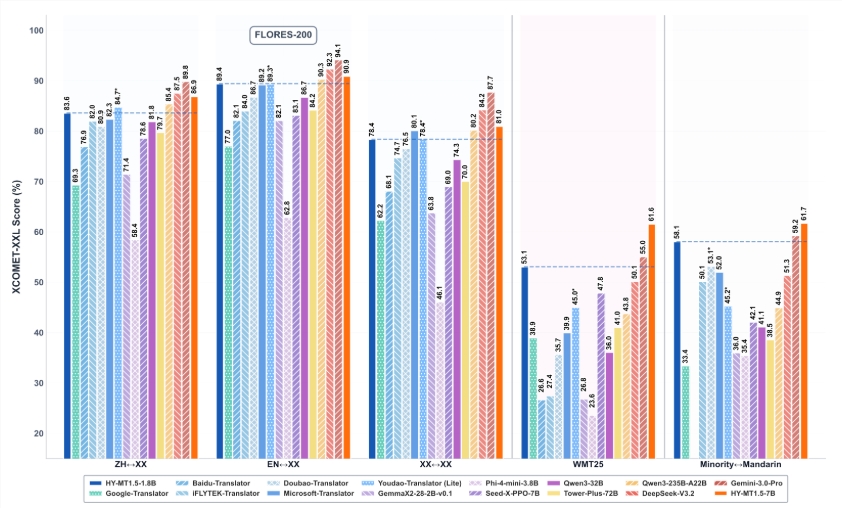
  • The 7B version surpassed Google's Gemini3.0Pro in WMT25 evaluations
  • Excelled at challenging language pairs like Mandarin to minority languages
  • The compact 1.8B model scored higher than Baidu, Google, and Microsoft systems in real-world testing

The system also addresses common translation frustrations:

  • Terminology Control: Need "Hunyuan珠" always rendered as "Chaos Pearl"? You can set specific rules.
  • Context Awareness: It distinguishes between a "pilot" (aviator) and a "pilot" (TV episode) based on surrounding text.
  • Format Faithfulness: HTML tags and special layouts remain intact during translation.

Tencent has open-sourced the models on GitHub and Hugging Face, inviting developers worldwide to integrate this technology into their applications.

Key Points:

  • Mobile-ready AI that works offline with minimal memory usage
  • Two specialized versions for casual and professional needs
  • Beats major competitors in accuracy and speed tests
  • Open-source availability encourages broader adoption

Enjoyed this article?

Subscribe to our newsletter for the latest AI news, product reviews, and project recommendations delivered to your inbox weekly.

Weekly digestFree foreverUnsubscribe anytime

Related Articles

News

Hume AI's TADA: A Game-Changer for Mobile Speech Tech

Hume AI has unveiled TADA, an open-source text-to-speech model that's shaking up the industry. With five times the speed of competitors and zero hallucination issues, this innovative system can generate crisp audio even on mobile devices. What makes it special? A clever dual-alignment architecture that keeps text and sound perfectly synced while using minimal resources.

March 12, 2026
speech synthesisAI innovationmobile technology
Tencent's WorkBuddy Gets Smarter: Control Your PC from WeChat
News

Tencent's WorkBuddy Gets Smarter: Control Your PC from WeChat

Tencent's WorkBuddy AI assistant just leveled up with seamless WeChat integration. Now you can command your office computer remotely through simple WeChat messages – whether it's drafting reports or crunching data. The update also brings scheduled tasks and enhanced security features, making digital work assistants more powerful than ever.

March 12, 2026
WorkBuddyTencentAI productivity
Tencent Defends Data Use Amid OpenClaw Scraping Dispute
News

Tencent Defends Data Use Amid OpenClaw Scraping Dispute

Tencent has responded to accusations from OpenClaw developer Peter Steinberger, who claims the tech giant scraped data from his platform without permission. While Tencent maintains its mirror site actually reduced traffic pressure on the original by 99%, the debate highlights growing tensions between open-source developers and corporate ecosystems.

March 12, 2026
TencentOpenClawAI Ethics
News

WeChat Prepares to Roll Out Its Own AI Model This Year

WeChat, Tencent's ubiquitous messaging platform, is reportedly developing its own independent AI model set for release later this year. The move aims to reduce reliance on third-party systems while enhancing WeChat's mini-program ecosystem. Alongside this development, Tencent is testing an AI assistant that could transform WeChat into a comprehensive digital life interface.

March 12, 2026
WeChatAI DevelopmentTencent
Tencent's WorkBuddy Gets Smarter: Now Plays Nice With WeChat
News

Tencent's WorkBuddy Gets Smarter: Now Plays Nice With WeChat

Tencent's desktop AI assistant WorkBuddy just leveled up. The new version lets users connect seamlessly with WeChat - just scan a QR code to control tasks remotely. Beyond smoother integrations with QQ and Feishu, WorkBuddy now handles automated workflows like report generation and meeting notes. Tencent's pushing hard to make AI assistants more useful where we actually work.

March 12, 2026
TencentAI assistantworkplace automation
Baidu's 'Red Finger Operator' App Brings AI Automation to Your Smartphone
News

Baidu's 'Red Finger Operator' App Brings AI Automation to Your Smartphone

Baidu has unveiled its innovative 'Red Finger Operator' mobile app, bringing AI-powered automation directly to Android devices. This groundbreaking tool lets users control multiple apps through simple voice commands, from ordering food to booking rides. It works alongside Baidu's existing OpenClaw system to create a seamless 'cloud + mobile' automation experience that could change how we interact with our phones.

March 12, 2026
AI automationmobile technologyBaidu innovation