
MiniMax Unveils M2.1 Model with Developer-Friendly Pricing

MiniMax's M2.1 Model: A Developer's New Best Friend

The AI development community just got an early holiday present. MiniMax has thrown open the doors to its M2.1 programming model, making it freely available on Hugging Face, ModelScope, and GitHub. This isn't just another model release - it's packed with features that developers have been craving.
Image

Performance Meets Accessibility

What sets M2.1 apart? For starters, it arrives with "Day-0" vLLM support - meaning developers can hit the ground running with optimized inference performance from minute one. The real game-changer comes with KTransformers technology, enabling smooth FP8 local inference on powerhouse devices like NVIDIA's RTX5090.

"We wanted to eliminate the usual waiting period," explains a MiniMax spokesperson. "When developers are excited about new tech, they shouldn't have to wait weeks for compatibility updates."

Budget-Conscious Innovation

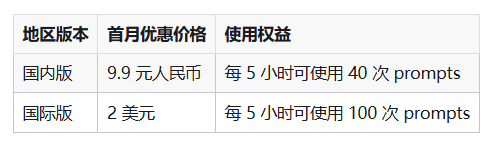
MiniMax isn't just thinking about performance - they're considering developers' wallets too. Their "Starter Plan" turns heads at just 9.9 RMB monthly (or $2 internationally), offering:

  • Domestic users: 40 prompts every 5 hours
  • International users: 100 prompts every 5 hours

The promotion runs through January 15, 2026, giving ample time for curious developers to test-drive the model.

Double the Savings

The savings don't stop there. Through February 28, 2026, MiniMax's referral program offers:

  • 10% discount on subscriptions/upgrades for both referrer and referee
  • Stackable savings when combined with Starter Plan discounts

The message is clear: MiniMax wants to remove financial barriers holding back AI innovation.

Why This Matters Now

The timing couldn't be better as industries increasingly lean on AI solutions:

  • Research teams gain powerful new tools without budget strain
  • Startups can prototype faster with accessible pricing tiers
  • Educators now have affordable options for student projects

The M2.1 model represents more than technical advancement - it's democratizing access to cutting-edge AI development.

Key Points:

  • Instant Compatibility: Day-0 vLLM support eliminates typical adoption delays
  • Local Power: KTransformers enables efficient FP8 inference on high-end GPUs
  • Budget-Friendly: Starter Plans begin at just $2/9.9 RMB monthly
  • Extended Savings: Referral program offers stackable discounts through February

Enjoyed this article?

Subscribe to our newsletter for the latest AI news, product reviews, and project recommendations delivered to your inbox weekly.

Weekly digestFree foreverUnsubscribe anytime

Related Articles

Anthropic's Cowork: The AI Coding Assistant Built by AI in Just 10 Days
News

Anthropic's Cowork: The AI Coding Assistant Built by AI in Just 10 Days

Anthropic has unveiled Cowork, a groundbreaking AI programming assistant developed primarily by its own Claude model in mere days. Designed to democratize coding, Cowork lets users complete tasks through simple voice commands - though Anthropic cautions about potential risks. The tool's rapid development showcases AI's growing capability to build itself.

January 14, 2026
AI DevelopmentProgramming ToolsAnthropic
MiniMax's OctoCodingBench Sets the Bar Higher for AI Coding Assistants
News

MiniMax's OctoCodingBench Sets the Bar Higher for AI Coding Assistants

MiniMax has unveiled OctoCodingBench, a groundbreaking benchmark designed to evaluate how well AI programming assistants follow instructions in real-world coding scenarios. Unlike traditional tests that focus solely on task completion, this new standard assesses compliance with coding rules and project constraints. With 72 diverse scenarios and over 2,400 evaluation checkpoints, it promises to reshape how we measure AI's practical coding abilities.

January 14, 2026
AIProgrammingCodingBenchmarksMiniMax
South Korea's AI Dream Hits Snag as Firms Rely on Chinese Code
News

South Korea's AI Dream Hits Snag as Firms Rely on Chinese Code

South Korea's ambitious plan to build a homegrown AI industry has hit turbulence after three finalists in a government-backed competition were found using Chinese open-source code. While companies defend their approach as standard practice, the revelations have sparked debate about what truly constitutes 'self-reliant' AI development in today's interconnected tech landscape.

January 14, 2026
AI DevelopmentSouth Korea TechOpen Source Controversy
DeepSeek-V4 Set to Revolutionize Code Generation This February
News

DeepSeek-V4 Set to Revolutionize Code Generation This February

DeepSeek is gearing up to launch its powerful new AI model, DeepSeek-V4, around Chinese New Year. The update promises major leaps in code generation and handling complex programming tasks, potentially outperforming competitors like Claude and GPT series. Developers can expect more organized responses and better reasoning capabilities from this innovative tool.

January 12, 2026
AI DevelopmentProgramming ToolsMachine Learning
Claude Code Goes Desktop: A Developer's New Best Friend
News

Claude Code Goes Desktop: A Developer's New Best Friend

Anthropic has launched a desktop preview of Claude Code, bringing AI-assisted programming to developers' fingertips with a sleek graphical interface. The standout feature? Multi-session workflows powered by Git Worktree technology let developers juggle tasks without messy code conflicts. It's like having multiple coding assistants working simultaneously in isolated branches. The desktop version plays nice with cloud tools and automatically syncs your development environment - no more npm headaches. Currently available for macOS and Windows (excluding ARM), this release transforms Claude from chatbot to full-fledged coding companion.

January 7, 2026
AI DevelopmentCoding ToolsProductivity Tech
Robots Get Personal Voices Through MiniMax-Zhiyuan Partnership
News

Robots Get Personal Voices Through MiniMax-Zhiyuan Partnership

MiniMax and Zhiyuan Robotics are teaming up to give robots truly personalized voices. Their collaboration goes beyond standard text-to-speech tech, enabling each user to create a unique vocal identity for their robotic companion. The system even understands emotional nuances, promising more natural interactions in eldercare, customer service and entertainment settings.

January 5, 2026
AI voice synthesisrobot companionsemotional AI