
Meta's Pixio Rewrites the Rules: Simple Approach Beats Complex AI in 3D Vision

Meta's Surprising Breakthrough in Computer Vision

In a development that challenges conventional wisdom, Meta AI researchers have unveiled Pixio—an image model that outperforms more complex rivals using surprisingly simple methods. The achievement suggests we may have been overengineering computer vision systems.

Image

Rethinking the Basics

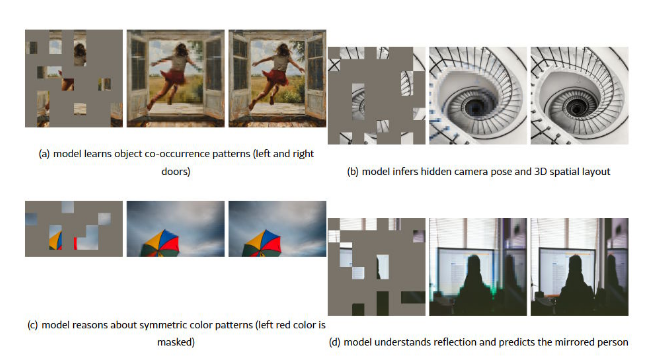
The team took inspiration from mask autoencoder (MAE) technology dating back to 2021, but gave it crucial upgrades. "We realized the original decoder was holding everything back," explains lead researcher Mark Chen. "By strengthening it and masking larger image areas, we forced the model to truly understand spatial relationships rather than just copy pixels."

The improvements are deceptively straightforward:

  • Expanded masking regions prevent simple pattern copying
  • Multiple category tokens help capture scene context
  • Dynamic training adjusts for image complexity
Image

Training Without Tricks

While competitors optimize specifically for benchmark tests, Pixio took a refreshingly honest approach. The team gathered 2 billion diverse web images, deliberately emphasizing complex scenes over easy product shots. "We didn't teach to the test," Chen notes. "That's why Pixio transfers so well to real-world applications."

The results speak volumes:

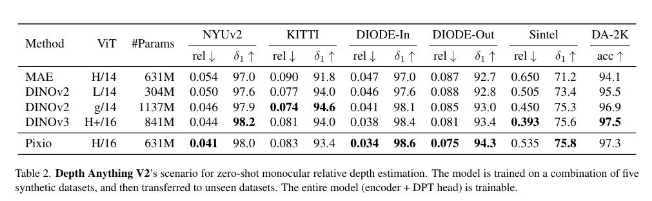
  • Outperforms DINOv3 despite having 25% fewer parameters
  • Achieves 16% better accuracy in depth estimation
  • Matches eight-view training with single-image input
  • Leads robot learning tasks by significant margins
Image

Implications Beyond Benchmarks

The success raises important questions about current AI development trends. If simpler architectures can surpass elaborate systems given proper training, are we wasting resources on unnecessary complexity?

"Pixio reminds us that sometimes going back to fundamentals yields the biggest leaps," says computer vision expert Dr. Elena Petrovna, who wasn't involved in the research. "Their masking approach essentially teaches AI to 'imagine' missing content based on true understanding."

The team acknowledges limitations—manual masking remains imperfect—but believes video prediction could be the next frontier.

Key Points:

  • Simpler wins: Enhanced MAE architecture beats complex alternatives
  • Honest training: Web-sourced data avoids benchmark optimization bias
  • Real-world ready: Excels in robotics and 3D applications
  • Future potential: Video prediction could be next breakthrough area

Enjoyed this article?

Subscribe to our newsletter for the latest AI news, product reviews, and project recommendations delivered to your inbox weekly.

Weekly digestFree foreverUnsubscribe anytime

Related Articles

VideoPipe: The Lego-Style Toolkit Revolutionizing Video AI Development
News

VideoPipe: The Lego-Style Toolkit Revolutionizing Video AI Development

VideoPipe, an innovative open-source framework, is changing how developers build video AI applications. By breaking down complex computer vision tasks into modular 'building blocks,' it lets creators assemble custom solutions in minutes rather than days. Supporting everything from traffic analysis to creative face-swapping apps, this toolkit handles multiple video formats and integrates cutting-edge AI models effortlessly. With over 40 ready-to-use examples, even beginners can quickly prototype professional-grade video intelligence systems.

December 29, 2025
ComputerVisionAIDevelopmentOpenSourceTools
Chinese Researchers Unveil Glasses-Free 3D Display That Feels Like Magic
News

Chinese Researchers Unveil Glasses-Free 3D Display That Feels Like Magic

A team from Fudan University has developed EyeReal, a breakthrough 3D display technology that projects crisp hologram-like images without requiring special glasses. Published in Nature, the system offers a 100-degree viewing angle with no blurring as you move, plus realistic depth effects that mimic human vision. The compact device could transform everything from gaming to medical imaging.

December 9, 2025
3DDisplayEyeRealHolographicTech
Alibaba's Qwen3-VL Outperforms Rivals in Spatial Reasoning Tests
News

Alibaba's Qwen3-VL Outperforms Rivals in Spatial Reasoning Tests

Alibaba's Qwen3-VL vision model has taken the lead in spatial reasoning benchmarks, scoring 13.5 points on SpatialBench - significantly ahead of competitors like Gemini and GPT-5.1. The model introduces innovative features like 3D detection upgrades and visual programming capabilities, with practical applications already being tested in logistics and smart ports. While still far from human performance (80 points), this advancement marks important progress toward more spatially-aware AI systems.

November 26, 2025
ComputerVisionAIResearchSpatialComputing
Tencent's Compact OCR Breakthrough: Small Model, Big Results
News

Tencent's Compact OCR Breakthrough: Small Model, Big Results

Tencent has unveiled HunyuanOCR, a surprisingly powerful open-source OCR model packing state-of-the-art performance into just 1 billion parameters. This lightweight solution outperforms bulkier competitors in document parsing and multilingual translation while handling everything from receipts to street signs. Its end-to-end design delivers accurate results faster than traditional approaches.

November 25, 2025
OCRTencentComputerVision
Tsinghua & Kuaishou Breakthrough: SVG Model Boosts AI Training by 6200%
News

Tsinghua & Kuaishou Breakthrough: SVG Model Boosts AI Training by 6200%

Researchers from Tsinghua University and Kuaishou's Ling team have developed a revolutionary SVG diffusion model that achieves a 6200% training efficiency improvement and 3500% faster generation speeds compared to traditional VAE models. The innovation addresses long-standing semantic entanglement issues in image generation while maintaining superior output quality.

October 29, 2025
GenerativeAIComputerVisionDeepLearning
ByteDance Launches Seed3D 1.0: A Breakthrough in 3D Generation
News

ByteDance Launches Seed3D 1.0: A Breakthrough in 3D Generation

ByteDance's Seed team has unveiled Seed3D 1.0, a cutting-edge large model capable of generating high-quality 3D models from single images. The model excels in geometry, textures, and materials, offering potential applications in embodied intelligence and robotics. It outperforms larger industry models in comparative evaluations.

October 23, 2025
AIComputerVisionMachineLearning