
VideoPipe: The Lego-Style Toolkit Revolutionizing Video AI Development

VideoPipe Simplifies AI Video Processing Like Never Before

The developer community is buzzing about VideoPipe, a game-changing open-source framework that turns complex video analysis projects into child's play. Imagine assembling powerful AI capabilities as easily as snapping together Lego bricks - that's the promise this innovative toolkit delivers.

Building Blocks for Smart Video Applications

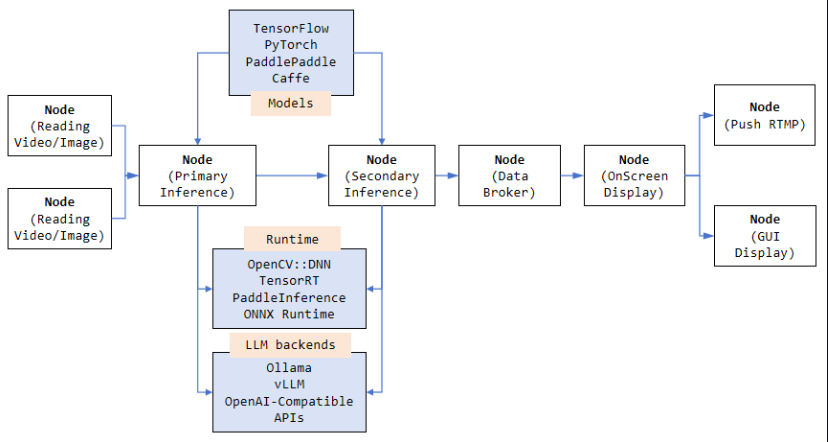
At its core, VideoPipe employs a clever pipeline architecture that decomposes intricate video tasks into simple functional units called Nodes. Each Node handles one specific job - whether it's pulling video streams, running AI detection, or pushing processed footage. Developers can mix and match these components freely to create custom workflows without writing mountains of boilerplate code.
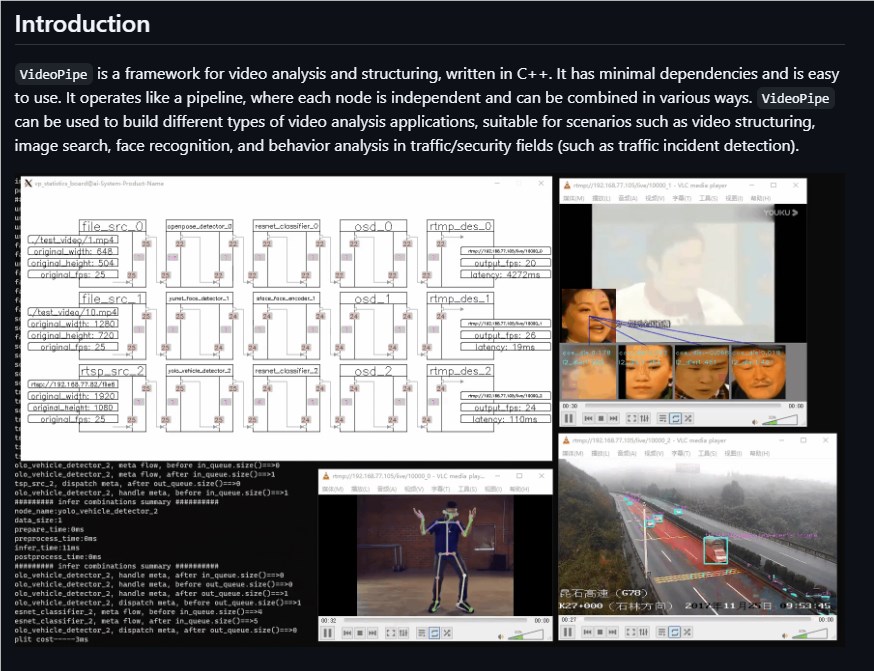
Image

"What used to take days of infrastructure coding now takes minutes," explains one early adopter. "You bring your AI model, configure how to interpret its output, and VideoPipe handles the rest." The framework's lightweight design and broad hardware compatibility make it particularly attractive for teams needing quick deployment across different environments.

Universal Video Compatibility

VideoPipe shines when working with real-world video sources. It digests everything from security camera feeds (RTSP/RTMP) to local files and even application screenshots. This versatility opens doors for:

  • Real-time traffic monitoring systems
  • Retail analytics from surveillance footage
  • Creative media processing pipelines

The toolkit even accepts image sequences, enabling hybrid approaches that combine still photos with video analysis.
Image

Future-Proof AI Integration

What sets VideoPipe apart is its agnostic approach to artificial intelligence. Need classic computer vision techniques? It works seamlessly with OpenCV. Want cutting-edge multimodal models? Those integrate too. The framework supports:

  • Cascading multiple AI models sequentially
  • Traditional image processing algorithms
  • Latest vision-language foundation models
  • Sophisticated object tracking across frames

This flexibility future-proofs investments as new AI breakthroughs emerge.

Complete Video Intelligence Pipeline

The toolkit covers every step from raw footage to actionable insights:

  1. Ingestion: Pull streams from various sources
  2. Processing: Apply detection/tracking/models
  3. Enhancement: Annotate frames with results
  4. Output: Push analyzed streams or trigger alerts Developers simply plug in their unique business logic while VideoPipe manages the underlying machinery.

Key Applications Already Flourishing:

  • Automated traffic violation detection systems
  • Retail customer behavior analytics
  • Media production tools for content creators
  • Enhanced security monitoring solutions

The project's GitHub repository bursts with over 40 practical examples demonstrating face recognition, vehicle counting, and other real-world implementations.

Why Developers Are Excited

The combination of simplicity and power hits a sweet spot for time-strapped teams. As one user shared: "We prototyped a parking space monitoring system over lunch - something that previously would have taken weeks." With comprehensive documentation and active community support, VideoPipe significantly lowers barriers to creating sophisticated video intelligence applications.

The framework continues evolving too - recent additions include support for large multimodal models, opening new possibilities at the intersection of language and visual understanding. For developers ready to experiment, visit VideoPipe on GitHub to start building.

Enjoyed this article?

Subscribe to our newsletter for the latest AI news, product reviews, and project recommendations delivered to your inbox weekly.

Weekly digestFree foreverUnsubscribe anytime

Related Articles

WeChat Rolls Out Developer Boost Package With Free AI Perks
News

WeChat Rolls Out Developer Boost Package With Free AI Perks

WeChat's new growth program offers developers free cloud resources, AI computing power, and monetization tools to accelerate mini-program creation. The initiative includes generous quotas for Tencent's HuanYuan models and simplified ad integration. Several successful AI-powered mini-programs already demonstrate the platform's potential for creative developers.

January 5, 2026
WeChatMiniProgramsAIDevelopment
Tsinghua's New Tool Simplifies Audio AI Evaluation
News

Tsinghua's New Tool Simplifies Audio AI Evaluation

Tsinghua University's NLP Lab has teamed up with OpenBMB and Miga Intelligence to launch UltraEval-Audio, an open-source framework revolutionizing how researchers assess audio models. The latest version introduces one-click reproduction of popular models and expands support for specialized audio technologies. This innovation promises to accelerate development in speech recognition, text-to-speech systems, and other audio AI applications.

January 4, 2026
AudioAITsinghuaResearchOpenSourceTools
Meta's Pixio Rewrites the Rules: Simple Approach Beats Complex AI in 3D Vision
News

Meta's Pixio Rewrites the Rules: Simple Approach Beats Complex AI in 3D Vision

Meta AI's new Pixio model proves simplicity can outperform complexity in computer vision. By enhancing an older masking technique and training on diverse web images, Pixio achieves better 3D reconstruction than larger models—all while avoiding benchmark 'cheating.' The breakthrough suggests we might have overcomplicated visual AI.

December 29, 2025
ComputerVisionMetaAI3DReconstruction
Chinese Researchers Unveil Glasses-Free 3D Display That Feels Like Magic
News

Chinese Researchers Unveil Glasses-Free 3D Display That Feels Like Magic

A team from Fudan University has developed EyeReal, a breakthrough 3D display technology that projects crisp hologram-like images without requiring special glasses. Published in Nature, the system offers a 100-degree viewing angle with no blurring as you move, plus realistic depth effects that mimic human vision. The compact device could transform everything from gaming to medical imaging.

December 9, 2025
3DDisplayEyeRealHolographicTech
Alibaba's Qwen3-VL Outperforms Rivals in Spatial Reasoning Tests
News

Alibaba's Qwen3-VL Outperforms Rivals in Spatial Reasoning Tests

Alibaba's Qwen3-VL vision model has taken the lead in spatial reasoning benchmarks, scoring 13.5 points on SpatialBench - significantly ahead of competitors like Gemini and GPT-5.1. The model introduces innovative features like 3D detection upgrades and visual programming capabilities, with practical applications already being tested in logistics and smart ports. While still far from human performance (80 points), this advancement marks important progress toward more spatially-aware AI systems.

November 26, 2025
ComputerVisionAIResearchSpatialComputing
Tencent's Compact OCR Breakthrough: Small Model, Big Results
News

Tencent's Compact OCR Breakthrough: Small Model, Big Results

Tencent has unveiled HunyuanOCR, a surprisingly powerful open-source OCR model packing state-of-the-art performance into just 1 billion parameters. This lightweight solution outperforms bulkier competitors in document parsing and multilingual translation while handling everything from receipts to street signs. Its end-to-end design delivers accurate results faster than traditional approaches.

November 25, 2025
OCRTencentComputerVision