
Meta's AI Video Push in Europe Divides Users: Innovation or Digital Noise?

Meta's AI Video Gamble Faces European Backlash

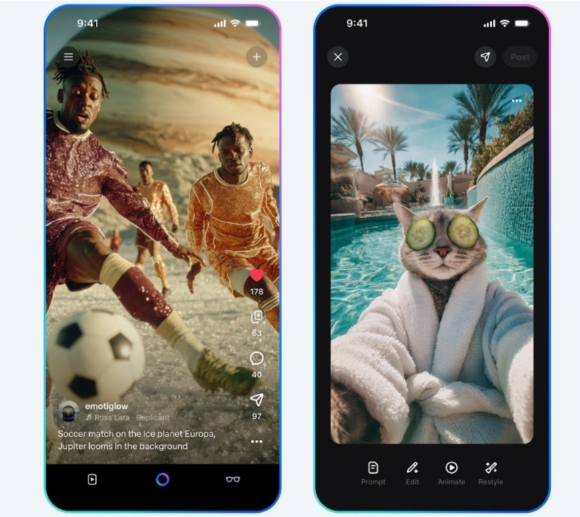
Six weeks after its U.S. debut, Meta has brought its controversial AI video platform Vibes to European users. The feature generates complete short videos from text prompts within Meta's apps, allowing for quick remixing and sharing across Instagram and Facebook. Company executives describe it as "the future of collaborative storytelling."
Image

User Revolt Against 'AI Slop'

The rollout hasn't gone smoothly. When CEO Mark Zuckerberg first announced Vibes in September, his post was flooded with negative comments like "No one asked for this" and "We don't need more digital junk." The term "AI slop" - internet slang for mass-produced, low-quality AI content - quickly trended in response.

"It's like eating fast food every day," explains London-based creator Mia Rodriguez. "At first it's convenient, but soon you crave something real."

Meta's Content Contradiction

What makes this launch particularly puzzling is Meta's recent crackdown on what it called "low-value content." Just last quarter, the company adjusted its algorithms to boost original creator posts while demoting repurposed material. Now critics accuse Meta of doing exactly what it claimed to oppose.

"They're trading authenticity for scale," says tech analyst David Chen. "When every video comes from the same AI model, creativity becomes predictable."

The Efficiency vs. Quality Debate

Other platforms are moving in the opposite direction. YouTube recently implemented stricter AI labeling requirements, while some art communities ban AI generations entirely. Yet Meta appears committed to its AI vision - internal data shows a tenfold increase in AI media creation since Vibes launched.

The company defends Vibes as a tool for human collaboration rather than replacement. "Friends can build stories together that wouldn't exist otherwise," claims product lead Sarah Kim. But without genuine human perspective, many question whether these creations have real meaning.

As this experiment unfolds, one thing is clear: users will ultimately decide whether AI videos enrich social media or drown it in algorithmic sameness.

Key Points:

  • European rollout of Vibes follows mixed U.S. reception
  • User backlash focuses on generic "AI slop" content
  • Contradicts Meta's earlier authenticity push
  • Platform divide as competitors restrict AI content
  • Critical question: Can AI enhance rather than replace human creativity?

Enjoyed this article?

Subscribe to our newsletter for the latest AI news, product reviews, and project recommendations delivered to your inbox weekly.

Weekly digestFree foreverUnsubscribe anytime

Related Articles

Meta's Power Play: Zuckerberg Bets Big on Energy Infrastructure for AI Dominance
News

Meta's Power Play: Zuckerberg Bets Big on Energy Infrastructure for AI Dominance

Meta CEO Mark Zuckerberg is making an audacious move to secure the company's AI future - by building its own power grid. The 'Meta Compute' initiative plans to construct gigawatt-scale energy facilities, aiming to control what Zuckerberg sees as AI's most critical resource. With projections showing US AI power demands skyrocketing tenfold, Meta is assembling a dream team to turn electricity into its ultimate competitive advantage.

January 13, 2026
MetaArtificialIntelligenceEnergyInfrastructure
News

Meta's Llama 4 Scandal: How AI Ambitions Led to Ethical Missteps

Meta's once-celebrated Llama AI project faces turmoil as revelations emerge about manipulated benchmark data. Former Chief Scientist Yann LeCun confirms ethical breaches, exposing internal conflicts and rushed development pressures from Zuckerberg. The scandal raises serious questions about Meta's AI strategy and its ability to compete ethically in the fast-moving artificial intelligence landscape.

January 12, 2026
MetaAI EthicsTech Scandals
Meta's Spatial Lingo Turns Your Living Room Into a Language Classroom
News

Meta's Spatial Lingo Turns Your Living Room Into a Language Classroom

Meta has unveiled Spatial Lingo, an innovative open-source Unity app that transforms everyday objects into language learning tools. Using mixed reality technology, the app guides users through vocabulary practice with items in their immediate environment. Developers can explore Meta's SDKs through practical examples while creating engaging educational experiences. The project showcases how AR can make language learning more immersive and contextually relevant.

January 8, 2026
Augmented RealityLanguage LearningMeta
News

Meta's Smart Glasses Hit Snag: Orders Backlogged Until 2026

Meta's Ray-Ban smart glasses have become an unexpected hit, with demand so high that international launches are delayed until at least mid-2026. The tech eyewear, developed with EssilorLuxottica, combines fashion with AI-powered features like hands-free information display and voice interaction. With U.S. orders already stretching years into the future, Meta is scrambling to boost production before expanding globally.

January 7, 2026
MetaSmartGlassesTechShortage
News

Meta's AI Shakeup: LeCun Questions New Leader's Credentials

AI pioneer Yann LeCun didn't mince words about Meta's new AI chief Alexandr Wang, calling him inexperienced in research leadership. The criticism comes as Zuckerberg reshuffles Meta's AI team following disappointing performance. LeCun reveals deep divisions over Meta's AI direction while launching his own venture focused on alternative approaches.

January 4, 2026
MetaArtificial IntelligenceTech Leadership
Meta's AI Scandal: Leaked Admission Reveals Llama 4 Test Manipulation
News

Meta's AI Scandal: Leaked Admission Reveals Llama 4 Test Manipulation

Meta faces a credibility crisis as outgoing AI chief Yann LeCun admits the company manipulated benchmark tests for its Llama 4 model. The revelation comes after months of developer complaints about performance gaps between advertised and actual results. This ethical breach led to internal shakeups, including LeCun's departure and the dismantling of Meta's GenAI team. The incident raises serious questions about corporate transparency in AI development.

January 4, 2026
MetaAI EthicsLlama Models