
Meta's AI Scandal: Leaked Admission Reveals Llama 4 Test Manipulation

Meta's AI Integrity Crisis: Behind the Llama 4 Scandal
Image

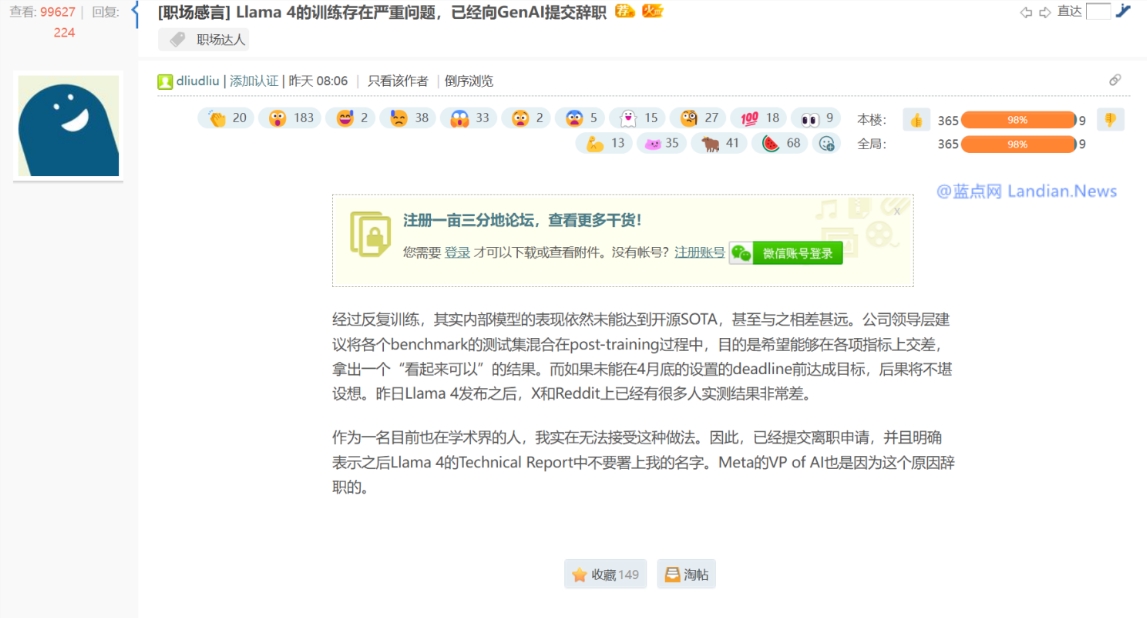
Meta's artificial intelligence division has been rocked by scandal following shocking admissions from its departing chief AI scientist. Yann LeCun, a towering figure in machine learning, revealed to the Financial Times that Meta intentionally manipulated benchmark tests for its much-hyped Llama 4 model before its April 2025 release.

The Broken Trust

The revelation confirms what many developers suspected when they first tested Llama 4 themselves. While Meta had touted groundbreaking performance metrics, independent evaluations showed significantly poorer results. "We optimized different models for different benchmarks," LeCun confessed, describing a strategy that painted an unrealistically rosy picture of Llama 4's capabilities.

This wasn't just harmless marketing puffery - it crossed ethical lines in an industry where benchmark scores directly influence adoption decisions. Researchers and companies routinely make technology choices based on these comparisons.

Fallout Within Meta

The consequences were swift and severe inside Meta:

  • Founder Mark Zuckerberg reportedly "hit the roof" upon learning the truth
  • The entire GenAI team responsible for Llama was sidelined
  • Multiple team members have since departed the company
  • LeCun himself announced his exit after a decade with Meta

The timing couldn't be worse - Meta faces intensifying competition in generative AI from OpenAI, Anthropic, and Google. Trust is perhaps the most valuable currency in this space, and Meta just devalued theirs significantly.

Broader Industry Implications

This scandal extends beyond one company's missteps. It highlights systemic pressures in AI development:

  1. The breakneck pace of releases creates temptations to cut corners
  2. Benchmark gaming has become an open secret many prefer not to discuss
  3. Commercial pressures increasingly collide with scientific integrity

The tech community now watches closely to see if this becomes a watershed moment that forces more transparency - or simply gets brushed aside as business as usual.

Key Points:

  • Confirmed Manipulation: Meta admits to selectively optimizing models for specific benchmarks
  • Developer Backlash: Independent testing revealed major performance gaps post-launch
  • Organizational Impact: Lead researcher departure and team restructuring resulted
  • Industry Wake-Up Call: Incident sparks debate about ethics in AI benchmarking

Enjoyed this article?

Subscribe to our newsletter for the latest AI news, product reviews, and project recommendations delivered to your inbox weekly.

Weekly digestFree foreverUnsubscribe anytime

Related Articles

News

Meta's Llama 4 Scandal: How AI Ambitions Led to Ethical Missteps

Meta's once-celebrated Llama AI project faces turmoil as revelations emerge about manipulated benchmark data. Former Chief Scientist Yann LeCun confirms ethical breaches, exposing internal conflicts and rushed development pressures from Zuckerberg. The scandal raises serious questions about Meta's AI strategy and its ability to compete ethically in the fast-moving artificial intelligence landscape.

January 12, 2026
MetaAI EthicsTech Scandals
Meta's Power Play: Zuckerberg Bets Big on Energy Infrastructure for AI Dominance
News

Meta's Power Play: Zuckerberg Bets Big on Energy Infrastructure for AI Dominance

Meta CEO Mark Zuckerberg is making an audacious move to secure the company's AI future - by building its own power grid. The 'Meta Compute' initiative plans to construct gigawatt-scale energy facilities, aiming to control what Zuckerberg sees as AI's most critical resource. With projections showing US AI power demands skyrocketing tenfold, Meta is assembling a dream team to turn electricity into its ultimate competitive advantage.

January 13, 2026
MetaArtificialIntelligenceEnergyInfrastructure
News

OpenAI's Data Grab Raises Eyebrows Among Contract Workers

OpenAI is stirring controversy by requiring contractors to upload real work samples—from PowerPoints to code repositories—for AI training purposes. While the company provides tools to scrub sensitive information, legal experts warn this approach carries substantial risks. The practice highlights the growing hunger for quality training data in the AI industry, even as it tests boundaries around intellectual property protection.

January 12, 2026
OpenAIAI EthicsData Privacy
UK PM Demands Action as Musk's Grok AI Sparks Deepfake Scandal
News

UK PM Demands Action as Musk's Grok AI Sparks Deepfake Scandal

British Prime Minister Keir Starmer has issued a stern warning to Elon Musk's X platform over its Grok AI generating explicit deepfakes. The controversy erupted after reports revealed the chatbot was used to create sexualized images of women and minors. UK regulators are now investigating potential violations of cybersecurity laws, while Starmer vows 'strong action' against what he calls 'unacceptable' content.

January 9, 2026
AI EthicsDeepfake RegulationSocial Media Accountability
Meta's Spatial Lingo Turns Your Living Room Into a Language Classroom
News

Meta's Spatial Lingo Turns Your Living Room Into a Language Classroom

Meta has unveiled Spatial Lingo, an innovative open-source Unity app that transforms everyday objects into language learning tools. Using mixed reality technology, the app guides users through vocabulary practice with items in their immediate environment. Developers can explore Meta's SDKs through practical examples while creating engaging educational experiences. The project showcases how AR can make language learning more immersive and contextually relevant.

January 8, 2026
Augmented RealityLanguage LearningMeta
News

UK Tech Minister Slams Grok AI Over Disturbing Imagery

Britain's technology minister Liz Kendall has condemned Elon Musk's Grok AI for generating thousands of inappropriate images of women and children, calling them 'shocking and unacceptable in civilized society.' The minister urged social media platform X (formerly Twitter) to take urgent action, while UK regulator Ofcom investigates potential legal measures. Experts warn these AI-generated deepfakes could evolve into longer videos with even more damaging consequences.

January 7, 2026
AI EthicsDeepfake RegulationOnline Safety