
Harvard Study Uncovers Gen Z's AI Paradox: Can't Live With It, Can't Live Without It

The AI Generation Gap: How Young Workers Really Feel About Automation
Image

The digital natives of Generation Z grew up swiping screens before they could ride bikes, but Harvard researchers have uncovered surprising tensions in their relationship with artificial intelligence. A comprehensive new survey reveals young adults are simultaneously embracing AI tools while worrying these very technologies might erase their career prospects.

Love-Hate Relationship With Smart Machines

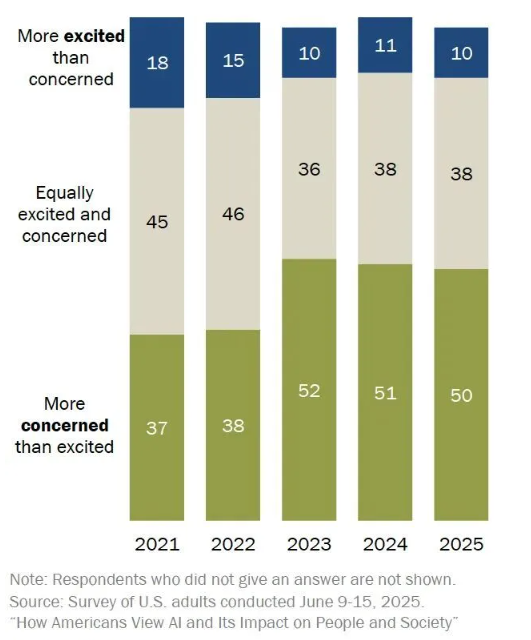
Picture this: A college student uses ChatGPT to draft a paper while nervously eyeing job postings requiring "AI-proof" skills. This cognitive dissonance captures what Harvard's Youth Opinion Survey found among respondents aged 18-29. While 52% happily delegate academic and work tasks to algorithms, 59% believe those same algorithms threaten their future employment - with 26% calling the threat "severe."

"It's like we're training our replacements," remarked one survey participant anonymously. Many reported feeling caught between leveraging AI's efficiency and watching it devalue hard-won expertise.

The Vanishing Advantage

The research identifies troubling patterns emerging as AI reshapes workplaces:

  • Skill homogenization: Tasks that once distinguished top performers now get standardized by AI assistance
  • Experience devaluation: Years spent mastering complex skills matter less when algorithms can approximate them instantly
  • Purpose erosion: Nearly half (44%) worry future jobs will feel meaningless as AI handles substantive work

"We're seeing the first generation that must compete directly with artificial intelligence rather than just other humans," explains Dr. Elena Torres, a labor economist who reviewed the findings.

Reinventing Human Value

The study suggests young workers aren't rejecting technology but struggling to define their irreplaceable qualities in an automated world. Some adapt by:

  • Focusing on creative problem-solving beyond AI's capabilities
  • Developing emotional intelligence and interpersonal skills
  • Combining technical knowledge with uniquely human judgment calls

As workplaces evolve, the challenge becomes distinguishing between what we can automate and what we should.

Key Points:

  • 🧠 59% of young workers see AI as a career threat, with over a quarter considering it severe
  • ⚖️ Split loyalty: While 52% regularly use AI tools professionally, many fear long-term consequences
  • 🔄 Changing rules: Traditional paths to expertise lose value when algorithms shortcut learning curves
  • 🛠️ New essentials: Future-proof careers may emphasize creativity, ethics and emotional skills machines can't replicate

Enjoyed this article?

Subscribe to our newsletter for the latest AI news, product reviews, and project recommendations delivered to your inbox weekly.

Weekly digestFree foreverUnsubscribe anytime

Related Articles

News

Tailwind's AI Paradox: Soaring Popularity, Plummeting Profits

Tailwind Labs faces a cruel irony - while its CSS framework enjoys record-breaking adoption thanks to AI tools generating Tailwind code, the company has slashed 75% of its engineering team. As AI agents bypass documentation pages, traffic dropped 40%, causing revenue to nosedive nearly 80%. Founder Adam Wathan calls this 'AI's brutal impact' on traditional open-source business models.

January 9, 2026
TailwindCSSOpenSourceAIDisruption
News

AI in Customer Service: More Help Than Replacement, Says Gartner

Contrary to popular fears, AI hasn't led to massive job cuts in customer service. A new Gartner survey reveals only 20% of teams shrank after AI adoption, while most companies report improved efficiency without reducing staff. Businesses are actually hiring more AI specialists as they shift toward human-AI collaboration models.

December 8, 2025
CustomerServiceAIFutureOfWorkHumanAICollaboration
Microsoft Office Gets Smarter: Copilot AI Now Built Right In
News

Microsoft Office Gets Smarter: Copilot AI Now Built Right In

Microsoft's latest update brings Copilot AI directly into Word, Excel, and PowerPoint, transforming how we work with documents. The new features can analyze financial data in Excel, summarize complex reports in Word, and craft compelling presentations in PowerPoint - all through natural conversation. With 90% of Fortune 500 companies already on board, this upgrade promises to redefine office productivity.

November 19, 2025
Microsoft365AIProductivityFutureOfWork
AI Adoption Threatens Entry-Level Jobs for Young Workers
News

AI Adoption Threatens Entry-Level Jobs for Young Workers

A BSI study reveals global companies increasingly favor AI investments over hiring junior staff, with 41% of executives using AI to reduce headcount. Nearly a quarter believe entry-level roles could be fully automated, raising concerns about youth employment prospects.

October 10, 2025
ArtificialIntelligenceFutureOfWorkEmploymentTrends
OpenAI CEO Forecasts AI Could Replace 30%-40% of Jobs by 2030
News

OpenAI CEO Forecasts AI Could Replace 30%-40% of Jobs by 2030

OpenAI CEO Sam Altman predicts artificial general intelligence (AGI) will emerge before 2030, potentially displacing 30%-40% of jobs. He emphasizes adaptability in future education and asserts AGI, if developed with proper values, won't threaten humanity.

September 28, 2025
Artificial IntelligenceFutureOfWorkAGI
Alibaba's Qwen Hits 100 Million Users Faster Than Expected
News

Alibaba's Qwen Hits 100 Million Users Faster Than Expected

Alibaba's AI assistant Qwen has reportedly crossed 100 million monthly active users just two months after launch, signaling strong adoption among students and professionals. While Alibaba hasn't confirmed the numbers, the rapid growth suggests China's appetite for AI tools is heating up. The app represents Alibaba's strategic push into consumer AI markets.

January 14, 2026
AlibabaAI AssistantsConsumer Tech