
Fogsight AI Transforms Education with One-Click Animation Tool

Fogsight AI Revolutionizes Educational Content with One-Click Animations
Image

Intelligent Concept-to-Animation Conversion

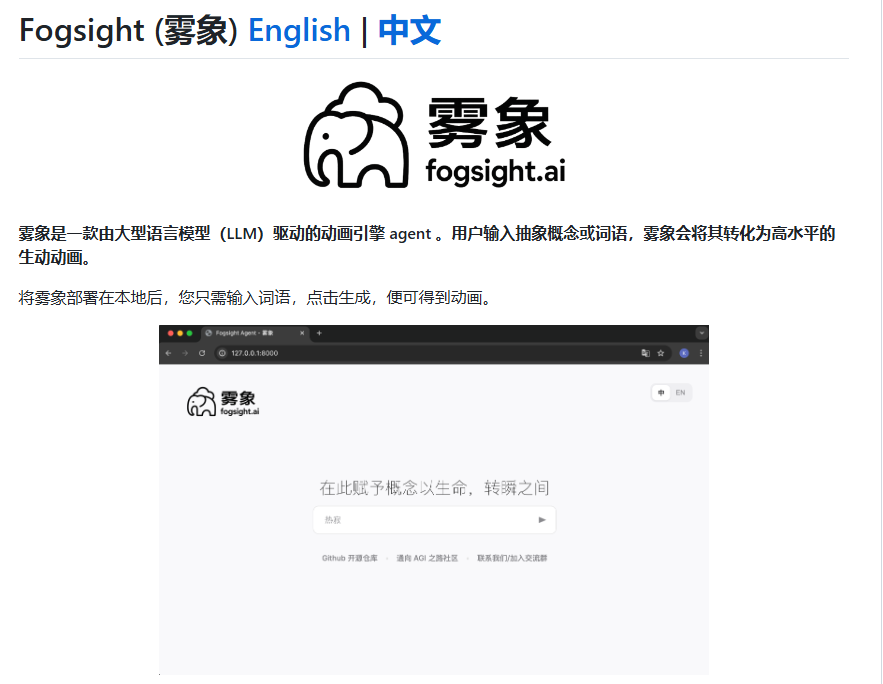
Fogsight AI, an animation engine powered by large language models (LLMs), is making waves in the education sector. By inputting simple keywords like "bubble sort" or "Euler's theorem," users can generate 30- to 90-second animated videos complete with bilingual narration (Chinese and English) and cinematic visuals. This tool is particularly useful for classroom teaching, online courses, and science communication.

The engine's AI-driven workflow handles everything from script generation to visual design and dynamic rendering, significantly lowering the technical barriers to animation production. Whether for mathematics, physics, or computer science, Fogsight transforms complex theories into intuitive visual narratives.
Image

Core Features: Efficiency and Flexibility

One-Click Generation

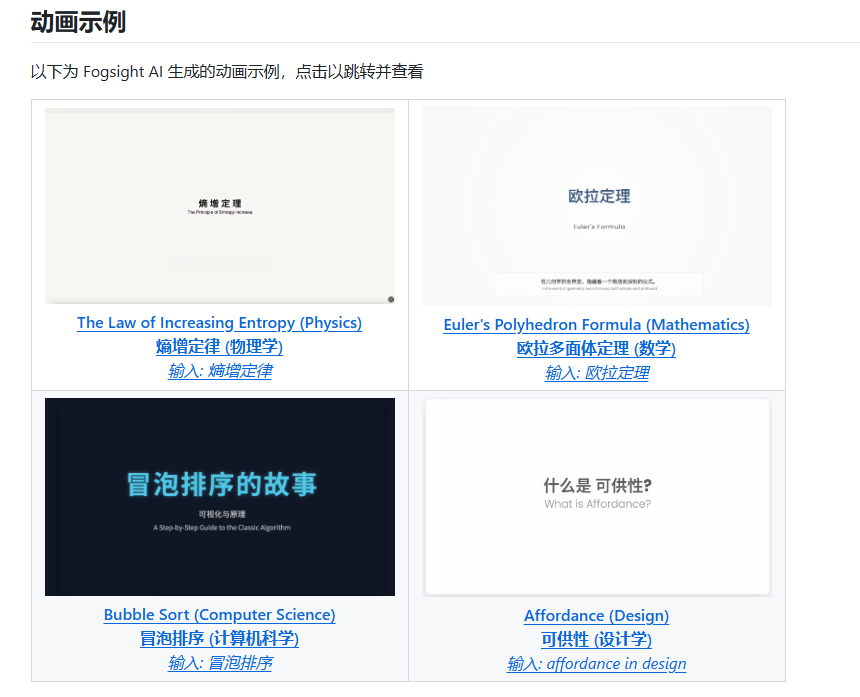
Fogsight produces animations with clear narrative structures in seconds. For example, inputting "entropy increase law" yields an abstract yet visually compelling explanation akin to a physics fable.

Visual Appeal

The tool emphasizes aesthetics and entertainment, making it ideal for K12 education and MOOCs. Its cinematic quality captures student attention and enhances engagement.

Interactive Adjustments

Users can refine animations via a language user interface (LUI), requesting changes like "shorten to 30 seconds" or "use warm tones." AI updates results instantly.

Open-Source Model

Fogsight supports local deployment under the MIT license, encouraging community contributions. This makes it adaptable for schools and developers.

Applications in Education

  • Classroom Teaching: Teachers use animations to explain abstract concepts (e.g., Euler’s polyhedron theorem).
  • Online Education: Platforms embed Fogsight’s videos to boost interactivity; one Bilibili video on entropy garnered 100K views.
  • Student Projects: Learners create presentations effortlessly, fostering creativity and teamwork.

User Feedback and Limitations

Educators praise Fogsight’s ease of use and effectiveness: "Students prefer these over traditional PPTs." However, complex scenes (e.g., dynamic camera transitions) may lack precision. Local setup can also be challenging for non-technical users. The team plans improvements based on feedback.

Market Competition and Future Prospects

Fogsight competes with tools like Animaker and Powtoon but stands out with its concept-driven generation and open-source flexibility. Future updates may include 3D animation support and real-time voice interaction.

Key Points:

  • One-click animation generation for educational content.
  • Bilingual narration (Chinese/English) and cinematic visuals.
  • Open-source model allows customization for schools/developers.
  • Ideal for classrooms, MOOCs, and student projects.
  • Limitations include precision in complex scenes and setup complexity.

Enjoyed this article?

Subscribe to our newsletter for the latest AI news, product reviews, and project recommendations delivered to your inbox weekly.

Weekly digestFree foreverUnsubscribe anytime

Related Articles

Alibaba's Qwen Dominates AI Landscape With Record Downloads
News

Alibaba's Qwen Dominates AI Landscape With Record Downloads

Alibaba's Qwen large language model has surged ahead in global adoption, amassing over 700 million downloads—more than the combined totals of Meta, OpenAI and other major competitors. Its comprehensive open-source approach and versatile applications have propelled Chinese AI development to new heights on the international stage.

January 9, 2026
Artificial IntelligenceOpen SourceTech Innovation
Teachers Can Now Transform Textbooks Into Podcasts With Google's New AI Tool
News

Teachers Can Now Transform Textbooks Into Podcasts With Google's New AI Tool

Google Classroom is getting a major upgrade in early 2026 with Gemini-powered technology that lets educators convert textbooks into engaging podcast-style lessons with just one click. Teachers can customize audio content by grade level, learning objectives, and even choose different narrative formats like interviews or casual conversations. While the tool aims to boost engagement among Gen Z learners who love podcasts, Google emphasizes teachers should review AI-generated content for accuracy.

January 8, 2026
EdTechAIinEducationDigitalLearning
Meta's Spatial Lingo Turns Your Living Room Into a Language Classroom
News

Meta's Spatial Lingo Turns Your Living Room Into a Language Classroom

Meta has unveiled Spatial Lingo, an innovative open-source Unity app that transforms everyday objects into language learning tools. Using mixed reality technology, the app guides users through vocabulary practice with items in their immediate environment. Developers can explore Meta's SDKs through practical examples while creating engaging educational experiences. The project showcases how AR can make language learning more immersive and contextually relevant.

January 8, 2026
Augmented RealityLanguage LearningMeta
NVIDIA CEO Hails Open-Source AI Breakthroughs at CES 2026
News

NVIDIA CEO Hails Open-Source AI Breakthroughs at CES 2026

At CES 2026, NVIDIA's Jensen Huang made waves by championing open-source AI development, singling out DeepSeek-R1 as a standout success. The tech leader revealed NVIDIA's plans to open-source training data while showcasing their new Vera Rubin chip. Huang outlined four key areas where AI is transforming industries, predicting these changes will define future technological paradigms.

January 6, 2026
AIOpen SourceNVIDIA
Youdao's AI Pen Now Explains Math Problems Like a Human Tutor
News

Youdao's AI Pen Now Explains Math Problems Like a Human Tutor

NetEase Youdao has upgraded its AI Q&A Pen with China's first video explanation feature. Instead of static answers, it generates personalized whiteboard-style tutorials that adapt to students' needs - even responding to requests like 'make it funnier.' The pen combines two AI models to create dynamic lessons, marking a shift from text-based learning to interactive video tutoring.

January 6, 2026
EdTechGenerativeAISmartLearning
NYU Professor's 42-Cent AI Oral Exams Expose Cheating Gap
News

NYU Professor's 42-Cent AI Oral Exams Expose Cheating Gap

An NYU professor found students acing written assignments often couldn't explain basic concepts when quizzed verbally. His solution? AI-powered oral exams costing just 42 cents per student. While stressful for some, 70% agreed these tests better measured real understanding than traditional methods. The experiment reveals both cheating vulnerabilities and AI's potential to transform academic assessment.

January 5, 2026
AI in EducationAcademic IntegrityNYU Innovation