
ChatGPT rolls out group chats: Collaborate with up to 20 people and AI assistants

ChatGPT's New Group Feature Makes Collaboration Easier

OpenAI has officially opened ChatGPT's group chat feature to all users - whether they're on free accounts or paid tiers like Plus/Pro. This long-awaited functionality transforms ChatGPT from a solo experience into a collaborative workspace.

How It Works

Starting a group chat is simple: just click the "people" icon in the top-right corner of your chat window to generate an invitation link. Up to 20 participants can join across web and mobile devices, with conversations syncing in real-time.
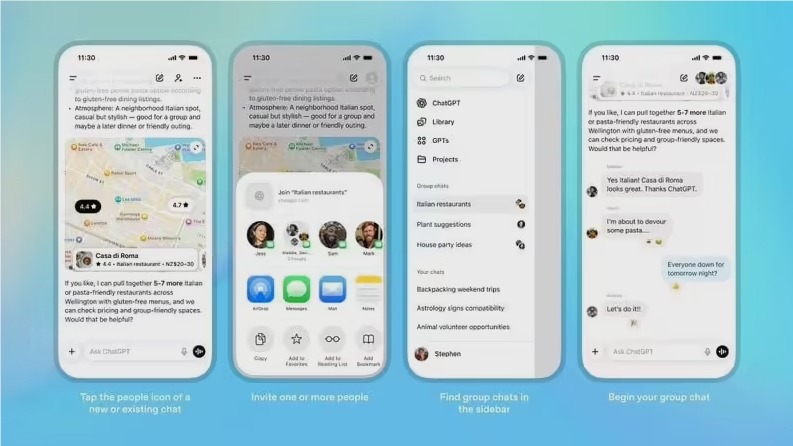
Image

What makes this particularly interesting is how ChatGPT behaves in group settings. OpenAI engineers have taught the AI some social graces:

  • It learns when to jump in naturally versus when to stay quiet
  • Only responds when directly @mentioned (reducing unnecessary interruptions)
  • Maintains context across multiple conversation threads

The system also respects privacy boundaries. While Personal Memory helps customize responses for the chat creator, these memories remain encrypted locally and aren't shared with other participants.

Practical Applications Abound

The potential uses are impressive:

  • Planning: Coordinate weekend trips or dinner reservations with friends
  • Creativity: Brainstorm garden designs or writing projects collaboratively
  • Decision Making: Vote on restaurants or debate options with AI moderation
  • Learning: Study groups can parse complex literature together

The temporary nature of these chats (messages auto-delete after 30 days) makes them ideal for sensitive discussions while maintaining privacy.

What's Coming Next?

OpenAI isn't stopping here. Based on user feedback, they plan to introduce:

  • Chat history reviews
  • Shared task lists
  • Enterprise-grade "Team Rooms" (supporting up to 200 users)

The business version, slated for early 2026, will add admin controls and knowledge base integration - perfect for workplace collaboration.

The only current limitation? API calls and plugins still can't run simultaneously for multiple users - though shared links, images, and file reading work fine.

Key Points:

  • Group size: Up to 20 participants
  • Platforms: Works across web and mobile
  • Privacy: Creator memories stay private
  • Retention: Messages delete after 30 days
  • Future plans: Task lists & enterprise versions coming soon

Enjoyed this article?

Subscribe to our newsletter for the latest AI news, product reviews, and project recommendations delivered to your inbox weekly.

Weekly digestFree foreverUnsubscribe anytime

Related Articles

OpenAI's GPT-5.4 Leak Reveals Game-Changing Memory Capabilities
News

OpenAI's GPT-5.4 Leak Reveals Game-Changing Memory Capabilities

A recent accidental code leak suggests OpenAI's upcoming GPT-5.4 model will feature unprecedented memory capabilities, including a 2 million token context window and true stateful AI functionality. The leaked details indicate this could transform AI from temporary assistants to persistent digital colleagues, remembering workflows across sessions. While OpenAI quickly attempted to cover the leak by rebranding it as GPT-5.3-codex, tech analysts believe this reveals their strategic move against competitors like Claude and Gemini.

March 3, 2026
AI developmentOpenAIGPT models
ChatGPT Faces User Exodus Amid Military AI Controversy
News

ChatGPT Faces User Exodus Amid Military AI Controversy

ChatGPT saw a staggering 295% spike in U.S. uninstalls after OpenAI's defense deal became public, while rival Claude gained traction by refusing similar partnerships. The backlash highlights growing consumer concerns about AI ethics in military applications.

March 3, 2026
AI ethicsChatGPTmilitary technology
News

ChatGPT Exodus: Users Flee After Military Deal

OpenAI's partnership with the U.S. Department of Defense sparked a massive backlash, with ChatGPT app uninstalls jumping 295% overnight. Rival Claude saw downloads surge as users protested the military collaboration through app store reviews and downloads. The dramatic shift highlights growing public concern about AI's role in defense applications.

March 3, 2026
ChatGPTAI ethicstech backlash
OpenAI Snags Coveted GPT.com Domain in Strategic Brand Move
News

OpenAI Snags Coveted GPT.com Domain in Strategic Brand Move

OpenAI appears to have quietly acquired the premium domain GPT.com, which now redirects to ChatGPT's official site. The move mirrors their previous acquisition of Chat.com and suggests a deliberate strategy to control key digital real estate in the AI space. While unconfirmed officially, domain records show GPT.com transferred to OpenAI's preferred registrar, strengthening their brand presence as competition in generative AI intensifies.

March 2, 2026
OpenAIDomain StrategyGenerative AI
News

OpenAI Strikes Military Deal With Built-In Safeguards

In a move that follows Anthropic's clash with the Pentagon, OpenAI has secured an agreement allowing its AI models on classified defense networks—but with strict conditions. CEO Sam Altman emphasized protections against mass surveillance and autonomous weapons, while revealing engineers will embed technical safeguards directly into Pentagon systems. The deal sparks debate within OpenAI as employees voice support for Anthropic's tougher stance.

March 2, 2026
AI ethicsmilitary techOpenAI
NVIDIA Bets Big on Groq Tech for Next-Gen AI Chips, Wins OpenAI Back
News

NVIDIA Bets Big on Groq Tech for Next-Gen AI Chips, Wins OpenAI Back

NVIDIA is shaking up the AI chip market with a powerful new partnership. The tech giant plans to unveil processors featuring Groq's lightning-fast language processing technology at next month's GTC conference. In a major coup, OpenAI has signed on as lead customer after briefly flirting with competitors. This move signals NVIDIA's determination to dominate the crucial AI inference market as computing demands evolve.

February 28, 2026
AI chipsNVIDIAGroq