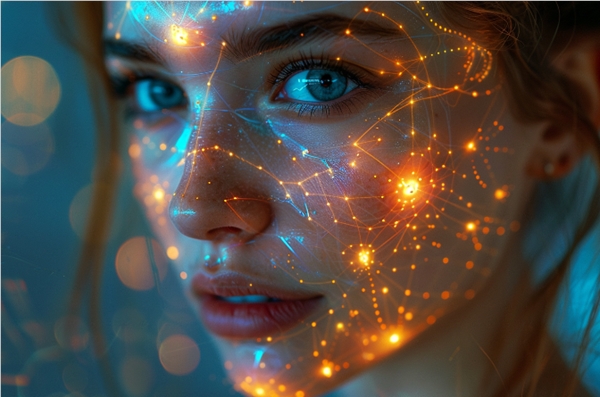
ByteDance's Volc Engine Tests Chimera Digital Human Platform

ByteDance Accelerates AI Strategy with Chimera Digital Human Platform

Volc Engine, the AI development arm of ByteDance, has begun closed beta testing for its new Chimera Digital Human Platform, according to industry reports. The platform represents ByteDance's latest push into advanced AI applications, building on the company's established expertise in machine learning and content generation.

Platform Capabilities and Development

The Chimera platform was developed by ByteDance's Intelligent Creation Digital Human Team and utilizes Volc Engine's proprietary large language model technology. Key features include:

  • Digital human generation
  • Image outfit modification
  • Video translation services

Image

Currently operating on an invitation-only basis, the platform is being offered free during the trial period. Company sources indicate plans to transition to a usage-based pricing model after launch, potentially charging per generated video or by processing time.

ByteDance's Growing Focus on Digital Humans

This development marks another milestone in Volc Engine's ongoing investment in digital human technology:

  • June 2022: Received first digital human system certification from China Academy of Information and Communications Technology
  • April 2023: Launched three specialized digital human solutions (interactive, broadcasting, live streaming)
  • 2024: Partnered with Hua Fa Group to develop comprehensive AI digital human solutions for finance, marketing, and live streaming applications

The company has positioned these technologies as particularly valuable for sectors requiring high-quality virtual interactions, including customer service, entertainment, and e-commerce.

Market Context and Future Plans

The digital human market has seen rapid growth across Asia, with Chinese tech firms particularly active in developing both consumer-facing and enterprise solutions. Industry analysts note that ByteDance appears to be accelerating its AI strategy through Volc Engine, potentially creating new revenue streams beyond its core social media platforms.

The Chimera platform is expected to enter public testing phase by the end of the current month. Early adopters report promising results in generating realistic digital avatars with natural movement patterns and speech capabilities.

Key Points:

  1. Volc Engine (ByteDance) launches closed beta for Chimera Digital Human Platform
  2. Platform offers AI-generated digital humans, image modification, and video services
  3. Current testing is invitation-only with free access; future usage-based pricing planned
  4. Builds on ByteDance's multi-year investment in digital human technology
  5. Expected public rollout scheduled for late this month

Enjoyed this article?

Subscribe to our newsletter for the latest AI news, product reviews, and project recommendations delivered to your inbox weekly.

Weekly digestFree foreverUnsubscribe anytime

Related Articles

ByteDance rolls out new security toolkit for AI model protection
News

ByteDance rolls out new security toolkit for AI model protection

ByteDance has introduced ByteClaw, a new security tool designed to safeguard internal access to large AI models. The company also released comprehensive guidelines addressing common vulnerabilities like prompt injection and data leaks. These measures aim to balance AI innovation with enterprise-grade security as machine learning tools become more prevalent in corporate environments.

March 18, 2026
AI SecurityByteDanceEnterprise Technology
News

Moonshot AI Founder Unveils Next-Gen Model Strategy at NVIDIA Event

Yang Zhilin, founder of Moonshot AI, made waves at the NVIDIA GTC2026 conference with his vision for the future of large language models. Moving beyond simple computing power scaling, he proposed a three-pronged approach focusing on token efficiency, long context processing, and agent clusters. The strategy behind their Kimi K2.5 model suggests we're entering an era where intelligence density matters more than raw parameter counts.

March 18, 2026
AI InnovationMoonshot AINVIDIA GTC
Unsloth Studio Puts AI Fine-Tuning in Your Hands
News

Unsloth Studio Puts AI Fine-Tuning in Your Hands

Unsloth AI has unveiled Unsloth Studio, a game-changing open-source platform that makes fine-tuning large language models accessible to all. By slashing VRAM usage by 70% and doubling training speeds, it enables developers to work with massive models on consumer-grade GPUs. The intuitive visual interface eliminates complex setups, offering everything from data prep to deployment in one streamlined package.

March 18, 2026
AI DevelopmentMachine LearningLLM Fine-Tuning
News

Tencent's AI Push Fuels Record B2B Growth in 2025

Tencent's latest financial results reveal how AI investments are paying off, with B2B revenue hitting 229.4 billion yuan - a new high. The tech giant saw cloud services turn profitable while accelerating AI adoption across its products. From smarter chatbots to enterprise solutions, Tencent is betting big on artificial intelligence to drive future growth.

March 18, 2026
TencentArtificial IntelligenceCloud Computing
News

Tencent's Gaming Empire Surges 22% in 2025 as AI and Global Push Pay Off

Tencent's gaming division posted impressive 22% revenue growth in 2025, hitting 241.6 billion yuan. Domestic sales rose 18% while international markets soared 33%, crossing the $10 billion milestone. Key titles like PUBG Mobile and Honor of Kings drove growth, with AI playing an increasingly vital role in content creation and player engagement. The company's strategic investments in global expansion and technology appear to be bearing fruit.

March 18, 2026
TencentGaming IndustryArtificial Intelligence
News

Robots' ChatGPT Moment Still Years Away, Says Tech Founder

Wang Xingxing, founder of Autonomous Intelligent Technology, predicts embodied AI won't reach its breakthrough moment for another 2-3 years. While progress continues, robots still struggle with complex real-world tasks. The industry awaits that pivotal threshold when machines can handle unfamiliar scenarios as smoothly as ChatGPT processes text.

March 18, 2026
Artificial IntelligenceRoboticsEmerging Technology