
ByteDance's InfinityStar Cuts Video Creation Time Dramatically

ByteDance's Game-Changing Video Tech
Image

Imagine creating professional-quality videos faster than brewing your morning coffee. That's what ByteDance promises with its new InfinityStar framework, which reduces generation time for a 5-second HD video to under a minute.

Rethinking Video from the Ground Up

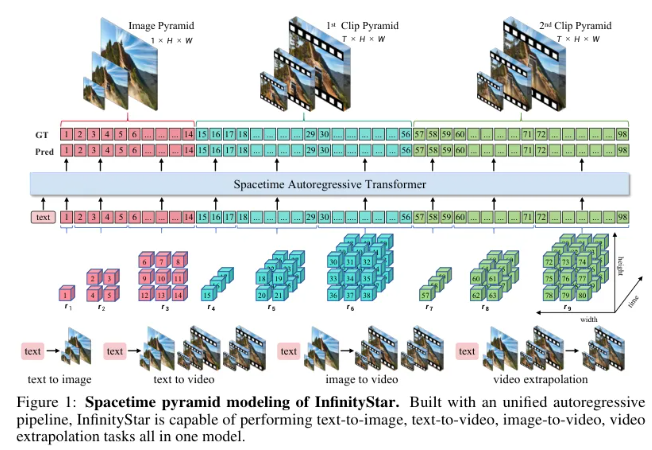
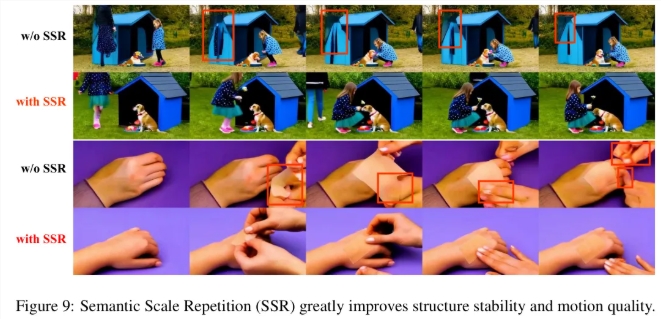
The secret lies in InfinityStar's novel approach. While traditional systems treat videos as monolithic blocks, ByteDance's engineers built a spatiotemporal pyramid model that separates visual elements from motion data. Think of it like analyzing a dance performance by studying the choreography and costumes separately rather than all at once.
Image

"This isn't just incremental improvement," explains Dr. Li Wen, lead researcher on the project. "We're fundamentally changing how AI understands moving images."

Smart Learning Saves Time and Power

The team implemented clever efficiency tricks:

  • Leveraging existing AI models through knowledge inheritance
  • Using pre-trained components as building blocks
  • Focusing computational power where it matters most

The result? Training times cut nearly in half without sacrificing quality.

What This Means for Creators

For content creators struggling with render times, InfinityStar could be revolutionary:

  • Rapid prototyping of video concepts
  • Faster iterations during editing
  • Lower hardware requirements

The framework handles everything from simple animations to complex scene transitions - all through one unified system.

The GitHub repository (github.com/FoundationVision/InfinityStar) already shows promising community engagement since yesterday's launch.

Key Points:

  • ⏱️ 58-second generation for 5-second HD clips
  • 🧩 Spatiotemporal separation improves quality
  • Efficient training reduces computing costs
  • 🎨 Unified system handles multiple visual tasks

Enjoyed this article?

Subscribe to our newsletter for the latest AI news, product reviews, and project recommendations delivered to your inbox weekly.

Weekly digestFree foreverUnsubscribe anytime

Related Articles

News

TikTok Doubles Down on Shenzhen with New AI and Video Tech Hub

ByteDance's TikTok is expanding its footprint in China's tech hub Shenzhen with a second headquarters focused on AI and video technology. The Nanshan District facility will house research labs and business incubators, complementing TikTok's existing Greater Bay Area operations. This move signals the company's growing investment in southern China's innovation ecosystem.

January 8, 2026
ByteDanceShenzhenTechAIInnovation
News

ByteDance's DouBao AI Glasses Set for Limited Release

ByteDance is gearing up to ship its highly anticipated DouBao AI glasses, but with a twist - the first batch of 100,000 units will be exclusively available to existing DouBao App users. Powered by Qualcomm's Snapdragon AR1 chip, these lightweight glasses focus on audio functionality without a display screen. While the company remains tight-lipped about broader sales plans, industry insiders reveal development is already underway for a second-generation model.

January 6, 2026
wearable techartificial intelligenceByteDance
News

ByteDance Shuts Down Rumors About Doubao AI Glasses Launch

ByteDance has officially denied rumors about the imminent launch of Doubao AI glasses, stating there's no concrete sales plan yet. Despite speculation fueled by supply chain reports, the company maintains the product hasn't reached shipping phase. Industry experts suggest this reflects ByteDance's cautious approach to hardware launches, possibly due to technical challenges or strategic timing considerations.

January 6, 2026
ByteDanceAI WearablesSmart Glasses
News

ByteDance's Doubao AI Glasses Set to Shake Up Wearable Tech Market

ByteDance is making waves in wearable tech with its upcoming Doubao AI glasses, developed in partnership with Longqi Technology. These sleek glasses feature a custom chip for seamless voice interaction and translation, while keeping weight and price low. Unlike standalone devices, they smartly leverage your smartphone's power through the Doubao app. Priced under 2000 yuan, they could make AI glasses mainstream accessories rather than niche gadgets.

January 5, 2026
wearable technologyAI hardwareByteDance
ByteDance's StoryMem Gives AI Videos a Memory Boost
News

ByteDance's StoryMem Gives AI Videos a Memory Boost

ByteDance and Nanyang Technological University researchers have developed StoryMem, an innovative system tackling persistent issues in AI video generation. By mimicking human memory mechanisms, it maintains character consistency across scenes - a challenge even for models like Sora and Kling. The solution cleverly stores key frames as references while keeping computational costs manageable. Early tests show significant improvements in visual continuity and user preference scores.

January 4, 2026
AI video generationByteDancecomputer vision
ByteDance's StoryMem Brings Consistency to AI-Generated Videos
News

ByteDance's StoryMem Brings Consistency to AI-Generated Videos

ByteDance and Nanyang Technological University researchers have developed StoryMem, a breakthrough system tackling character consistency issues in AI video generation. By intelligently storing and referencing key frames, the technology maintains visual continuity across scenes - achieving 28.7% better consistency than existing models. While promising for storytelling applications, the system still faces challenges with complex multi-character scenes.

January 4, 2026
AI video generationByteDancecomputer vision