
Apple's AI Design Breakthrough: Small Model Outshines GPT-5

How Apple Taught AI to Design Better Than Humans
Image

For years, AI-generated interfaces have suffered from what designers call "functional but ugly" syndrome. Apple's latest research reveals why—and more importantly, how they fixed it.

The tech giant discovered traditional AI training methods were missing crucial nuances. "Scoring systems are too blunt," explains Dr. Elena Torres, lead researcher on the project. "They can't capture why one layout feels right while another falls flat."

The Designer Touch

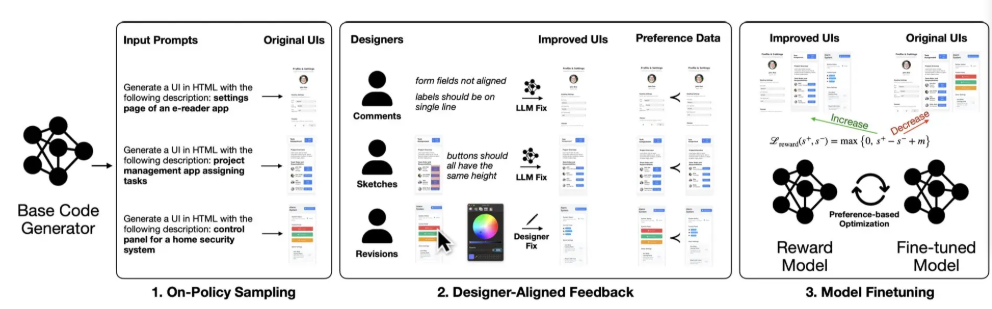
The breakthrough came when Apple brought human experts back into the loop. Their team worked with 21 senior designers who provided:

  • 1,460 detailed improvement logs
  • Hand-drawn sketches showing ideal layouts
  • Direct modification suggestions for AI outputs
Image

"We weren't just saying 'make it better,'" notes designer Marcus Chen. "We showed exactly how—with pencil marks demonstrating spacing relationships, visual hierarchy, and that elusive quality we call 'balance.'"

Surprising Results

The findings challenged conventional wisdom:

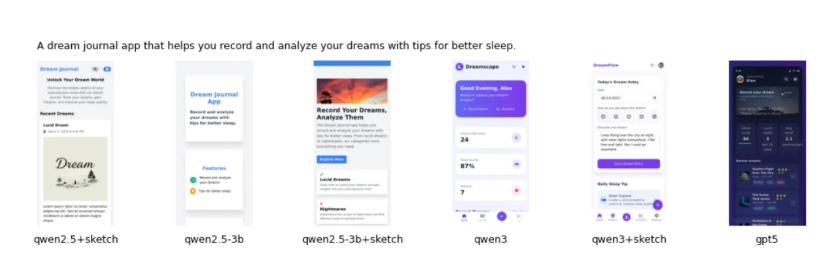
  1. Small models can outperform giants: The optimized Qwen3-Coder (a relatively compact model) surpassed GPT-5's design capabilities
  2. Visual feedback trumps text: Evaluation consistency jumped from 49% to 76% when using sketches versus text descriptions
  3. Efficient learning: Just 181 sketch samples produced significant improvements

The implications extend beyond Apple products. This approach could revolutionize how we train AI for any creative task where subjective judgment matters.

Key Points:

  • 🎨 Quality over size: Smaller, well-trained models can beat larger generic ones at specialized tasks
  • ✏️ Show don't tell: Visual feedback proves far more effective than text instructions for design training
  • Rapid improvement: The method achieves dramatic results with surprisingly few samples

Enjoyed this article?

Subscribe to our newsletter for the latest AI news, product reviews, and project recommendations delivered to your inbox weekly.

Weekly digestFree foreverUnsubscribe anytime

Related Articles

News

AI Music Revolution: Suno v5 and Lyria3 Redefine Creative Boundaries

February 2026 marked a turning point in AI music generation as industry leaders Suno, Udio, and Google unveiled groundbreaking updates. These advancements transformed AI music from experimental tools to professional-grade production systems capable of emotional vocals, studio-quality audio, and seamless integration across creative workflows. Major brands are already leveraging these technologies to revolutionize advertising, design, and gaming industries.

March 6, 2026
AI MusicCreative TechnologyDigital Transformation
Figma and OpenAI Bridge Design-Code Gap with Breakthrough Integration
News

Figma and OpenAI Bridge Design-Code Gap with Breakthrough Integration

Figma's new integration with OpenAI Codex shatters barriers between design and development teams. The collaboration enables seamless two-way translation between visual designs and functional code, powered by AI that understands full project context. Weekly usage has skyrocketed past 1 million visits as developers embrace tools that automatically generate editable designs from codebases while converting Figma changes into production-ready code.

February 28, 2026
FigmaOpenAIAI Design
Corgi Codes: How a Dog's Random Typing Spawned a Video Game
News

Corgi Codes: How a Dog's Random Typing Spawned a Video Game

In an experiment that blurs the line between canine antics and AI innovation, former Meta engineer Caleb Leak turned his corgi Momo's keyboard taps into a fully functional video game. Using Claude Code and some clever programming tricks, Momo's random typing sessions produced 'Quasar Saz' - a cosmic adventure game complete with boss battles. This playful project raises fascinating questions about AI's creative potential when guided by unconventional inputs.

February 27, 2026
AI CreativityExperimental ProgrammingHuman-AI Collaboration
OpenAI Takes Aim at Claude with Game-Changing 'Skills' Feature
News

OpenAI Takes Aim at Claude with Game-Changing 'Skills' Feature

OpenAI is quietly testing a revolutionary 'Skills' system for ChatGPT, codenamed 'Hazelnut,' that could fundamentally change how we interact with AI. Moving beyond static GPTs, this new approach lets users teach ChatGPT specific abilities and workflows - similar to Anthropic's Claude but with potentially greater flexibility. Expected to launch in early 2026, Skills promises on-demand capabilities, slash commands for efficiency, and seamless conversion of existing GPTs.

December 25, 2025
AI InnovationChatGPT UpdateHuman-AI Collaboration
News

Kling AI 2.6 Debuts with Game-Changing Audio Features

Kuaishou's Kling AI has unveiled version 2.6, marking a significant leap forward in AI-generated content. The update introduces native audio capabilities alongside its existing video tools, creating seamless multimodal experiences. With improved efficiency and quality metrics, this release promises to transform creative workflows for professionals across media industries.

December 3, 2025
AI Video GenerationMultimodal AICreative Technology
Kling AI's O1 Model Transforms Video Creation with Simple Prompts
News

Kling AI's O1 Model Transforms Video Creation with Simple Prompts

Kling AI has unveiled its groundbreaking O1 video model, allowing users to generate videos from single sentences. This multimodal system combines text, images and video processing in one seamless interface, solving common issues like 'feature drift' during scene transitions. Currently available for short-form content creation, the technology promises to democratize AI video production - though its real-world performance remains to be seen.

December 2, 2025
AI Video GenerationMultimodal AICreative Technology