
Xiaomi's Robot Brain Breakthrough Goes Open Source

Xiaomi's Robotics Leap: Open-Sourcing the Future
Image

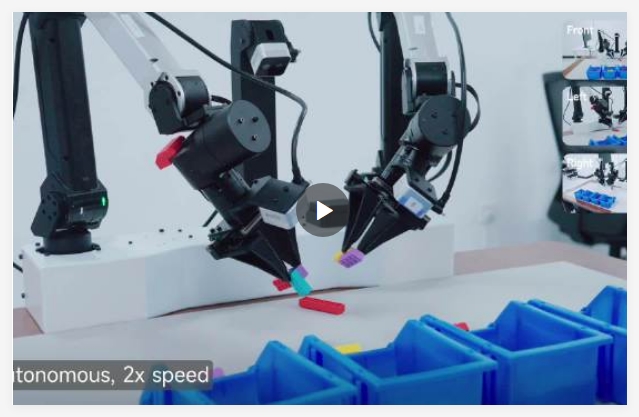
In a move that could accelerate robotics development worldwide, Xiaomi has released its first-generation robot intelligence model to the public. The Xiaomi-Robotics-0 isn't just another AI - it's specifically designed to overcome the awkward delays that make robots seem clumsy or slow to respond.

How Robots Finally Got Quick Reflexes

The secret lies in Xiaomi's clever dual-system approach:

  • The Thinking Brain: Handles complex tasks like interpreting vague human requests ("Put that over there") and understanding spatial relationships
  • The Motion Cerebellum: Uses cutting-edge Diffusion Transformers to translate those thoughts into smooth, precise movements

"It's like giving robots both book smarts and athletic coordination," explains Dr. Wei Zhang, lead researcher on the project. "Previous models excelled at one or the other - we've bridged that gap."
Image

From Lab Bench to Your Garage

What makes this release particularly exciting is its accessibility. While packing serious computational power (4.7 billion parameters), the model runs efficiently on consumer-grade GPUs. During testing:

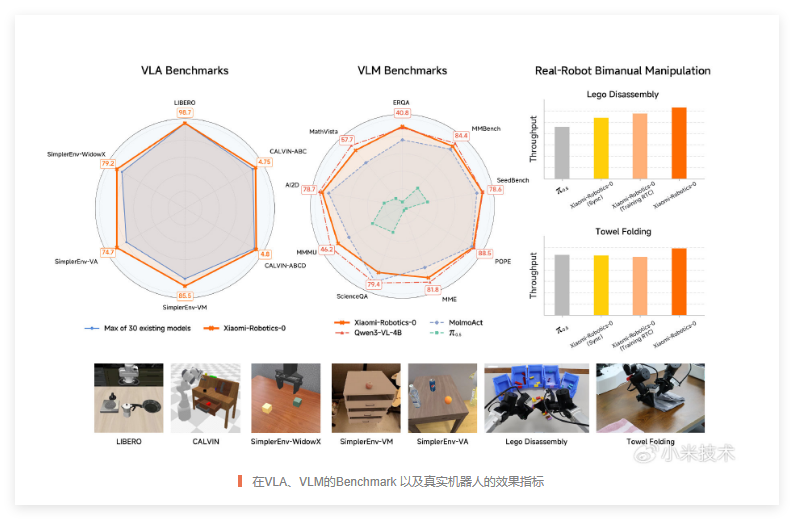
  • Outperformed 30 competing models in simulation benchmarks
  • Demonstrated remarkable adaptability when shifting from virtual tests to physical robot arms
  • Showed particular skill handling delicate tasks like folding towels - a notorious challenge for robots

The open-source package includes everything developers need: technical documentation on GitHub, pre-trained model weights on Hugging Face, and detailed implementation guides.

Why This Changes Everything

The implications extend far beyond lab experiments:

  1. Faster Innovation: With barriers lowered, researchers worldwide can build upon Xiaomi's work without reinventing the wheel
  2. More Natural Interactions: Reduced latency means robots that don't pause awkwardly before responding to commands
  3. Cost Efficiency: Optimized for consumer hardware makes advanced robotics more economically viable

The timing couldn't be better as industries from manufacturing to eldercare increasingly look toward robotic solutions.

Key Points:

  • Open Access: Complete technical resources available at Xiaomi Robotics GitHub
  • Benchmark Breaker: Sets new standards across LIBERO, CALVIN and SimplerEnv tests
  • Real-World Ready: Demonstrated success transitioning from simulation to physical robots
  • Community Focus: Designed for collaborative improvement through open-source development

Enjoyed this article?

Subscribe to our newsletter for the latest AI news, product reviews, and project recommendations delivered to your inbox weekly.

Weekly digestFree foreverUnsubscribe anytime

Related Articles

News

Google's AI Turns News Reports into Flood Warnings for Vulnerable Regions

Google has developed an innovative flood prediction system by analyzing millions of news articles with its Gemini AI. The technology transforms qualitative reports into quantitative data, creating early warnings for areas lacking traditional weather monitoring. Already implemented in 150 countries, this approach marks a breakthrough in using language models for disaster prevention while addressing global inequality in weather forecasting capabilities.

March 13, 2026
AI innovationdisaster preventionclimate technology
Google's Gemini Embedding 2 Bridges the Gap Between Machines and Human Understanding
News

Google's Gemini Embedding 2 Bridges the Gap Between Machines and Human Understanding

Google has unveiled Gemini Embedding 2, its first native multimodal embedding model that can process text, images, videos, audio, and documents simultaneously. Unlike generative models focused on content creation, this breakthrough technology helps machines truly 'understand' complex data by mapping diverse media types into unified mathematical spaces. With support for over 100 languages and combined media inputs, it promises significant improvements in search accuracy, legal research, and AI-powered analysis across industries.

March 11, 2026
AI innovationmultimodal learningmachine understanding
News

NVIDIA shakes up AI with open-source NemoClaw platform

NVIDIA is making waves with its new open-source AI agent platform NemoClaw, breaking free from hardware dependencies. Meanwhile, China celebrates a milestone in industrial communication standards, and Apple gears up for its foldable iPhone launch with boosted production targets. The tech world is buzzing with innovation as these developments signal major shifts across industries.

March 11, 2026
AI innovationtech trendsopen source
Qualcomm and Arduino Unveil Ventuno Q: A Powerhouse for AI Robotics
News

Qualcomm and Arduino Unveil Ventuno Q: A Powerhouse for AI Robotics

Qualcomm makes its first major move since acquiring Arduino with the launch of Ventuno Q, a cutting-edge development board packing serious AI muscle. Designed for robotics enthusiasts and professionals alike, this hardware promises to bring cloud-level AI processing to your workbench. While pricing remains under wraps, its specs - including a dedicated NPU and industrial-grade processor - suggest Qualcomm means business in the maker market.

March 10, 2026
roboticsedge computingAI hardware
News

Shenzhen Hosts Lobster Feast with AI Twist to Boost Tech Adoption

Longgang District teams up with AI firm Kimi for an unforgettable culinary-tech fusion event. On March 14th, attendees will witness robots cooking lobster while enjoying free samples, all while learning about OpenClaw deployment. The festival offers practical benefits too - from free installation services to API discounts for businesses embracing AI transformation.

March 10, 2026
AI innovationculinary techShenzhen events
News

Lei Jun's Vision: Self-Driving Cars and Smart Robots Set to Transform Our Future

Xiaomi founder Lei Jun has unveiled ambitious tech proposals at China's Two Sessions, predicting 2026 will be a breakthrough year for autonomous vehicles and intelligent robots. His plans call for updated safety standards as cars become smarter, while humanoid robots could soon join factory workforces. These innovations promise to reshape industries and daily life, though challenges remain in bringing them to mass production.

March 9, 2026
autonomous vehiclesartificial intelligencerobotics