
Xiaomi Introduces AI-Powered 'Quick Find Car' Feature

Xiaomi Revolutionizes Parking with AI Car-Finding Feature

Xiaomi has taken another leap in smart vehicle technology with its newly unveiled "Quick Find Car" feature, designed to solve one of the most common frustrations for urban drivers: locating their vehicle in vast parking facilities. Initially available for the Xiaomi YU7 model, this innovation combines automatic photography with advanced AI recognition.

How It Works

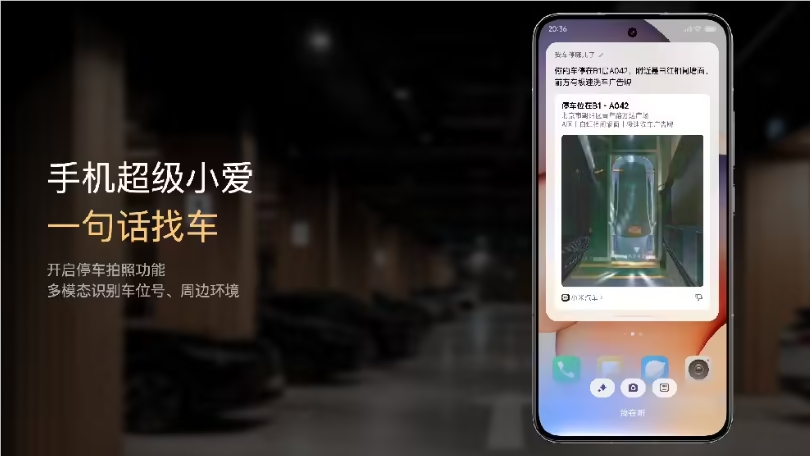
The system activates when users lock their car through the Xiaomi Car App. The vehicle automatically captures five photographs from different angles (top, front, rear, left, and right), creating a comprehensive visual record of the parking location. These images are then uploaded to the app's "Vehicle Location" page.
Image

Advanced AI Integration

Xiaomi employs its proprietary large-scale image understanding model to analyze parking lot scenes. This technology can accurately identify:

  • Parking space numbers
  • Floor levels
  • Zone designations
  • Nearby landmarks and facilities

The system eliminates the need for manual comparison of photos, providing users with clear, actionable information about their vehicle's location.

Ecosystem Integration

As part of Xiaomi's interconnected smart ecosystem, users can access this feature through multiple touchpoints:

  1. Directly via the Xiaomi Car App
  2. Through voice commands to Super Xiaoai assistant on Xiaomi smartphones
  3. With visual pop-up notifications when approaching the parking area

This multi-channel approach is particularly useful when drivers have their hands full or need quick access to parking information.

Market Context

The development addresses a growing urban mobility challenge. As cities become more congested and parking facilities expand, drivers increasingly struggle with:

  • Time wasted searching for vehicles
  • Stress from navigating unfamiliar parking structures
  • Safety concerns in poorly lit areas

Xiaomi's solution demonstrates how automotive technology is evolving beyond traditional transportation functions to address complete mobility experiences.

Future Developments

The company has indicated plans to expand this AI vision technology to other life service scenarios, suggesting potential applications in:

  • Automated valet systems
  • Smart city navigation
  • Enhanced security features

The feature showcases Xiaomi's growing capabilities in both automotive technology and artificial intelligence.

Key Points:

  • Automatic photography: Captures 5-angle views upon locking
  • AI analysis: Identifies precise parking location details
  • Multi-platform access: Available via app and voice assistant
  • Ecosystem integration: Part of Xiaomi's broader smart services
  • Future potential: Foundation for expanded AI vision applications

Enjoyed this article?

Subscribe to our newsletter for the latest AI news, product reviews, and project recommendations delivered to your inbox weekly.

Weekly digestFree foreverUnsubscribe anytime

Related Articles

News

Motional shifts gears with AI-powered driverless taxis coming to Vegas

After facing setbacks in its autonomous driving ambitions, Motional is pivoting to an AI-first strategy. The Hyundai-Aptiv joint venture plans to launch fully driverless taxis in Las Vegas by 2026, following employee trials later this year. CEO Laura Major reveals how new machine learning approaches aim to make the technology more adaptable and cost-effective.

January 12, 2026
autonomous vehiclesartificial intelligencefuture mobility
News

XPeng's AI Cockpit Breakthrough: The Turing Test Comes to Your Car

XPeng has secured trademark rights for its 'Turing AI Cockpit,' marking a significant leap in smart vehicle technology. This system aims to transform cars into thinking companions that understand and anticipate driver needs, going far beyond simple voice commands. The move signals XPeng's ambition to lead the race in creating truly intelligent vehicles that blend autonomous driving with human-like interaction.

January 9, 2026
smart vehiclesAI cockpitautonomous driving
Ford Bets Big on AI: Smart Assistant Coming Next Year, Eyes Fully Autonomous Cars by 2028
News

Ford Bets Big on AI: Smart Assistant Coming Next Year, Eyes Fully Autonomous Cars by 2028

Ford made waves at CES 2026 with ambitious plans to integrate AI across its vehicles. The automaker announced a new Google Cloud-powered assistant launching next year, followed by a major autonomous driving push. Their goal? To bring Tesla-level tech to mainstream buyers through phased rollouts - starting with smarter voice controls and culminating in hands-free driving capabilities.

January 8, 2026
automotive techAI assistantsself-driving cars
News

Chinese Tech Firm Unveils AI Suite Set to Transform Car Design

Chinese automotive tech company IAT has launched a groundbreaking suite of AI tools that could revolutionize vehicle development. Their 'AI+Digital Intelligent Creation' system includes four specialized products targeting different aspects of car design, promising to slash development times while improving quality. The announcement comes as Beijing's tech hub solidifies its position as China's automotive AI powerhouse.

January 8, 2026
automotive techAI innovationvehicle design
News

Qualcomm and Google Supercharge Smart Cars with AI That Thinks Ahead

Qualcomm and Google are taking their automotive partnership to the next level by integrating advanced AI capabilities into vehicles. The upgraded Snapdragon Digital Chassis will feature Google's multi-modal AI agent, transforming cars from passive responders to proactive assistants. Chinese EV makers like Zeekr are already lining up to implement this technology, which promises personalized experiences and seamless task automation.

January 6, 2026
automotive techAI integrationsmart vehicles
News

Boston Dynamics and Google DeepMind Team Up to Power Next-Gen Atlas Robots

In a groundbreaking move, Boston Dynamics is partnering with Google DeepMind to integrate the Gemini Robotics AI model into its next-generation Atlas humanoid robot. This collaboration combines Boston Dynamics' unmatched robotic mobility with Google's advanced AI reasoning capabilities, potentially transforming Atlas from an acrobatic marvel into a truly autonomous helper capable of understanding complex instructions and adapting to new environments.

January 6, 2026
roboticsartificial intelligencetech innovation