
Unitree's Open-Source Breakthrough Gives Humanoid Robots Smooth Moves

Unitree's Robotic Revolution: Smooth Moves Now Open Source
Image

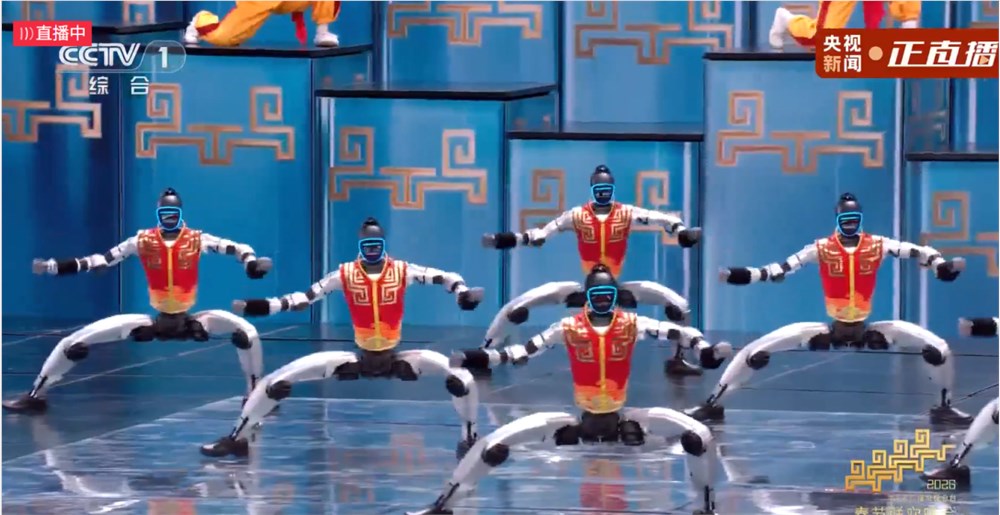
In a move that could transform humanoid robotics, Unitree has released its OmniXtreme motion control architecture to the open-source community. Founded by Wang Xingxing, the company addresses what engineers call "the春晚 problem" - how robots lose precision when attempting complex performances like those seen in China's Spring Festival Gala.

How OmniXtreme Works Its Magic

The secret lies in a clever two-phase approach. First, Scalable Flow-based Pretraining acts like a digital choreographer, teaching robots everything from backflips to street dance moves through generative modeling. Unlike traditional methods that struggle with multiple skills, this technique avoids conflicting instructions by mapping movement paths as velocity fields.

Then comes the real-world test: Actuation-Aware Post-Training. Here's where physics enters the dance studio. The system learns each motor's actual capabilities - how fast it can spin, how much power it regenerates - and makes micro-adjustments accordingly. It's like teaching a gymnast to compensate when their muscles tire mid-routine.

Performance That Turns Heads

The numbers speak volumes. On Unitree's G1 hardware:

  • Backflip success rate: 96.36% (most humans can't match that!)
  • Decision speed: 10 milliseconds
    • faster than an eye blink

"This isn't just about flashy moves," explains robotics engineer Dr. Li Mei (not affiliated with Unitree). "That 10ms response time means these robots could navigate unpredictable environments - think disaster zones or crowded sidewalks."

Why Open Source Matters

By sharing OmniXtreme publicly, Unitree invites global collaboration on what they see as robotics' next frontier: general mobility. Instead of programming each skill individually, robots might soon learn movement languages as fluidly as humans master walking and running.

The implications stretch beyond entertainment bots. From elderly care assistants to factory workers that never tire, machines moving with this combination of precision and adaptability could reshape multiple industries.

Key Points:

  • Two-stage training: Combines digital choreography with real-world physics awareness
  • Open-source release: Accelerates industry-wide development of agile robots
  • Proven performance: Near-perfect backflip success at human-reflex speeds
  • Future applications: Potential uses in healthcare, manufacturing, and emergency response

Enjoyed this article?

Subscribe to our newsletter for the latest AI news, product reviews, and project recommendations delivered to your inbox weekly.

Weekly digestFree foreverUnsubscribe anytime

Related Articles

News

Arduino's New Powerhouse: VENTUNO Q Brings Edge AI to Life

Arduino has unveiled its groundbreaking VENTUNO Q single-board computer, packing Qualcomm's Dragonwing processor with an impressive 40 TOPS computing power. This Italian-designed powerhouse marks Arduino's 21st anniversary by bringing generative AI capabilities to edge devices. From smart mirrors to industrial robots, developers now have unprecedented local processing power in their hands.

March 10, 2026
ArduinoEdgeAIQualcomm
News

Tesla Could Pioneer Humanoid AI, Says Musk

Elon Musk predicts Tesla will lead in developing general artificial intelligence for humanoid robots. The billionaire envisions Optimus robots evolving into self-replicating space explorers, powered by AGI breakthroughs. His companies Tesla, xAI and SpaceX may integrate their technologies to achieve this ambitious goal.

March 9, 2026
Artificial IntelligenceTeslaRobotics
News

OpenAI Robotics Chief Quits Over Military AI Concerns

Caitlin Kalinowski, OpenAI's hardware and robotics lead, resigned abruptly this week citing ethical concerns about the company's military partnerships. The former Meta AR glasses developer warned about unchecked surveillance and autonomous weapons in social media posts. Her departure exposes growing tensions within OpenAI as it navigates defense contracts while trying to maintain ethical boundaries.

March 9, 2026
OpenAIAI EthicsMilitary Tech
Xiaomi's CyberOne Robot Shows Off Factory Skills in New Video
News

Xiaomi's CyberOne Robot Shows Off Factory Skills in New Video

Xiaomi has unveiled impressive new capabilities for its third-generation humanoid robot CyberOne, showcasing it working autonomously in an automobile factory for up to three hours. The tech giant recently secured copyright protection for the robotic system, classified as an 'artwork,' along with several related software platforms. This development marks another step forward in China's growing robotics industry.

March 3, 2026
RoboticsArtificialIntelligenceTechInnovation
News

Hyundai Bets Big on AI and Robots with $6.1 Billion Korean Hub

Hyundai Motor Group is making a massive $6.1 billion push into AI and robotics, announcing plans for a cutting-edge innovation hub in South Korea. The project will feature one of the world's largest AI data centers with 50,000 GPUs, a robot factory producing 30,000 units annually, and ambitious hydrogen energy initiatives. This strategic move signals Hyundai's transformation from carmaker to future mobility leader while boosting local jobs and technology development.

March 3, 2026
Artificial IntelligenceRoboticsGreen Technology
China Unveils First-Ever National Standards for Humanoid Robots
News

China Unveils First-Ever National Standards for Humanoid Robots

China has taken a major step in robotics development with the release of its first comprehensive standards system for humanoid robots and embodied intelligence. The framework covers everything from brain-like computing to safety ethics, aiming to address industry challenges like data shortages and fragmented standards. This move could accelerate robot adoption in fields from manufacturing to healthcare, while positioning China as a key player in the global robotics race.

February 28, 2026
RoboticsAIStandardsTechPolicy