
Tencent's Lobster Butler: Your AI's New Security Guard

Tencent Rolls Out Lobster Butler: A Security Shield for Local AI

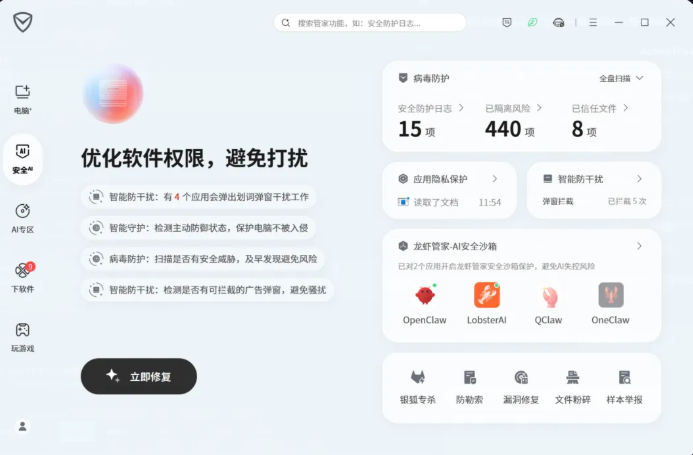
In its latest PC Manager update, Tencent has introduced what might be the most creatively named security feature yet - Lobster Butler. This isn't some aquatic-themed screensaver, but rather a serious attempt to address growing concerns about local AI security.
Image

Why Your AI Needs Protection

As AI assistants become more powerful and integrated into our daily computing, they're also becoming potential targets for exploitation. "We've seen cases where malicious actors try to manipulate AI agents into performing unauthorized actions," explains Tencent's security lead Wang Lei. "Lobster Butler creates what we call a 'secure isolation shrimp room' - essentially putting your AI in protective custody."

The system uses sandboxing technology to strictly control what resources your AI can access. Imagine trying to teach a lobster martial arts - it might wave its claws impressively, but it's not going anywhere dangerous. That's essentially how Lobster Butler contains potential threats.

Seeing Through the Shell

One of the standout features is its transparent approach to privacy management:

  • Visual logs show exactly when and why an AI accesses sensitive permissions
  • Clear indicators distinguish between user-initiated actions and automated processes
  • Real-time monitoring alerts users to suspicious behavior patterns

"It's about giving control back to users," says Wang. "You shouldn't have to choose between using helpful AI tools and protecting your personal data."

Image

The system doesn't just watch passively either. It actively intercepts questionable commands - whether that's an unexpected payment request or attempts to modify system files. Think of it as having a bouncer for your computer who specializes in spotting shady AI behavior.

What This Means Going Forward

As more companies race to integrate powerful AI into consumer products, security often plays second fiddle to flashy features. Tencent's move suggests this dynamic might be changing:

  • Sets precedent for built-in local AI protection
  • Could influence industry standards for responsible deployment
  • Shows consumers don't have to sacrifice safety for convenience

The lobster theme might seem whimsical, but the underlying technology addresses very real concerns in our increasingly AI-assisted digital lives.

Key Points:

  • Sandbox Security: Creates isolated environment for local AI operations
  • Permission Transparency: Clear visual tracking of sensitive data access
  • Active Protection: Blocks suspicious commands in real-time
  • Industry First: Represents new approach to consumer-grade AI safety

Enjoyed this article?

Subscribe to our newsletter for the latest AI news, product reviews, and project recommendations delivered to your inbox weekly.

Weekly digestFree foreverUnsubscribe anytime

Related Articles

Volcano Engine Fortifies AI Assistants with New Security Shield
News

Volcano Engine Fortifies AI Assistants with New Security Shield

ByteDance's Volcano Engine has unveiled a major security upgrade for its ArkClaw AI assistant platform. The new safeguards tackle vulnerabilities exposed by open-source tools like OpenClaw, implementing cloud-native sandboxing and strict permission controls. This transforms potentially risky AI agents into accountable 'digital employees' with full behavioral tracking - crucial protection as businesses increasingly adopt generative AI.

March 12, 2026
AI SecurityEnterprise TechnologyCloud Computing
360 Group Tackles AI Security Risks with New OpenClaw Guide
News

360 Group Tackles AI Security Risks with New OpenClaw Guide

360 Group has unveiled China's first security guide specifically designed for OpenClaw, addressing critical vulnerabilities in AI agent deployment. The comprehensive framework tackles everything from prompt injection attacks to privilege escalation risks, offering tailored solutions for individual developers and large enterprises alike. This initiative signals a crucial industry shift toward prioritizing security alongside functionality in AI development.

March 11, 2026
AI SecurityOpenClawCybersecurity
Tencent's QClaw Beta: How to Get Your Hands on This Local AI Assistant
News

Tencent's QClaw Beta: How to Get Your Hands on This Local AI Assistant

Tencent has unveiled QClaw, a privacy-focused local AI assistant now in beta testing. Unlike cloud-based alternatives, QClaw processes all data on your device while offering cross-platform support and WeChat integration. Here's how tech enthusiasts can apply for limited beta access before the public release.

March 9, 2026
QClawTencentAI Assistant
Xiaomi's 'Lobster' AI Agent Emerges with Strong Privacy Promise
News

Xiaomi's 'Lobster' AI Agent Emerges with Strong Privacy Promise

Xiaomi has quietly unveiled its experimental AI assistant codenamed 'Lobster,' currently in limited testing. Unlike many competitors, Xiaomi makes a firm commitment: your personal data won't feed its AI training. The mobile-focused agent aims to transform how we interact with our phones through deep contextual understanding and ecosystem integration. While still rough around the edges, Lobster represents Xiaomi's ambitious push into native AI smartphone experiences.

March 6, 2026
XiaomiAI AssistantPrivacy Tech
News

Apple's AI Ambitions Hit Hardware Wall: Could Google Save Siri?

Apple's privacy-first approach to AI is hitting unexpected roadblocks. Reports suggest their custom server chips struggle to power Gemini-enhanced Siri features, forcing tough choices between privacy ideals and performance. With warehouses full of underutilized servers and slow software updates, Apple may turn to an unlikely ally - Google's cloud infrastructure - while racing to develop next-gen AI chips.

March 3, 2026
Apple AIPrivacy TechCloud Computing
Google's AI Crackdown Leaves Email Automation Users in the Cold
News

Google's AI Crackdown Leaves Email Automation Users in the Cold

Google has escalated its battle against AI-powered email automation, with users of tools like OpenClaw reporting complete account suspensions. The tech giant isn't just restricting access to Gmail - entire Google accounts are being wiped out, taking years of stored data with them. Security experts warn that AI agents' unnatural behavior patterns and some users' attempts to bypass paid features have crossed Google's red lines. While developers scramble for solutions, affected users face the harsh reality of permanently lost emails, photos, and documents.

February 25, 2026
GoogleEmail AutomationAI Security