
Robots Get a Sense of Touch: Groundbreaking Dataset Bridges Vision and Feeling

Robots Learn to Feel: Major Leap in Tactile Perception
Image

In what could transform robotics forever, researchers have released Baihu-VTouch, the first large-scale dataset merging visual and tactile data for machines. This isn't just another collection of numbers - it's giving robots something remarkably close to human touch.

What Makes Baihu-VTouch Special?

The dataset captures over 90 million real-world contact samples using sensors that detect minute changes at 120 times per second. Picture this: robotic fingers gently grasping a wine glass while cameras record the interaction from multiple angles - that's the level of detail we're talking about.

"Previous attempts focused on vision or touch separately," explains Dr. Li Wei from the research team. "Baihu-VTouch finally bridges these senses, much like how humans naturally combine sight and touch."

Real-World Applications Coming Soon

The implications are staggering:

  • Precision manufacturing where robots handle fragile components
  • Elder care assistants that can safely help with daily tasks
  • Disaster response bots capable of delicate search-and-rescue operations

Early tests show robots using this data achieve 70% better performance in continuous contact tasks. That means fewer dropped objects and more natural movements.

Behind the Scenes: How They Did It

The team collected data across:

  • Full-size humanoid robots (including the Qinglong model)
  • Wheeled humanoid assistants
  • Handheld smart devices

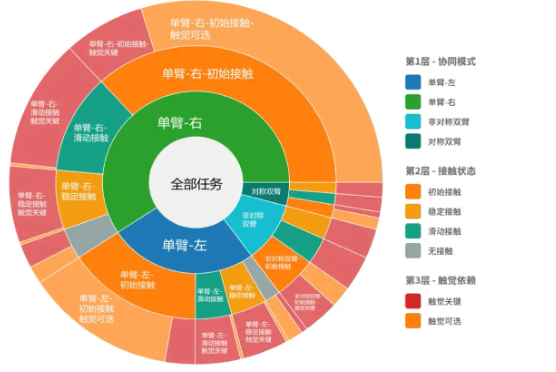
Each recorded not just visual data but precise force measurements and joint positions during hundreds of common tasks.

Key Points:

  • 60,000+ minutes of interaction data captured
  • Covers 260+ tasks across home, industrial, and service settings
  • Sensors track contact at 640×480 resolution, 120 times per second
  • Could enable robots to recover from errors autonomously

Enjoyed this article?

Subscribe to our newsletter for the latest AI news, product reviews, and project recommendations delivered to your inbox weekly.

Weekly digestFree foreverUnsubscribe anytime

Related Articles

News

Google's AI Turns News Reports into Flood Warnings for Vulnerable Regions

Google has developed an innovative flood prediction system by analyzing millions of news articles with its Gemini AI. The technology transforms qualitative reports into quantitative data, creating early warnings for areas lacking traditional weather monitoring. Already implemented in 150 countries, this approach marks a breakthrough in using language models for disaster prevention while addressing global inequality in weather forecasting capabilities.

March 13, 2026
AI innovationdisaster preventionclimate technology
Tencent's WorldCompass Helps AI Models Navigate Complex Commands
News

Tencent's WorldCompass Helps AI Models Navigate Complex Commands

Tencent has open-sourced WorldCompass, a reinforcement learning framework that dramatically improves how AI world models understand and execute complex instructions. This breakthrough solves persistent accuracy issues, boosting performance by over 35% in challenging scenarios. The technology marks a shift from pure pre-training to sophisticated fine-tuning approaches.

March 11, 2026
AI developmentTencentmachine learning
Qualcomm and Arduino Unveil Ventuno Q: A Powerhouse for AI Robotics
News

Qualcomm and Arduino Unveil Ventuno Q: A Powerhouse for AI Robotics

Qualcomm makes its first major move since acquiring Arduino with the launch of Ventuno Q, a cutting-edge development board packing serious AI muscle. Designed for robotics enthusiasts and professionals alike, this hardware promises to bring cloud-level AI processing to your workbench. While pricing remains under wraps, its specs - including a dedicated NPU and industrial-grade processor - suggest Qualcomm means business in the maker market.

March 10, 2026
roboticsedge computingAI hardware
News

Lei Jun's Vision: Self-Driving Cars and Smart Robots Set to Transform Our Future

Xiaomi founder Lei Jun has unveiled ambitious tech proposals at China's Two Sessions, predicting 2026 will be a breakthrough year for autonomous vehicles and intelligent robots. His plans call for updated safety standards as cars become smarter, while humanoid robots could soon join factory workforces. These innovations promise to reshape industries and daily life, though challenges remain in bringing them to mass production.

March 9, 2026
autonomous vehiclesartificial intelligencerobotics
News

Peking University and OceanBase Break New Ground in Long Video Search Technology

Researchers from Peking University and OceanBase have developed LoVR, a groundbreaking benchmark for long video retrieval that tackles key industry challenges. Accepted by WWW 2026, this innovation enables precise searches across entire videos or specific segments through advanced semantic analysis. The system features over 40,000 finely annotated clips and addresses real-world problems like semantic drift in lengthy content.

March 2, 2026
video retrievalAI researchmultimodal technology
Anthropic Bolsters AI Ambitions with Vercept Acquisition
News

Anthropic Bolsters AI Ambitions with Vercept Acquisition

AI powerhouse Anthropic has snapped up Seattle-based startup Vercept in a strategic move to strengthen its Claude Code ecosystem. While some founders transition to Anthropic, others voice disappointment over the product shutdown. The deal highlights the fierce competition for top AI talent as major players race to dominate emerging technologies.

February 26, 2026
AnthropicAI acquisitionsdeveloper tools