
Perplexity's BrowseSafe Shields AI Browsers from Hidden Web Threats

Perplexity Fortifies AI Browsers Against Web-Based Attacks

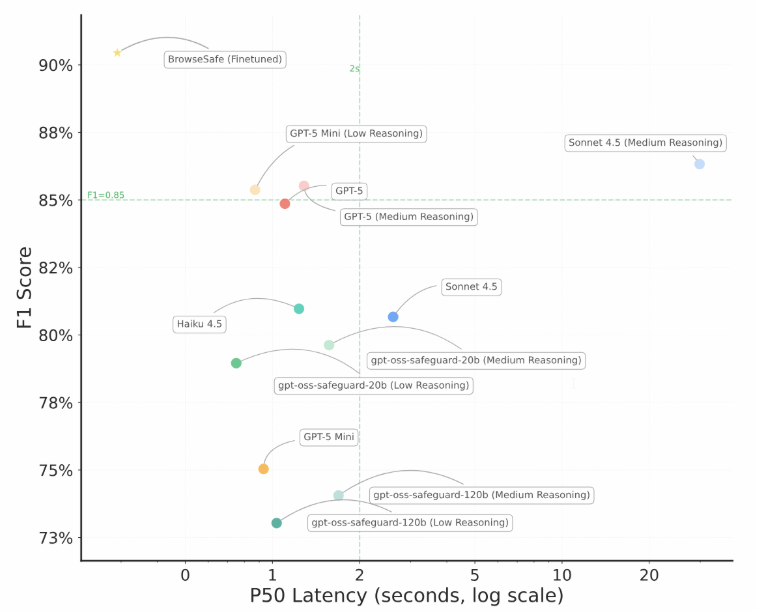
In a move to secure the growing ecosystem of AI-powered browsers, Perplexity has launched BrowseSafe - a defense system specifically designed to protect automated agents from hidden web threats. The technology boasts an impressive 91% success rate in catching prompt injection attacks, significantly outperforming existing solutions like PromptGuard-2 (35%) and even advanced models like GPT-5 (85%).
Image

Why AI Browsers Need Special Protection

The rise of AI browser agents has opened new frontiers in productivity - and new vulnerabilities. Earlier this year, Perplexity's own Comet browser demonstrated how AI agents could authenticate and interact with sensitive services like banking portals and corporate systems. This powerful access comes with risks: attackers can now plant malicious code within ordinary-looking web pages, tricking agents into revealing confidential data or performing unauthorized actions.

"We're seeing attack methods evolve faster than traditional defenses can keep up," explains a Perplexity security researcher. "Standard benchmarks don't account for the sophisticated ways hackers hide dangerous instructions in today's complex web environments."

Building a Smarter Safety Net

Perplexity's solution analyzes threats across three critical dimensions:

  • Attack type (from direct prompts to subtle social engineering)
  • Injection strategy (how malicious content gets embedded)
  • Language style (including multilingual approaches)

The system particularly focuses on "hard-to-detect" content that appears harmless at first glance but contains dangerous triggers. Using a hybrid architecture that combines speed with deep analysis, BrowseSafe scans pages in real-time without slowing down the browsing experience.

Current Limitations and Future Directions

While effective against most threats, the system shows some gaps:

  • Detection rates drop to 76% for multilingual attacks
  • HTML comments prove easier to scan than visible page elements
  • About 10% of sophisticated attacks still slip through defenses

Perplexity has taken the unusual step of making its benchmark data and research publicly available. "Security is a collective challenge," notes their technical paper. "By sharing our framework, we hope to accelerate industry-wide improvements in AI agent protection."

Key Points:

🔹 91% detection rate surpasses current market solutions
🔹 Specialized protection for AI browser privilege escalation risks
🔹 Three-tier defense combines speed with deep language analysis
🔹 Publicly released benchmarks aim to advance industry standards

Enjoyed this article?

Subscribe to our newsletter for the latest AI news, product reviews, and project recommendations delivered to your inbox weekly.

Weekly digestFree foreverUnsubscribe anytime

Related Articles

AntTech's Lobster Defender: A New Shield for AI Security
News

AntTech's Lobster Defender: A New Shield for AI Security

AntTech has unveiled its OpenClaw Lobster Defender, a cutting-edge antivirus solution designed to protect enterprises from AI-related security threats. The software tackles issues like privilege overreach and malicious inducement, offering real-time risk reporting and compliance scans. Alongside the launch, AntTech introduced a protection plan providing free security calls to early adopters, ensuring businesses can safely harness AI's power without compromising security.

March 19, 2026
AI SecurityAntTechEnterprise Technology
ByteDance rolls out new security toolkit for AI model protection
News

ByteDance rolls out new security toolkit for AI model protection

ByteDance has introduced ByteClaw, a new security tool designed to safeguard internal access to large AI models. The company also released comprehensive guidelines addressing common vulnerabilities like prompt injection and data leaks. These measures aim to balance AI innovation with enterprise-grade security as machine learning tools become more prevalent in corporate environments.

March 18, 2026
AI SecurityByteDanceEnterprise Technology
News

Tech Titans Unite: $12.5M Boost for Open-Source Security

In a rare show of unity, Google, Microsoft, OpenAI and other tech giants have pooled $12.5 million to help the Linux Foundation tackle a growing problem - the flood of unreliable AI-generated security reports overwhelming open-source maintainers. The funding will support efforts to filter out these 'AI garbage reports' while protecting critical open-source infrastructure. This collaboration marks another step in the industry's push to establish shared security standards beyond competitive interests.

March 18, 2026
OpenSourceCybersecurityAI
AI Blind Spot: How Hackers Trick Chatbots with Sneaky Font Tricks
News

AI Blind Spot: How Hackers Trick Chatbots with Sneaky Font Tricks

Security researchers uncovered a clever hack where attackers manipulate fonts and web styling to fool AI assistants like ChatGPT and Copilot. By disguising malicious code as harmless text, they trick these systems into giving dangerous advice. While Microsoft quickly patched the vulnerability in Copilot, other major providers like Google dismissed the threat. This eye-opening discovery reminds us that even advanced AI can be fooled by simple visual tricks.

March 18, 2026
AI SecurityChatGPT VulnerabilitiesCyber Threats
News

NVIDIA's NemoClaw: Armoring AI Agents for the Enterprise

At the 2026 GTC Conference, NVIDIA unveiled NemoClaw, a new platform designed to bring enterprise-grade security to AI agent development. Built on the popular OpenClaw framework, it tackles critical business concerns around privacy and control while maintaining hardware flexibility. As the AI industry shifts from simple chatbots to complex agent systems, NVIDIA's move positions them against competitors like OpenAI in this emerging market space.

March 17, 2026
NVIDIAAI AgentsEnterprise Tech
News

NVIDIA and Cisco Team Up to Secure AI Agents with Open-Source OpenShell

As AI agents move from labs to business systems, security concerns grow. NVIDIA and Cisco have responded by open-sourcing OpenShell, a runtime that creates secure 'sandboxes' for AI agents. Combined with Cisco's AI Defense platform, this solution monitors agent actions while preventing data leaks. The collaboration marks a significant step toward trustworthy enterprise AI automation.

March 17, 2026
AI SecurityEnterprise TechnologyOpen Source