
NVIDIA's Rubin AI Platform Debuts with Stunning 5x Performance Leap

NVIDIA Raises the Bar with Revolutionary Rubin AI Platform

At this year's GTC conference, all eyes were on Jensen Huang as the NVIDIA CEO pulled back the curtain on their most ambitious project yet - the Rubin AI acceleration platform. Named after pioneering astronomer Vera Rubin, this isn't just another chip upgrade; it represents NVIDIA's full transformation into an AI infrastructure powerhouse.
Image

Engineering Marvel: Smaller, Faster, Smarter

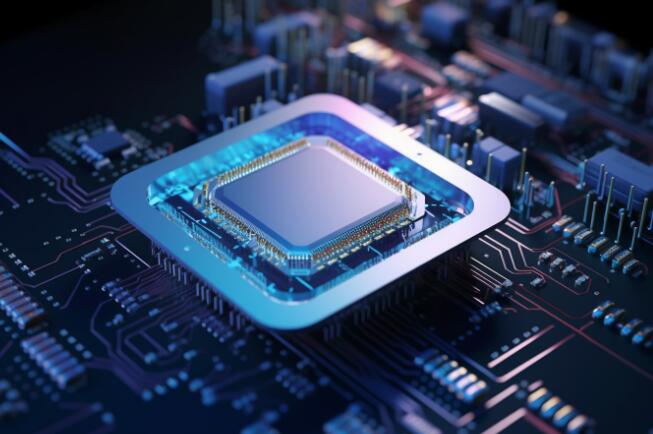
The Rubin GPU shatters previous benchmarks by packing 36 billion transistors into TSMC's state-of-the-art 3nm architecture. That's over 60% more than Blackwell could manage - think of squeezing an entire data center's worth of computing into a space no bigger than your fingernail.

What really sets Rubin apart is its innovative "six-chip collaboration" approach. Imagine an orchestra where every instrument plays in perfect harmony:

  • The new Vera CPU conducts operations
  • Dual Rubin GPUs handle the heavy lifting
  • A massive 288GB of HBM4 memory keeps everything flowing at lightning speeds

The result? A staggering 22TB/s bandwidth that makes previous systems look like dial-up internet.

Performance That Turns Heads

Numbers tell part of the story:

  • 50 PFLOPS of FP4 inference power (5x Blackwell)
  • 10x improvement in performance per watt
  • Training times for complex MoE models slashed dramatically

But what does this mean for developers and researchers? Suddenly, projects that required weeks of computation can finish in days. AI models that were previously theoretical become practical. The entire field just got a massive productivity boost.

The Future Is Already Here - And It's Called Rubin Ultra

Never one to rest on its laurels, NVIDIA teased Rubin Ultra coming in 2027. Early specs suggest we could see:

  • NVL576 configuration
  • Up to 15 ExaFLOPS inference power
  • Even greater efficiency gains

The race for AI supremacy continues, and with Rubin, NVIDIA has just lapped the competition.

Key Points:

  • Process Node: TSMC 3nm with 36 billion transistors
  • Performance: 5x Blackwell at FP4 inference (50 PFLOPS)
  • Memory: 288GB HBM4 at 22TB/s bandwidth
  • Efficiency: 10x better performance per watt
  • Roadmap: Rubin Ultra coming 2027 with NVL576 configuration

Enjoyed this article?

Subscribe to our newsletter for the latest AI news, product reviews, and project recommendations delivered to your inbox weekly.

Weekly digestFree foreverUnsubscribe anytime

Related Articles

NVIDIA's Nemotron 3 Series: AI Gets a Fivefold Speed Boost
News

NVIDIA's Nemotron 3 Series: AI Gets a Fivefold Speed Boost

At the 2026 GTC conference, NVIDIA unveiled its Nemotron 3 series of open-source AI models, with the flagship Ultra version delivering five times faster processing. The release also includes innovative multimodal tools for audio-visual integration and real-time conversation, plus breakthroughs in robotics and medical research. Major industry players are already adopting these cutting-edge technologies.

March 17, 2026
AI innovationNVIDIAmachine learning
News

NVIDIA's DLSS 5 Brings AI-Powered Hollywood Graphics to Gaming

NVIDIA has unveiled DLSS 5, marking a revolutionary shift in real-time graphics rendering. By harnessing neural networks, games can now achieve Hollywood-quality lighting and textures without crushing performance. CEO Jensen Huang calls this graphics' 'GPT moment,' while the company eyes trillion-dollar revenue from its Blackwell and Rubin chips. Major automakers are also adopting NVIDIA's tech for next-gen autonomous vehicles.

March 17, 2026
NVIDIAAI graphicsDLSS5
News

NVIDIA Takes AI to Space with New Orbital Computing Platform

NVIDIA has launched its groundbreaking Space Computing Service at the 2026 GTC conference, bringing advanced AI capabilities directly to low Earth orbit. The initiative features specialized hardware including the powerful Space-1 Vera Rubin Module and edge computing platforms IGX Thor and Jetson Orin. This technological leap transforms satellites from simple relays into intelligent orbital data centers capable of real-time decision making - potentially revolutionizing space operations and geospatial analysis.

March 17, 2026
space technologyAI innovationedge computing
NVIDIA's NemoClaw Brings One-Click AI to OpenClaw Ecosystem
News

NVIDIA's NemoClaw Brings One-Click AI to OpenClaw Ecosystem

NVIDIA has unveiled NemoClaw, a game-changing toolkit that simplifies AI agent deployment for the OpenClaw platform. With just one command, users can now install powerful AI models like Nemotron and OpenShell runtime. The solution addresses critical privacy concerns with isolated sandboxes and hybrid model strategies while supporting everything from consumer devices to enterprise supercomputers. NVIDIA CEO Jensen Huang calls it the 'AI operating system' of our era.

March 17, 2026
AINVIDIAOpenClaw
News

Tesla Takes Charge: Musk Launches In-House AI Chip Production

Tesla is making a bold move into semiconductor manufacturing as Elon Musk announces the launch of Terafab, the company's own AI chip production facility. With suppliers struggling to meet Tesla's growing demands and facing delays in next-gen chip production, Musk is taking matters into his own hands. This strategic shift could reshape the autonomous driving landscape while giving Tesla complete control over its AI hardware supply chain.

March 16, 2026
TeslaSemiconductorsAutonomous Driving
Meta Takes on NVIDIA With Powerful New AI Chip
News

Meta Takes on NVIDIA With Powerful New AI Chip

Meta has unveiled its latest custom AI chip, the MTIA3, marking a bold challenge to NVIDIA's dominance. Designed specifically for Meta's recommendation systems and AI models, the chip boasts superior energy efficiency and compute density compared to general-purpose GPUs. This strategic move aims to reduce costs, optimize hardware-software integration, and secure Meta's AI future amid global chip supply uncertainties.

March 12, 2026
AI chipsMetaNVIDIA