
NVIDIA's Alpamayo Platform Brings Human-Like Thinking to Self-Driving Cars

NVIDIA Takes Autonomous Driving to New Heights with Alpamayo Platform

Image

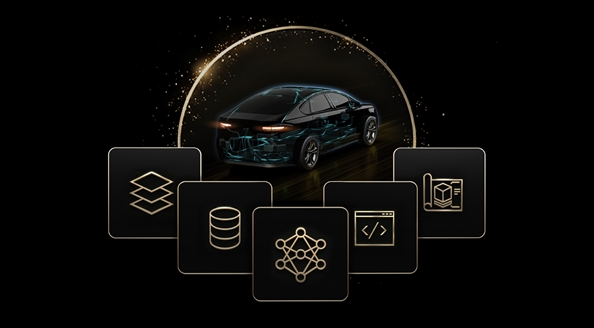
The future of self-driving cars just got smarter. At CES 2026, NVIDIA CEO Jensen Huang introduced Alpamayo, an open-source AI platform that could revolutionize how autonomous vehicles navigate our roads. Unlike traditional systems that rely on pre-programmed responses, Alpamayo enables cars to think through problems much like humans do.

The Brain Behind the Wheel

At the heart of this innovation lies Alpamayo1 - a massive 10-billion parameter model using vision-language-action (VLA) technology. Imagine approaching an intersection where the traffic lights aren't working. Most current systems would freeze or make risky guesses. But with Alpamayo1, the vehicle analyzes the situation, considers multiple solutions, and chooses the safest path forward - all without specific training for this exact scenario.

"This isn't just about better sensors or faster processing," explained Ali Kanai, NVIDIA's VP of Automotive. "We're giving vehicles the ability to break down complex situations and explain their reasoning." That means your self-driving car could theoretically tell you why it's slowing down before you even notice potential hazards ahead.
Image

Fueling Innovation Across the Industry

NVIDIA isn't keeping this technology locked away. The company has already made Alpamayo1's code available on Hugging Face, inviting developers worldwide to experiment and build upon it. They've also released:

  • A massive cross-border driving dataset covering 1,727 hours of real-world conditions from 25 countries
  • The AlpaSim simulation framework for safe testing in virtual environments
  • Tools for creating lightweight versions tailored to different vehicle types

The timing couldn't be better. With the first NVIDIA-powered autonomous cars expected on U.S. roads this quarter, these new tools could help accelerate adoption while addressing lingering safety concerns.

Key Points:

  • Human-like reasoning: Alpamayo enables autonomous vehicles to handle novel situations without specific training
  • Transparent decision-making: Systems can explain their actions and thought processes
  • Developer-friendly: Open-source code and extensive datasets lower barriers for innovation
  • Global perspective: Training data includes diverse driving conditions from over 2,500 cities worldwide
  • Coming soon: First commercial applications expected within months

Enjoyed this article?

Subscribe to our newsletter for the latest AI news, product reviews, and project recommendations delivered to your inbox weekly.

Weekly digestFree foreverUnsubscribe anytime

Related Articles

PixVerse R1 Brings Virtual Worlds to Life with Real-Time AI Magic
News

PixVerse R1 Brings Virtual Worlds to Life with Real-Time AI Magic

Aishikeji's groundbreaking PixVerse R1 shatters boundaries between virtual and real worlds. This revolutionary model blends three cutting-edge technologies to create interactive digital environments that respond instantly to user input. From gaming worlds that breathe to movies you can influence, PixVerse opens doors for creators everywhere.

January 14, 2026
AI innovationvirtual realityinteractive media
How AI is Transforming Live Streaming with Virtual Reality
News

How AI is Transforming Live Streaming with Virtual Reality

OTO Electronics' subsidiary Chuanxiang Shuwei is revolutionizing live streaming by blending AI with XR technology. Their MetaBox solutions help brands create immersive virtual experiences, breaking content monotony while boosting engagement. With over 100 major clients and record-breaking results, they're proving this tech's commercial potential extends far beyond traditional broadcasting.

January 14, 2026
AI innovationvirtual productionlive streaming
News

Shanghai's Maifushi Climbs to Top Five in National AI Rankings

Shanghai-based Maifushi has secured fourth place in China's prestigious 'Top 100 AI Agents of 2025' list with its innovative Smart Body Mid-Platform 3.0. The Jing'an district company stands out among tech giants by solving industry pain points through no-code AI solutions that empower businesses across retail, manufacturing and supply chains. Their achievement signals a shift toward practical AI applications that drive real-world efficiency.

January 14, 2026
AI innovationShanghai techenterprise automation
News

South Korea secures priority access to NVIDIA's cutting-edge AI chips

At CES 2026, South Korean officials announced NVIDIA's commitment to prioritize delivery of next-generation Vera Rubin GPUs to the country. This strategic move comes as part of a broader partnership that includes supplying up to 260,000 GPUs for South Korea's AI infrastructure development. Officials emphasized how securing advanced chip technology early could give Korean tech firms a crucial edge in global AI competition.

January 13, 2026
NVIDIAArtificial IntelligenceTech Partnerships
Qiongche's Pocket-Sized Revolution: How Your Phone Could Help Train Future Robots
News

Qiongche's Pocket-Sized Revolution: How Your Phone Could Help Train Future Robots

Tech innovator Qiongche Intelligence has unveiled 'RoboPocket,' a game-changing device that turns everyday smartphone users into data collectors for AI training. This pocket-sized solution breaks down traditional lab barriers, allowing high-quality real-world data to be gathered anywhere, anytime. Experts say this marks a significant shift toward more practical, accessible robot development.

January 12, 2026
AI innovationcrowdsourced datarobotics development
News

Motional shifts gears with AI-powered driverless taxis coming to Vegas

After facing setbacks in its autonomous driving ambitions, Motional is pivoting to an AI-first strategy. The Hyundai-Aptiv joint venture plans to launch fully driverless taxis in Las Vegas by 2026, following employee trials later this year. CEO Laura Major reveals how new machine learning approaches aim to make the technology more adaptable and cost-effective.

January 12, 2026
autonomous vehiclesartificial intelligencefuture mobility