
Northeastern University's Translation Model Bridges Global Language Gaps

Northeastern University Breaks New Ground in Multilingual AI Translation

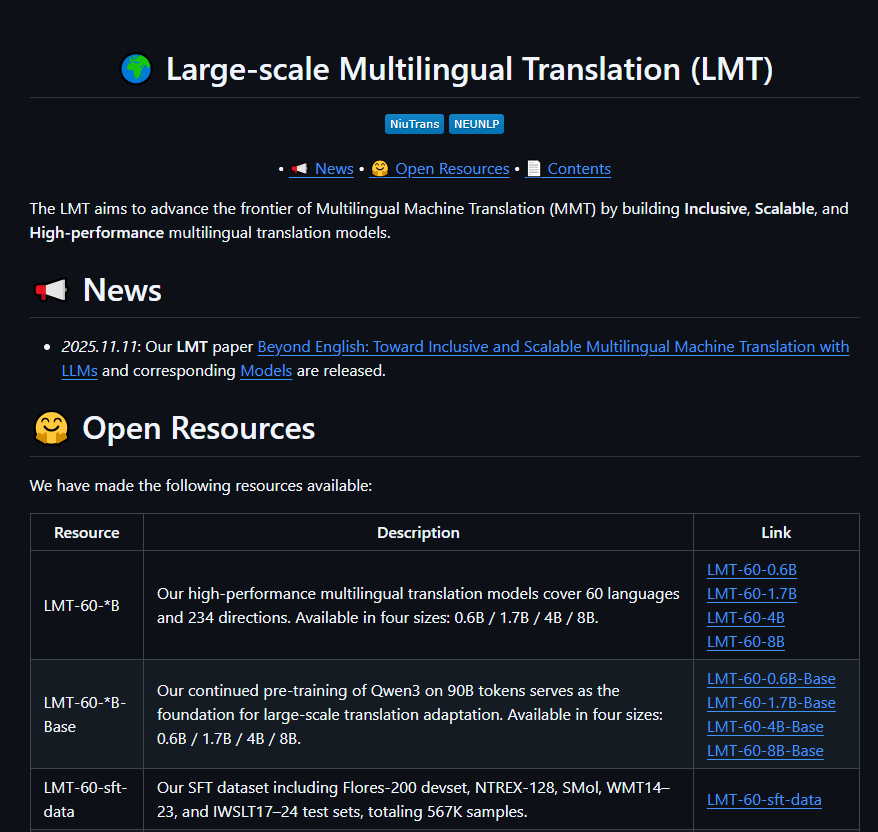
The world just became a little smaller thanks to Northeastern University's latest breakthrough. Their NiuTrans.LMT translation model now bridges 60 languages across an impressive 234 translation directions - and it's doing so while challenging traditional approaches.
Image

Rethinking Translation Architecture

Most translation models route everything through English, creating what researchers call "meaning potholes" - places where nuance gets lost in multiple translations. NiuTrans.LMT takes a different path with its Chinese-English dual-center design. This means cleaner translations between Chinese and 58 other languages, plus English and 59 others.

"Imagine trying to explain a Tibetan poem to someone in Ethiopia," says lead researcher Dr. Li Wei. "Previously, that might go Tibetan→English→Amharic with meaning leaking at each step. Now it's direct."
Image

Bringing Marginalized Languages Into the Digital Age

The team categorized languages into three tiers:

  • 13 high-resource languages (French, Arabic, etc.): Human-level fluency
  • 18 medium-resource languages (Hindi, Finnish): Strong technical accuracy
  • 29 low-resource languages (Tibetan, Swahili): Now moving from "untranslatable" to practical use

The model achieved this through innovative training:

  1. Continued pre-training: Balanced learning across 90 billion multilingual tokens
  2. Supervised fine-tuning: Refined using premium parallel texts covering 117 directions

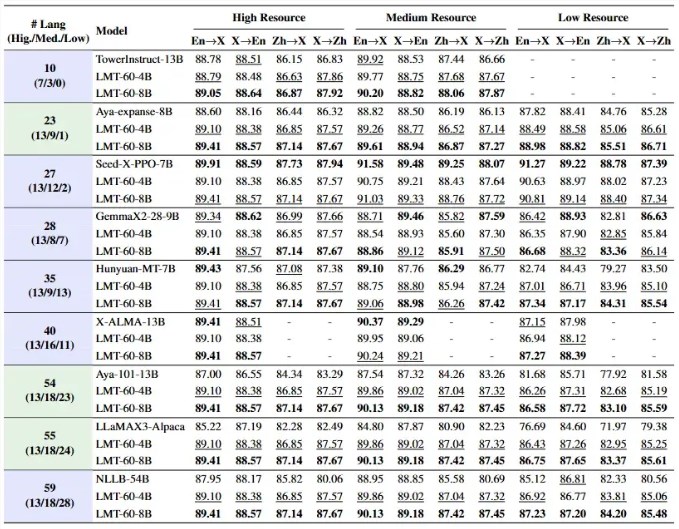
The results? Top rankings on the FLORES-200 benchmark among open-source models.

Scalable Solutions for Every Need

Understanding that one size doesn't fit all, the team released four versions: | Version | Best For | |---------|----------| | 0.6B | Mobile devices | | 1.7B | Standard computers | | 4B | Professional use | | 8B | Enterprise-grade precision | All versions are available free on GitHub and Hugging Face.

More Than Technology - A Cultural Bridge

This isn't just about bits and algorithms. When an Ethiopian farmer can read Tibetan poetry accurately translated, or Nordic scholars can study Swahili proverbs without distortion, we're preserving cultural heritage digitally.

The project represents Northeastern University's commitment to what Dr. Li calls "technological democracy" - making advanced AI accessible globally rather than keeping it locked in tech hubs.

Key Points:

  • Supports direct translation between Chinese/English and 58/59 other languages respectively
  • Special focus on previously underserved languages like Tibetan and Amharic
  • Four scalable versions available open-source
  • Outperforms competitors on FLORES-200 benchmark
  • Represents significant progress toward global language equality

Enjoyed this article?

Subscribe to our newsletter for the latest AI news, product reviews, and project recommendations delivered to your inbox weekly.

Weekly digestFree foreverUnsubscribe anytime

Related Articles

Tencent's new translation model shines on smartphones
News

Tencent's new translation model shines on smartphones

Tencent has unveiled version 1.5 of its open-source Hunyuan translation model, packing impressive capabilities into surprisingly small packages. The standout 1.8B variant runs smoothly on smartphones with just 1GB memory, outperforming many commercial alternatives while supporting 33 languages and multiple Chinese dialects. What makes it special? A clever 'teacher-student' system where larger models train smaller ones in real-time.

December 30, 2025
AI translationTencentedge computing
AI in 2025: How Translation, Search and Browsers Got Smarter
News

AI in 2025: How Translation, Search and Browsers Got Smarter

The AI landscape is transforming how we interact with technology daily. Translation tools now understand context and tone, search engines deliver answers instead of links, and browsers have evolved into full-fledged digital assistants. These innovations aren't just changing tech - they're reshaping how we work and communicate.

December 30, 2025
AI translationsmart searchdigital assistants
News

Google's New Translation Tech Lets Headphones Speak in Any Language

Google Translate just got a game-changing upgrade. Now your everyday headphones can deliver real-time translations while preserving the speaker's original voice - tone, accent and all. Powered by Gemini AI, this beta feature transforms how we experience foreign languages, whether you're traveling abroad or watching international content. Currently testing on Android in select countries, it supports over 70 languages and works with most headphones.

December 15, 2025
Google TranslateAI translationlanguage technology
Meta's New AI Speaks 1600 Languages - Including Ones You've Never Heard Of
News

Meta's New AI Speaks 1600 Languages - Including Ones You've Never Heard Of

Meta has shattered language barriers with its groundbreaking Omnilingual ASR system, bringing speech recognition to 1,600 languages - many spoken by small communities previously ignored by tech. The system achieves impressively low error rates and can learn new languages from just a few audio samples. By open-sourcing the technology and collaborating with indigenous communities, Meta is helping preserve linguistic diversity while giving marginalized groups access to voice-enabled AI.

November 12, 2025
speech recognitionAI ethicslanguage preservation
Meta's Speech Tech Breakthrough: Now Understanding 1600 Languages
News

Meta's Speech Tech Breakthrough: Now Understanding 1600 Languages

Meta's FAIR team has unveiled Omnilingual ASR, a groundbreaking speech recognition system that supports over 1600 languages - including 500 never before covered by AI. This open-source technology achieves impressive accuracy even with limited training data, offering new possibilities for global communication. The release includes extensive datasets to help developers adapt the system for local needs worldwide.

November 11, 2025
speech recognitionAI accessibilitymultilingual technology
News

Translation Schools Close Doors as AI Reshapes Industry

Two prestigious translation programs are shutting down as artificial intelligence transforms the profession. The Monterey Institute of International Studies, often called the 'Harvard of Translation,' will close its campus programs in 2027 amid plunging enrollment. Meanwhile, AI translation now completes work nine times faster at just 10% of traditional costs, leaving many students worried about their career prospects.

November 11, 2025
AI translationhigher educationworkforce disruption