
NeurIPS Conference Rocked by Fake Citation Scandal

NeurIPS Conference Faces Credibility Crisis Over Fake Citations

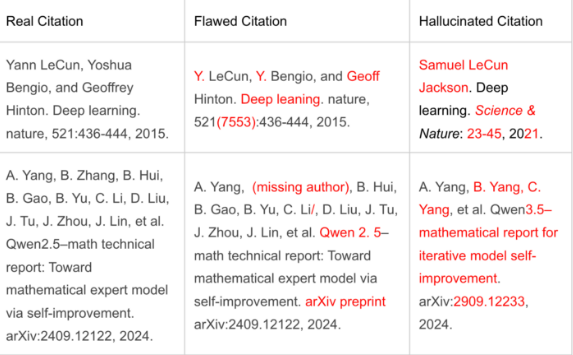
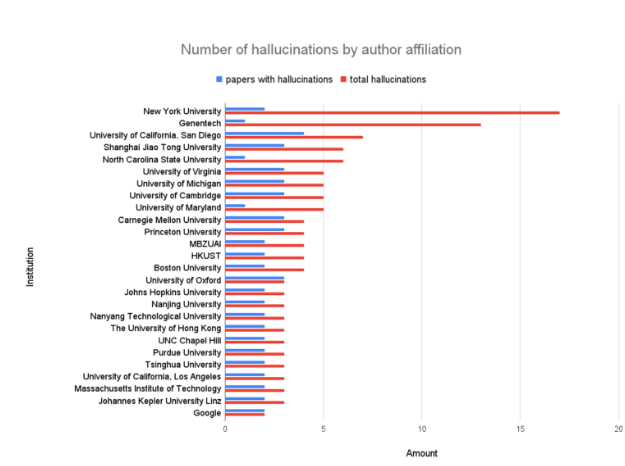
In a scandal shaking the artificial intelligence research community, the prestigious NeurIPS conference has been caught up in a widespread case of citation fraud. AI detection firm GPTZero uncovered that 51 accepted papers contained at least 100 fabricated references between them - complete with fictional authors and bogus publication details.
Image

The 'Vibe Citing' Phenomenon

Researchers have dubbed this troubling trend "vibe citing" - where authors include references that look legitimate but are completely fabricated. Some papers listed non-existent authors like "John Doe," while others cited papers with clearly fake arXiv identifiers (such as arXiv:2305.XXXX). These phantom citations slipped past peer review despite their obvious flaws.

The problem appears concentrated among submissions from top-tier institutions, including New York University and tech giants like Google. "It's particularly concerning because these are papers we'd expect to meet the highest standards," said a source familiar with the investigation.
Image

A System Under Pressure

The scandal reveals deeper cracks in academic publishing's foundation. NeurIPS submissions have skyrocketed from 9,467 in 2020 to 21,575 this year - a staggering 220% increase. This deluge forced organizers to recruit many inexperienced reviewers just to handle the volume.

Some reviewers reportedly cut corners by using AI tools instead of carefully reading submissions. "When you're expected to review dozens of complex papers in weeks, the temptation to take shortcuts becomes overwhelming," explained one anonymous reviewer.

Consequences and Reforms

NeurIPS has responded by declaring fabricated citations grounds for paper rejection or withdrawal. But the damage to trust may be harder to repair in a field where citations serve as academic currency.

The incident raises tough questions about how to maintain quality control as AI research expands exponentially. With preprint servers and conferences flooded with submissions, traditional peer review systems appear increasingly strained.

Key Points:

  • 51 papers at NeurIPS contained 100+ fake citations
  • Fabrications included fake authors and invalid publication IDs
  • Submissions more than doubled since 2020, overwhelming reviewers
  • Conference organizers now treating fake citations as grounds for rejection
  • Scandal highlights growing pains in AI research publishing

Enjoyed this article?

Subscribe to our newsletter for the latest AI news, product reviews, and project recommendations delivered to your inbox weekly.

Weekly digestFree foreverUnsubscribe anytime

Related Articles

News

Google's Gemini 3 Takes AI Reasoning to New Scientific Heights

Google has unveiled Gemini 3 Deep Think, marking a significant leap in AI capabilities beyond everyday conversations. This specialized model tackles complex scientific problems with Olympiad-level reasoning skills, scoring impressively on mathematical and programming challenges. Available now for select researchers and Google AI Ultra subscribers, it promises to transform from benchmark champion to actual lab partner.

February 13, 2026
AI ResearchMachine LearningScientific Computing
News

Apple's Secret Sauce: How a Tuned Open-Source Model Outperformed GPT-5 in UI Design

Apple's research team has achieved a surprising breakthrough in AI-assisted UI development. By collaborating with 21 design experts to provide targeted feedback through sketches and code modifications, they've demonstrated that quality trumps quantity in AI training. Their fine-tuned Qwen3-Coder model, despite its smaller size, now outperforms GPT-5 in generating app interfaces - proving that expert human insight remains invaluable in the age of artificial intelligence.

February 6, 2026
AI ResearchUI DevelopmentMachine Learning
News

Tencent's AI Push Gains Momentum as Top Scientist Tianyu Peng Joins Hunyuan Team

Tencent has made another strategic hire in its AI talent race, bringing on Tianyu Peng as Chief Research Scientist for its Hunyuan multimodal team. The Tsinghua PhD and former Sea AI Lab researcher will focus on advancing reinforcement learning capabilities within Tencent's flagship AI model. This move signals Tencent's continued commitment to competing at the forefront of multimodal AI development.

February 3, 2026
TencentAI ResearchReinforcement Learning
News

AI Luminary Peng Tianyu Takes Helm at Tencent Hunyuan's Multimodal Research

Peng Tianyu, a rising star in AI research with deep roots at Tsinghua University, has joined Tencent's Hunyuan division as Chief Research Scientist. The machine learning expert will spearhead advancements in multimodal reinforcement learning, blending visual and language AI capabilities. With an impressive track record that includes prestigious awards and publications at top conferences, Peng's move signals Tencent's commitment to pushing boundaries in generative AI technologies.

January 30, 2026
AI ResearchTencent HunyuanMultimodal Learning
Tsinghua AI Whiz Joins Tencent to Supercharge Multimodal Learning
News

Tsinghua AI Whiz Joins Tencent to Supercharge Multimodal Learning

Tencent's AI ambitions get a major boost as Peng Tianyu, a rising star in machine learning from Tsinghua University, joins their Tongyi team. The 31-year-old prodigy brings expertise in reinforcement learning and multimodal systems, fresh from his stint at Sea AI Lab in Singapore. This marks another strategic hire for Tencent following their recent acquisition of an OpenAI researcher.

January 30, 2026
TencentAI ResearchMachine Learning
News

AI's Scientific Leap: Why 2026 Could Change Research Forever

OpenAI's Kevin Weil predicts AI will revolutionize scientific research by 2026, with GPT-5.2 already scoring higher than human experts in advanced knowledge tests. The focus shifts from AI as all-knowing oracle to humble research partner, helping scientists spot connections they might miss.

January 28, 2026
AI ResearchScientific BreakthroughsGPT-5