
MiniMax posts strong first-year results with $79M revenue

MiniMax Delivers Strong First-Year Performance Amid Challenges

Shanghai-based artificial intelligence company MiniMax (Shanghai Xiyu Technology) unveiled its inaugural annual report on March 2, 2026, showcasing remarkable growth tempered by significant financial complexities.

Financial Highlights Show Rapid Expansion

The numbers tell a story of explosive growth:

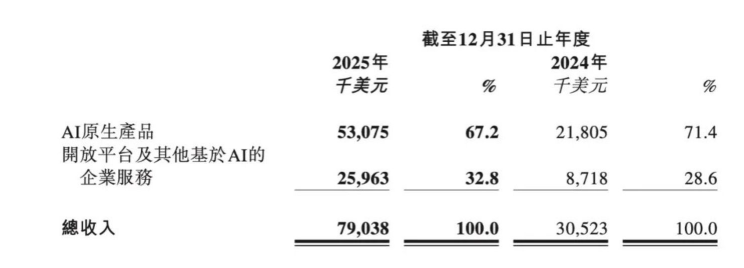
  • Revenue: $79.04 million (+158.9% year-over-year)
  • Gross margin: Improved to 25.4% (+13.2 percentage points)
  • Net loss: $1.87 billion (primarily non-cash valuation adjustments)
  • Adjusted loss: $251 million (excluding special items)

What makes these figures particularly noteworthy? Over 70% of MiniMax's revenue originates from international markets - an unusual achievement for a Chinese tech startup.
Image

Behind the Numbers: Reality vs Appearance

The staggering $1.87 billion loss requires context. This primarily reflects accounting treatment of pre-IPO valuation surges rather than operational performance. In fact, operational metrics show encouraging signs:

  • Research and development costs grew slower than revenue
  • Sales expenses dropped 40.3% despite doubling sales
  • The company appears to be entering a more efficient growth phase

Competitive Edge: Cost Leadership Meets Global Ambition

MiniMax's strategy revolves around founder Yan Junjie's formula: "Intelligence Density × Token Throughput." This approach delivers tangible advantages:

Technical Performance

The M2.5 model scored 80.2% on SWE-Bench programming evaluations - nearly matching Claude Opus4.6's 80.8%. But the real differentiator comes in pricing:

  • Input costs: Just $0.3 per million tokens
  • Roughly 1/20th the price of Claude series models

The affordability advantage fueled explosive adoption - daily token consumption surged sixfold in February 2026 alone.

Global Footprint

The company defies conventional wisdom about Chinese tech firms:

  • International markets contribute 73% of total revenue
  • Talkie app boasts 236 million users across 200+ countries This global traction helps transform AI interactions into valuable digital assets worldwide.

Challenges Ahead: Lawsuits and Valuation Questions

The road forward isn't without obstacles:

The company faces a potentially costly copyright lawsuit from Hollywood studios Disney, Warner Bros., and Universal seeking $75 million in damages related to its SeaBull AI product.

The Hong Kong-listed firm carries substantial market expectations with its peak valuation exceeding HK$300 billion ($38 billion). Investors debate whether this reflects genuine potential or speculative excess. Yet MiniMax enjoys scarcity value as one of few publicly traded pure-play AI model companies globally. If it can convert current cost advantages into enduring ecosystem positioning, today's valuation might someday look modest.

Enjoyed this article?

Subscribe to our newsletter for the latest AI news, product reviews, and project recommendations delivered to your inbox weekly.

Weekly digestFree foreverUnsubscribe anytime

Related Articles

Meituan's Wang Xing: AI's Next Frontier Lies in Digitizing the Real World
News

Meituan's Wang Xing: AI's Next Frontier Lies in Digitizing the Real World

At Meituan's annual strategy meeting, CEO Wang Xing made waves by declaring that true AI transformation requires digitizing the physical world - not just boosting intelligence. The Chinese tech giant has already put theory into practice with its new 'Wen Xiao Tuan' AI search tool, marking a shift from generic AI to specialized industry applications. As companies race to integrate AI, Meituan's approach suggests the next battleground will be real-world implementation rather than theoretical capabilities.

March 13, 2026
Artificial IntelligenceDigital TransformationChinese Tech
News

Zeekr Unveils 'Digital Engineer' AI Agents at March Launch Event

Chinese automaker Zeekr is gearing up to showcase its breakthrough 'Super Intelligent Agent' system on March 18th. Built on Alibaba's Qwen model, this network of over 30 specialized AI agents promises to revolutionize smart mobility by handling everything from solution selection to customer service. The company says these 'Digital Engineers' will work collaboratively like a well-oiled team, bringing unprecedented efficiency to vehicle technology.

March 13, 2026
Electric VehiclesArtificial IntelligenceSmart Mobility
News

Anthropic Bets $100M to Put Claude AI in Every Office

AI powerhouse Anthropic is making a bold $100 million play to dominate enterprise adoption of its Claude AI. Through its new Claude Partner Network, the company aims to solve businesses' biggest hurdle: integrating AI into existing workflows. With unique multi-cloud availability and developer incentives, Anthropic is positioning itself as OpenAI's strongest competitor in the corporate AI race.

March 13, 2026
Artificial IntelligenceEnterprise TechnologyCloud Computing
News

Alibaba Cloud Joins Mobile AI Race with OpenClaw Launch

Alibaba Cloud has entered the competitive mobile AI space with its OpenClaw 'Lobster' application now available on major app stores. The launch comes just as Tencent updates its rival 'Crayfish' platform, signaling intensified competition among tech giants for dominance in mobile artificial intelligence tools.

March 13, 2026
Artificial IntelligenceCloud ComputingMobile Technology
News

NVIDIA Bets Big: $26 Billion Push Into Open AI Models

NVIDIA is making its boldest move yet beyond chips, pledging $26 billion to develop open AI models. This strategic shift aims to transform the company from hardware provider to full-stack AI powerhouse. Their Nemotron 3 Super model already shows promise, outperforming rivals in benchmarks. The investment signals NVIDIA's ambition to shape the future of AI development while strengthening its ecosystem.

March 12, 2026
NVIDIAAI ModelsOpen Source
Musk's xAI and Tesla Team Up on 'Macrohard' - A Playful Jab at Microsoft with Serious AI Ambitions
News

Musk's xAI and Tesla Team Up on 'Macrohard' - A Playful Jab at Microsoft with Serious AI Ambitions

Elon Musk has unveiled an intriguing collaboration between his companies xAI and Tesla - a dual-brained AI system playfully named 'Macrohard' (a cheeky nod to Microsoft) or 'Digital Optimus'. This innovative project combines xAI's Grok model for strategic thinking with Tesla's real-time response technology, running on surprisingly affordable hardware. Musk claims it could eventually automate entire companies, potentially shaking up the software industry. The system monitors user screens and inputs to react with human-like speed, marking a significant step toward enterprise-level AI automation.

March 12, 2026
Artificial IntelligenceElon MuskTech Innovation