

Microsoft's New Open-Source Voice Model Talks Almost as Fast as You Think
Microsoft's Speech Breakthrough: AI That Keeps Up With Conversation
In a move that caught the open-source community off guard, Microsoft recently unveiled VibeVoice-Realtime-0.5B - a text-to-speech model so responsive it feels like talking to a person rather than software. 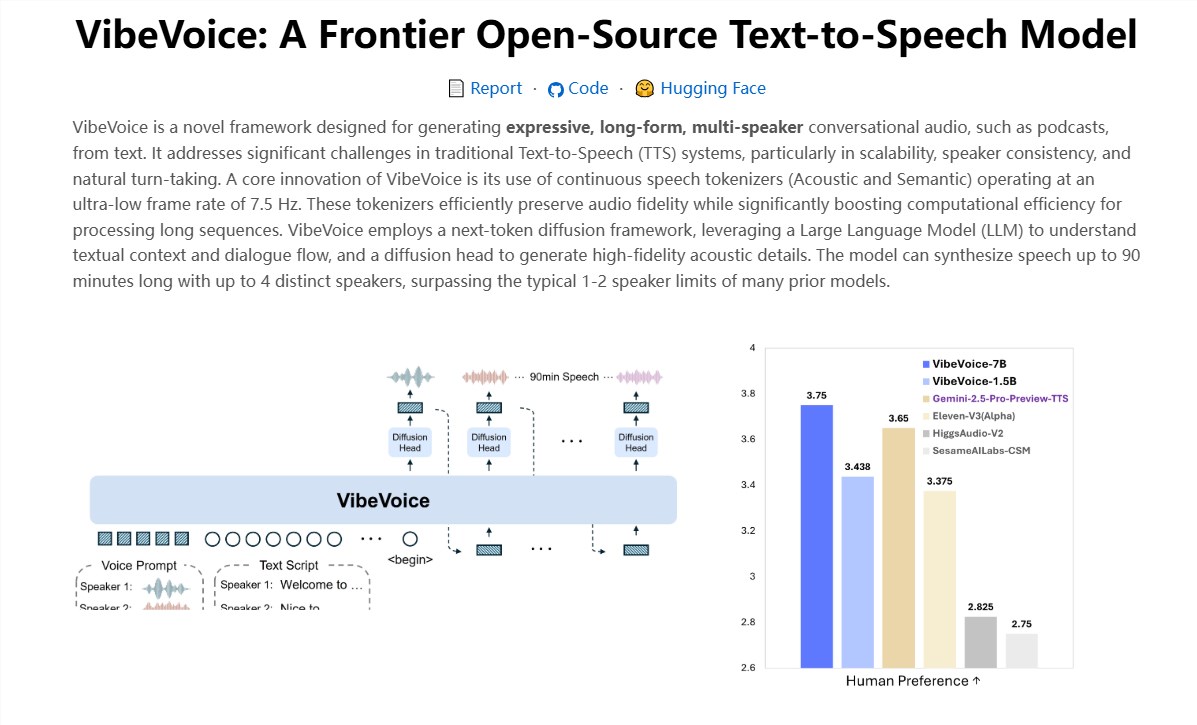
Blink-and-you'll-miss-it speed
What sets this model apart is its jaw-dropping 300ms response time. To put that in perspective: while traditional TTS systems make you wait 1-3 seconds (enough time to second-guess what you just typed), VibeVoice starts speaking before you've finished your thought. Early testers describe the experience as "uncanny" - like having an ultra-fast reader looking over your shoulder.
Marathon performer
Don't let its compact size fool you (at just 0.5 billion parameters). This workhorse can generate 90 minutes of flawless audio without the robotic stutters or unnatural pauses that plague many voice systems. Community members have already stress-tested it with entire chapters of dense sci-fi novels like "The Three-Body Problem," with the model maintaining perfect composure throughout. 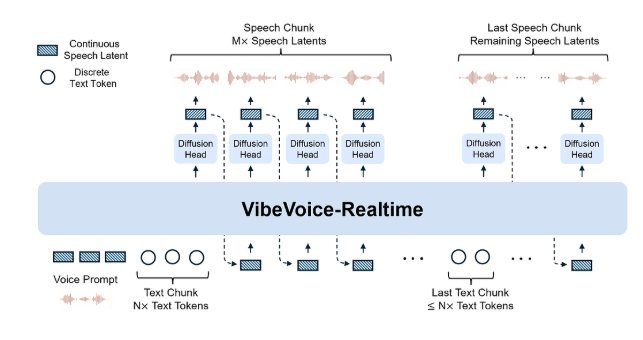
Party of four
Where VibeVoice truly shines is its ability to host what amounts to an AI dinner party - seamlessly managing up to four distinct character voices simultaneously. Imagine a podcast where the host remains calm while one guest gets animated, another cracks jokes, and a third occasionally backtracks with apologies. The transitions feel organic, with no confusing voice bleed or emotional whiplash.
Emotional IQ
The model doesn't just read words - it understands context. Encounter "I'm sorry" and it adopts an apologetic tone; see "That's amazing!" and it perks right up. Even subtle cues like "I'm very angry" trigger appropriate vocal changes (lower pitch, quicker delivery) without any manual tagging required.
Room to grow
While its English performance rivals commercial products, the Chinese implementation still struggles slightly with polyphonic characters and light tones. Microsoft has promised a China-optimized version soon.
Surprisingly portable
Despite its capabilities, VibeVoice runs happily on modest hardware - consuming under 2GB of VRAM and operating in real-time on standard laptops. Developers are already embedding it in everything from local AI assistants to real-time translation apps.
Available now on HuggingFace and GitHub under MIT license (meaning free for commercial use), this could become the go-to voice for offline applications. Some creative users have already married it with large language models for true end-to-end conversations, while others built "type-and-speak" tools for messaging apps.
Key Points:
- Lightning response: 300ms latency makes conversations feel natural
- Long-haul champion: Flawless 90-minute readings without fatigue
- Social butterfly: Manages four distinct voices simultaneously
- Emotionally intelligent: Detects and expresses text sentiment automatically
- Device-friendly: Runs on laptops and edge devices with minimal resources

