

LTX 2.3: Your AI-Powered Video Creation Studio
LTX 2.3: AI Video Generation Made Simple
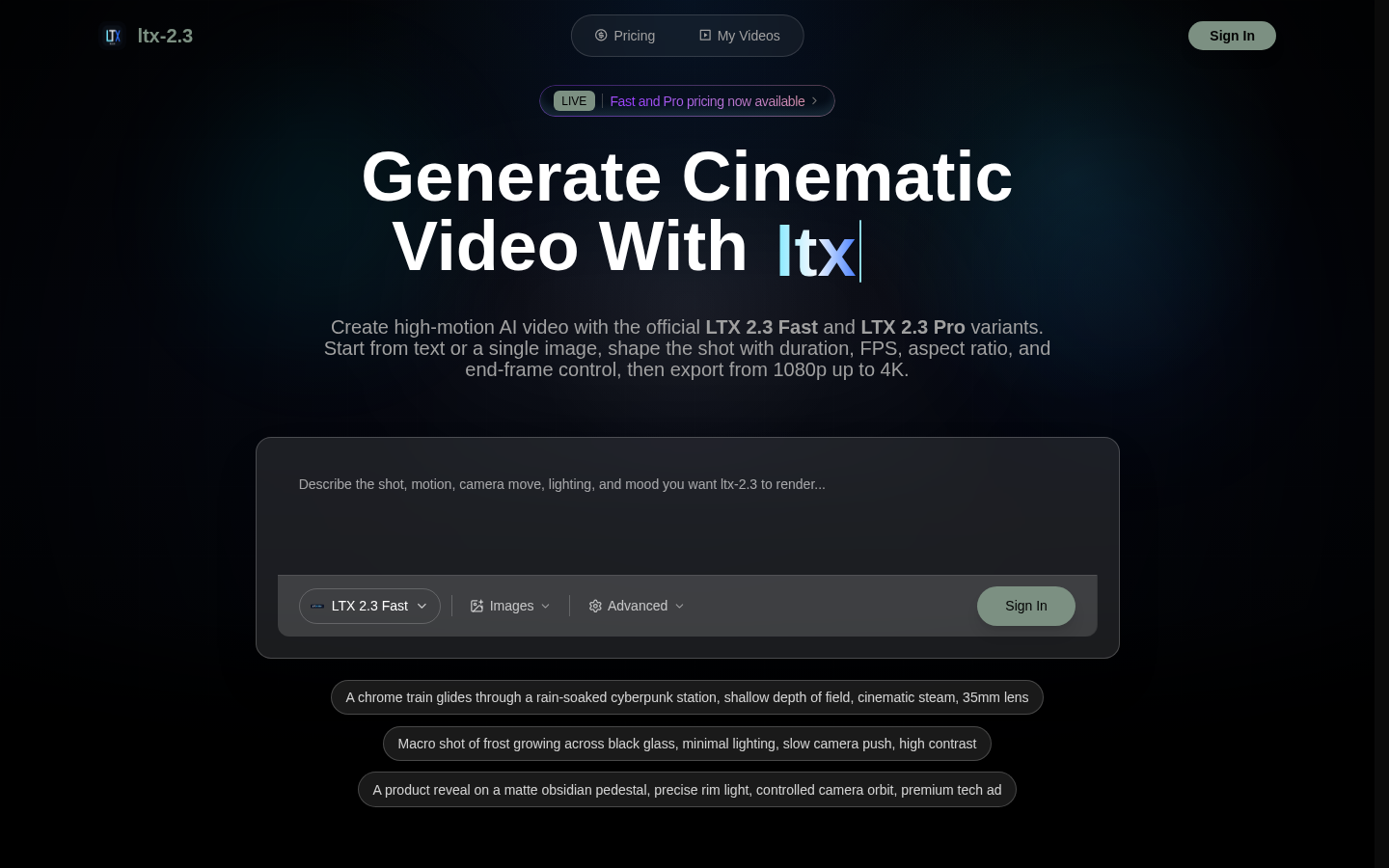
Bring Your Ideas to Motion
Ever wished you could type out a scene description and watch it come alive? That's exactly what LTX 2.3 delivers - an intuitive workspace where words transform into dynamic videos and static images gain cinematic movement.
Why Creators Love It
Text-to-Video Magic
- Describe any scene ("cyberpunk city at night" or "sunlit meadow with butterflies")
- Customize duration (from quick snippets to longer sequences)
- Adjust frame rates for different styles (cinematic 24fps or smooth 60fps)
Image Animation Power
- Upload product photos that elegantly transform into showcase videos
- Create seamless transitions between start and end frames
- Perfect for mood boards and storyboard presentations
Professional Controls At Your Fingertips
- Camera movement presets (dolly shots, pans, zooms)
- Aspect ratio options for every platform (square for IG, widescreen for YouTube)
- Resolution choices from HD to crisp 4K output
The Pro version takes quality further with enhanced detail rendering - ideal when pixels matter most.
Who's Using LTX 2.3?
Our creative community includes:
- Digital marketers crafting eye-catching ads without expensive production crews
- Product designers visualizing concepts before prototyping
- Content creators adding professional motion to their social media posts
- Educators building engaging lesson materials
Real-World Magic Examples:
- A furniture designer animates their latest chair design slowly rotating against different backdrops.
- A novelist generates book trailer scenes directly from chapter excerpts.
- A small business owner creates holiday promo videos featuring their products in festive settings.
The process couldn't be simpler:
- Describe your vision or upload reference images
- Fine-tune settings like duration and camera angles
- Generate previews instantly with Fast mode
- Polish with Pro version when ready for final output
- Download and share your creation!
The platform operates on a credit system - smaller tests cost fewer credits while complex renders use more."


