
Google's Gemini 3.1 Flash-Lite: Faster, Smarter, But Pricier

Google's Latest AI Model Delivers Speed and Smarts - At a Price

Google DeepMind has rolled out its newest AI contender: Gemini 3.1 Flash-Lite. This lightweight model isn't just fast - it's smart too, marking a significant step up from previous versions while maintaining blazing processing speeds.

Image

Performance That Turns Heads

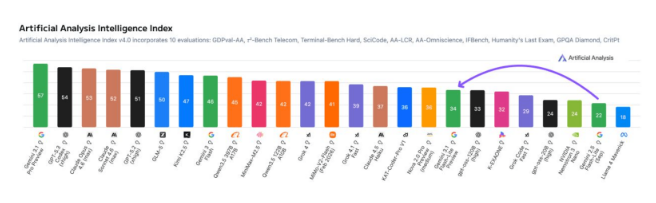
The numbers tell an impressive story. Clocking in at over 360 tokens per second with responses averaging just 5.1 seconds, Gemini 3.1 Flash-Lite doesn't sacrifice speed for capability. Its intelligence score jumped 12 points to 34 on industry benchmarks, while earning a respectable 1432 Elo rating on Arena.ai's competitive leaderboard.

Where it really shines is handling complex tasks. Scoring 86.9% on the challenging GPQA Diamond test and achieving 76.8% accuracy on MMMU-Pro benchmarks puts it ahead of heavyweight competitors like Claude Opus and Kimi models.
Image

Flexibility Meets Power

Developers get an interesting new tool with this release - customizable "thinking depth." This means the same model can handle everything from quick translations to building intricate user interfaces by adjusting how deeply it processes information.

The Cost of Progress Comes Due

The advancements don't come cheap though. Google has implemented substantial price hikes:

  • Input token costs: Now $0.25 per million (up from previous rates)
  • Output tokens: Skyrocketed from $0.40 to $1.50 per million

The nearly threefold increase reflects the growing pains of balancing speed with sophisticated reasoning capabilities.

What This Means for Developers

The model is already available for testing through Google AI Studio and Vertex AI platforms. Its release signals an industry shift - we're moving beyond simple price wars into an era where accessible high-performance AI commands premium pricing.

Key Points:

  • Speed maintained: Processes >360 tokens/sec with ~5 sec response times
  • Smarter processing: Significant intelligence gains across benchmarks
  • Flexible applications: Customizable depth suits various complexity levels
  • Higher costs: Pricing nearly triples previous generation models
  • Market shift: Signals move toward premium performance models

Enjoyed this article?

Subscribe to our newsletter for the latest AI news, product reviews, and project recommendations delivered to your inbox weekly.

Weekly digestFree foreverUnsubscribe anytime

Related Articles

OpenClaw's Game-Changing Update: GPT-5.4 Support and Smarter AI Agents
News

OpenClaw's Game-Changing Update: GPT-5.4 Support and Smarter AI Agents

The open-source AI project OpenClaw just dropped its biggest update yet, bringing native GPT-5.4 support that outperforms competitors like Claude Code. The 2026.3.7 version introduces revolutionary 'memory hot-swapping' technology, solving long-standing fragmentation issues in smart agents. From coding to stock analysis, this update transforms OpenClaw from a developer's toy into a true virtual employee that never stops working.

March 9, 2026
AI DevelopmentOpenClawGPT-5
News

Meta Hits Pause on Llama4 Launch Amid Technical Tweaks

Meta has pushed back the release of its next-gen AI model Llama4 to May, citing ongoing refinements in performance and reasoning capabilities. While disappointing eager developers, the delay allows for crucial security testing and optimization. The postponement highlights the growing complexity of balancing computational efficiency with advanced AI functionalities in today's competitive landscape.

March 13, 2026
MetaAI DevelopmentLlama4
News

WeChat Prepares to Roll Out Its Own AI Model This Year

WeChat, Tencent's ubiquitous messaging platform, is reportedly developing its own independent AI model set for release later this year. The move aims to reduce reliance on third-party systems while enhancing WeChat's mini-program ecosystem. Alongside this development, Tencent is testing an AI assistant that could transform WeChat into a comprehensive digital life interface.

March 12, 2026
WeChatAI DevelopmentTencent
Xie Saining's Team Unveils Solaris: A Breakthrough in Multi-User Video AI
News

Xie Saining's Team Unveils Solaris: A Breakthrough in Multi-User Video AI

Xie Saining's research team has launched Solaris, the world's first multi-user video world model, powered by Kunlun Wanzhi's Matrix-Game2.0. This innovative technology enhances player interaction in environments like Minecraft, outperforming previous solutions. The release coincides with a major funding milestone for Xie's AI company, AMI, highlighting the growing importance of world models in advancing artificial general intelligence.

March 11, 2026
AIMachine LearningVirtual Worlds
News

AI Pioneer Yann LeCun Secures $1 Billion for His Next Big Bet

Yann LeCun, the Turing Award-winning AI researcher, has raised over $1 billion for his new venture Advanced Machine Intelligence. The startup aims to move beyond today's language models by developing systems that can truly reason and understand the physical world. With backing from major investors, LeCun's company could reshape industries from robotics to healthcare.

March 10, 2026
Artificial IntelligenceTech StartupsMachine Learning
News

Mac Mini's Hidden Power: How Engineers Unlocked AI Training on Apple's M4 Chip

In a surprising breakthrough, engineers have cracked open Apple's Neural Engine capabilities, revealing that Mac Minis can do far more than just run apps. By reverse-engineering the M4 chip with Claude AI's help, researchers discovered these compact machines can efficiently train AI models - challenging the need for expensive GPU setups. The findings show energy efficiency up to 80 times better than professional-grade hardware, potentially democratizing AI development.

March 9, 2026
Apple SiliconAI HardwareMachine Learning