
Flux.2 Goes Open Source, Challenging Google's Premium AI Pricing

Open Source AI Shakes Up Image Generation Market

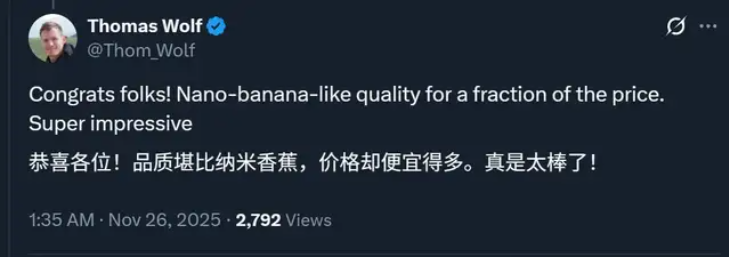
Late last night, GitHub stars began flooding Black Forest Lab's repository as they unexpectedly released Flux.2 - their entire AI image generation system - into the public domain. Within minutes, social media exploded with test results showing the system producing 4MP fashion photos in just 8 seconds at a cost of $0.003 per image.
Image

A Four-Pronged Approach

What makes Flux.2 particularly disruptive isn't just its price point (free) but its modular approach:

  • Pro Version: Slashes sampling steps to 8, delivering speeds 2.3x faster than previous models
  • Flex Version: Opens temperature, CFG and noise scheduling controls to developers
  • Dev Version: Runs efficiently on modest hardware like RTX 3060 laptops
  • Coming Klein Version: Promises direct 2K output on Raspberry Pi-level devices

The immediate comparison? Google's Nano Banana Pro requires a $3000 enterprise key for similar capabilities.

Pixel-Perfect Control Wins Creators Over

The new release brings unprecedented control to generative AI workflows. Users can upload pose sketches and overlay reference materials like leather jackets, with Flux.2 accurately reproducing folds, zippers and highlights in final renders.

The improvements solve common AI art frustrations - no more twelve-fingered monstrosities or garbled background text. One Reddit user generated twelve Cyberpunk 2077-inspired posters in three minutes using Flux.2 Flex and immediately sold them on Redbubble - effectively earning $500/hour.

Where Google Still Leads (For Now)

Google maintains an edge in handling complex artistic prompts combining multiple styles like "Van Gogh landscapes with rainy neon nights." Their solution produces smoother color transitions and denser details - but at premium pricing that puts it out of reach for most independent creators and students.

The gap has narrowed significantly though - enough that cost-conscious users are overwhelmingly choosing the open source alternative.

Key Points:

  • Cost Revolution: Free vs $3000 enterprise licenses creates massive pricing pressure
  • Hardware Flexibility: From laptops to Raspberry Pis expands accessibility
  • Creative Control: Precise texture mapping solves common AI art flaws
  • Market Impact: Could reshape pricing expectations across generative AI tools

Enjoyed this article?

Subscribe to our newsletter for the latest AI news, product reviews, and project recommendations delivered to your inbox weekly.

Weekly digestFree foreverUnsubscribe anytime

Related Articles

News

Kuaishou's AI Video Tool Hits $240M Annual Revenue Milestone

Kuaishou's video generation AI, Kling, has reached impressive financial heights just 19 months after launch. The platform now generates over $20 million monthly, serving 60 million creators worldwide. Its success stems from continuous innovation, including breakthrough multimodal video capabilities that solve persistent industry challenges.

January 14, 2026
GenerativeAIVideoCreationTechGrowth
News

Tailwind CSS Crisis: How AI Boom Left Developers Divided

Tailwind CSS, the beloved utility-first framework, faces an existential paradox. While its adoption hits record highs thanks to AI coding tools, these same technologies have gutted its revenue streams - triggering massive layoffs. Founder Adam Wathan reveals documentation traffic dropped 40% as developers bypass official channels entirely. The crisis sparks urgent debates about open-source sustainability in the AI era.

January 12, 2026
TailwindCSSOpenSourceAIEthics
News

Tencent's 'Upset Frog' Lets Gen Z Play Storyteller with AI

Tencent is testing an innovative mini-program called 'Upset Frog' that blends AI storytelling with user interaction. Unlike passive content platforms, it lets young users shape narratives through choices and commands, creating a social space around collaborative storytelling. While still in testing, this experiment could redefine digital entertainment for the TikTok generation.

January 9, 2026
GenerativeAIInteractiveMediaTencent
News

Tailwind's AI Paradox: Soaring Popularity, Plummeting Profits

Tailwind Labs faces a cruel irony - while its CSS framework enjoys record-breaking adoption thanks to AI tools generating Tailwind code, the company has slashed 75% of its engineering team. As AI agents bypass documentation pages, traffic dropped 40%, causing revenue to nosedive nearly 80%. Founder Adam Wathan calls this 'AI's brutal impact' on traditional open-source business models.

January 9, 2026
TailwindCSSOpenSourceAIDisruption
Youdao's AI Pen Now Explains Math Problems Like a Human Tutor
News

Youdao's AI Pen Now Explains Math Problems Like a Human Tutor

NetEase Youdao has upgraded its AI Q&A Pen with China's first video explanation feature. Instead of static answers, it generates personalized whiteboard-style tutorials that adapt to students' needs - even responding to requests like 'make it funnier.' The pen combines two AI models to create dynamic lessons, marking a shift from text-based learning to interactive video tutoring.

January 6, 2026
EdTechGenerativeAISmartLearning
Shanghai Expands AI Landscape with Nine New Registered Services
News

Shanghai Expands AI Landscape with Nine New Registered Services

Shanghai continues to lead China's generative AI development, adding nine newly registered services to its growing ecosystem. The city now boasts 139 approved AI applications across diverse sectors, all undergoing strict compliance checks. Authorities emphasize transparency, requiring clear labeling of registered services to help users identify vetted AI products.

December 24, 2025
GenerativeAITechRegulationShanghaiTech