
DeepMind's New Tool Peers Inside AI Minds Like Never Before

DeepMind Lifts the Hood on AI Thinking

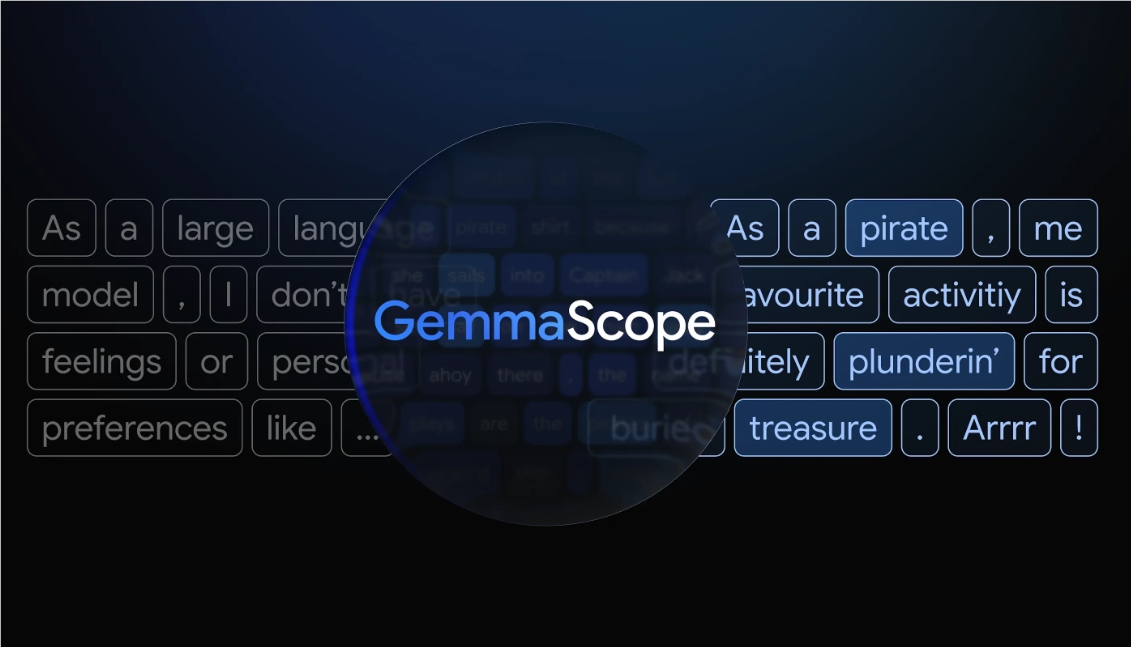
Ever wondered what really goes on inside an AI's "mind" when it responds to your questions? Google DeepMind's latest innovation might finally give us some answers. Their newly released Gemma Scope 2 toolkit provides researchers with powerful new ways to examine the inner workings of language models.
Image

Seeing Beyond Inputs and Outputs

Traditional AI analysis often feels like trying to understand a conversation by only hearing one side of it. You see what goes in and what comes out, but the reasoning in between remains mysterious. Gemma Scope 2 changes this by letting scientists track how information flows through every layer of models like Gemma 3.

"When an AI starts hallucinating facts or showing strange behaviors, we can now trace exactly which parts of its neural network are activating," explains DeepMind researcher Elena Rodriguez. "It's like having X-ray vision for AI decision-making."

The toolkit works by using specialized components called sparse autoencoders - essentially sophisticated pattern recognizers trained on massive amounts of internal model data. These act like microscopic lenses that break down complex AI activations into understandable pieces.

Four Major Upgrades Over Previous Version

The new version represents significant advances:

  • Broader model support: Now handles everything from compact 270-million parameter versions up to massive 27-billion parameter models
  • Deeper layer analysis: Includes tools examining every processing layer rather than just surface features
  • Improved training techniques: Uses "Matty Ryoshka" method (named after its developer) for more stable feature detection
  • Conversation-specific tools: Specialized analyzers for chat-based interactions help study refusal behaviors and reasoning chains

The scale is staggering - training these interpretability tools required analyzing about 110 petabytes (that's 110 million gigabytes) of activation data across more than a trillion total parameters.

Why This Matters for AI Safety

The timing couldn't be better as concerns grow about advanced AI systems behaving unpredictably. Last month alone saw three major incidents where large language models produced dangerous outputs despite safety measures.

"We're moving from reactive patching to proactive understanding," says safety researcher Dr. Mark Chen. "Instead of just blocking bad outputs after they happen, we can now identify problematic patterns forming internally before they surface."

The open-source nature of Gemma Scope means independent researchers worldwide can contribute to making AI systems safer and more reliable - crucial as these technologies become embedded in everything from healthcare to financial systems.

The team has already used preliminary versions to uncover previously hidden patterns behind:

  • Factual hallucinations
  • Unexpected refusal behaviors
  • Sycophantic responses
  • Chain-of-thought credibility issues DeepMind plans regular updates as they gather feedback from the broader research community working with these tools. ## Key Points: 🔍 Transparency breakthrough: Provides unprecedented visibility into large language model internals 🛠️ Scalable solution: Works across model sizes from millions to billions of parameters 🔒 Safety focused: Helps identify problematic behaviors before they cause harm 🌐 Open access: Available publicly for research community collaboration

Enjoyed this article?

Subscribe to our newsletter for the latest AI news, product reviews, and project recommendations delivered to your inbox weekly.

Weekly digestFree foreverUnsubscribe anytime

Related Articles

News

Tech Giant Teams Up With Child Advocates to Shield Kids From AI Risks

OpenAI has joined forces with Common Sense Media to create groundbreaking safeguards protecting children from AI's potential harms. Their proposed 'Parent and Child Safe AI Bill' would require age verification, ban emotional manipulation by chatbots, and strengthen privacy protections for minors. While still needing public support to reach November ballots, this rare tech-activist partnership signals growing pressure on AI companies to address social responsibility.

January 13, 2026
AI safetychild protectiontech regulation
Chinese Researchers Teach AI to Spot Its Own Mistakes in Image Creation
News

Chinese Researchers Teach AI to Spot Its Own Mistakes in Image Creation

A breakthrough from Chinese universities tackles AI's 'visual dyslexia' - where image systems understand concepts but struggle to correctly portray them. Their UniCorn framework acts like an internal quality control team, catching and fixing errors mid-creation. Early tests show promising improvements in spatial accuracy and detail handling.

January 12, 2026
AI innovationcomputer visionmachine learning
News

Google, Character.AI settle lawsuit over chatbot's harm to teens

Google and Character.AI have reached a settlement in a high-profile case involving their AI chatbot's alleged role in teen suicides. The agreement comes after months of legal battles and public outcry over the technology's psychological risks to young users. While details remain confidential, the case has intensified scrutiny on how tech companies safeguard vulnerable users from potential AI harms.

January 8, 2026
AI safetytech lawsuitsmental health
AI Expert Revises Doomsday Timeline: Humanity Gets a Few More Years
News

AI Expert Revises Doomsday Timeline: Humanity Gets a Few More Years

Former OpenAI researcher Daniel Kokotajlo has pushed back his controversial prediction about artificial intelligence destroying humanity. While he previously warned AI could achieve autonomous programming by 2027, new observations suggest the timeline may extend into the early 2030s. The expert acknowledges current AI still struggles with real-world complexity, even as tech companies like OpenAI race toward creating automated researchers by 2028.

January 6, 2026
AI safetyAGIfuture technology
Fine-Tuning AI Models Without the Coding Headache
News

Fine-Tuning AI Models Without the Coding Headache

As AI models become ubiquitous, businesses face a challenge: generic models often miss the mark for specialized needs. Traditional fine-tuning requires coding expertise and expensive resources, but LLaMA-Factory Online changes the game. This visual platform lets anyone customize models through a simple interface, cutting costs and technical barriers. One team built a smart home assistant in just 10 hours - proving specialized AI doesn't have to be complicated or costly.

January 6, 2026
AI customizationno-code AImachine learning
Falcon H1R7B: The Compact AI Model Outperforming Larger Rivals
News

Falcon H1R7B: The Compact AI Model Outperforming Larger Rivals

The Abu Dhabi Innovation Institute has unveiled Falcon H1R7B, a surprisingly powerful 7-billion-parameter open-source language model that's rewriting the rules of AI performance. By combining innovative training techniques with hybrid architecture, this nimble contender delivers reasoning capabilities that rival models twice its size. Available now on Hugging Face, it could be a game-changer for developers needing efficient AI solutions.

January 6, 2026
AI innovationlanguage modelsmachine learning