
China's MOSS-Speech Breaks New Ground in AI Conversations

A Leap Forward in Natural AI Conversations

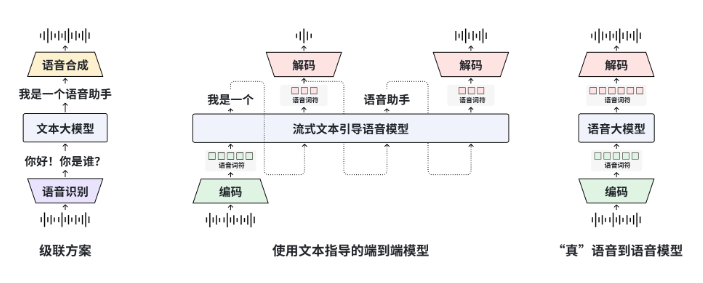
Fudan University's MOSS team has made waves in artificial intelligence with their groundbreaking MOSS-Speech system. Unlike traditional voice assistants that rely on converting speech to text and back again, this new model handles conversations entirely through sound - just like humans do.
Image

How It Works Differently

The secret lies in its clever "layer splitting" architecture. Instead of rebuilding everything from scratch, researchers kept the proven text capabilities of their original MOSS model frozen intact. They then added three specialized layers:

  • A speech understanding layer that interprets vocal patterns
  • A semantic alignment layer connecting meaning to sound
  • A neural vocoder that generates natural-sounding responses

This elegant solution bypasses the clunky three-step process (speech-to-text → language processing → text-to-speech) used by Siri, Alexa and other digital assistants.

Performance That Surprises

The numbers tell an impressive story:

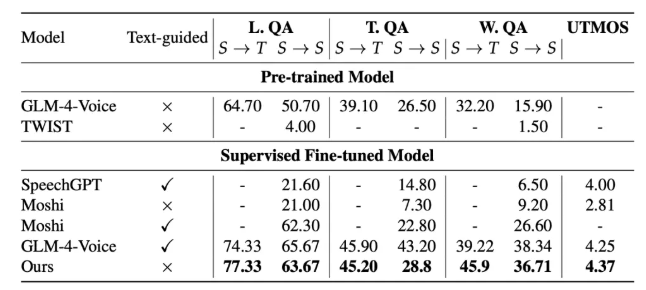
  • Just 4.1% word error rate on complex speech tasks - better than Meta's SpeechGPT and Google AudioLM
  • 91.2% accuracy recognizing emotions from tone of voice
  • Nearly human-level 4.6 MOS score (out of 5) for Chinese speech quality

The team offers two versions: a studio-quality 48kHz edition and a lightweight 16kHz variant that runs smoothly on a single RTX4090 GPU with under 300ms delay - fast enough for real-time mobile apps.
Image

What's Coming Next?

The researchers aren't resting on their laurels. By early 2026, they plan to release "MOSS-Speech-Ctrl" - a version users can direct with voice commands like "sound more excited" or "speak slower." The technology is already available for commercial licensing through GitHub, complete with tools for creating custom voices.

Key Points:

  • First Chinese AI system enabling direct speech-to-speech conversations
  • Achieves superior accuracy by preserving emotional nuance often lost in text conversion
  • Lightweight version enables real-time use on consumer hardware
  • Upcoming control features will allow vocal style adjustments mid-conversation

Enjoyed this article?

Subscribe to our newsletter for the latest AI news, product reviews, and project recommendations delivered to your inbox weekly.

Weekly digestFree foreverUnsubscribe anytime

Related Articles

PixVerse R1 Brings Virtual Worlds to Life with Real-Time AI Magic
News

PixVerse R1 Brings Virtual Worlds to Life with Real-Time AI Magic

Aishikeji's groundbreaking PixVerse R1 shatters boundaries between virtual and real worlds. This revolutionary model blends three cutting-edge technologies to create interactive digital environments that respond instantly to user input. From gaming worlds that breathe to movies you can influence, PixVerse opens doors for creators everywhere.

January 14, 2026
AI innovationvirtual realityinteractive media
News

Zhipu and Huawei Team Up to Launch Open-Source Image Model on Domestic Chips

Zhipu AI and Huawei have unveiled GLM-Image, a groundbreaking multimodal model that runs entirely on China's Ascend chips. This marks a significant step in domestic AI development, combining cutting-edge image generation with complete independence from foreign hardware. The hybrid architecture blends language modeling with diffusion techniques, promising more intelligent content creation tools for Chinese developers.

January 14, 2026
AI independenceChinese techmultimodal models
How AI is Transforming Live Streaming with Virtual Reality
News

How AI is Transforming Live Streaming with Virtual Reality

OTO Electronics' subsidiary Chuanxiang Shuwei is revolutionizing live streaming by blending AI with XR technology. Their MetaBox solutions help brands create immersive virtual experiences, breaking content monotony while boosting engagement. With over 100 major clients and record-breaking results, they're proving this tech's commercial potential extends far beyond traditional broadcasting.

January 14, 2026
AI innovationvirtual productionlive streaming
News

Shanghai's Maifushi Climbs to Top Five in National AI Rankings

Shanghai-based Maifushi has secured fourth place in China's prestigious 'Top 100 AI Agents of 2025' list with its innovative Smart Body Mid-Platform 3.0. The Jing'an district company stands out among tech giants by solving industry pain points through no-code AI solutions that empower businesses across retail, manufacturing and supply chains. Their achievement signals a shift toward practical AI applications that drive real-world efficiency.

January 14, 2026
AI innovationShanghai techenterprise automation
Qiongche's Pocket-Sized Revolution: How Your Phone Could Help Train Future Robots
News

Qiongche's Pocket-Sized Revolution: How Your Phone Could Help Train Future Robots

Tech innovator Qiongche Intelligence has unveiled 'RoboPocket,' a game-changing device that turns everyday smartphone users into data collectors for AI training. This pocket-sized solution breaks down traditional lab barriers, allowing high-quality real-world data to be gathered anywhere, anytime. Experts say this marks a significant shift toward more practical, accessible robot development.

January 12, 2026
AI innovationcrowdsourced datarobotics development
Chinese Researchers Teach AI to Spot Its Own Mistakes in Image Creation
News

Chinese Researchers Teach AI to Spot Its Own Mistakes in Image Creation

A breakthrough from Chinese universities tackles AI's 'visual dyslexia' - where image systems understand concepts but struggle to correctly portray them. Their UniCorn framework acts like an internal quality control team, catching and fixing errors mid-creation. Early tests show promising improvements in spatial accuracy and detail handling.

January 12, 2026
AI innovationcomputer visionmachine learning