
China Launches AI Security Database to Tackle Emerging Threats

China Strengthens AI Defenses with New Vulnerability Database

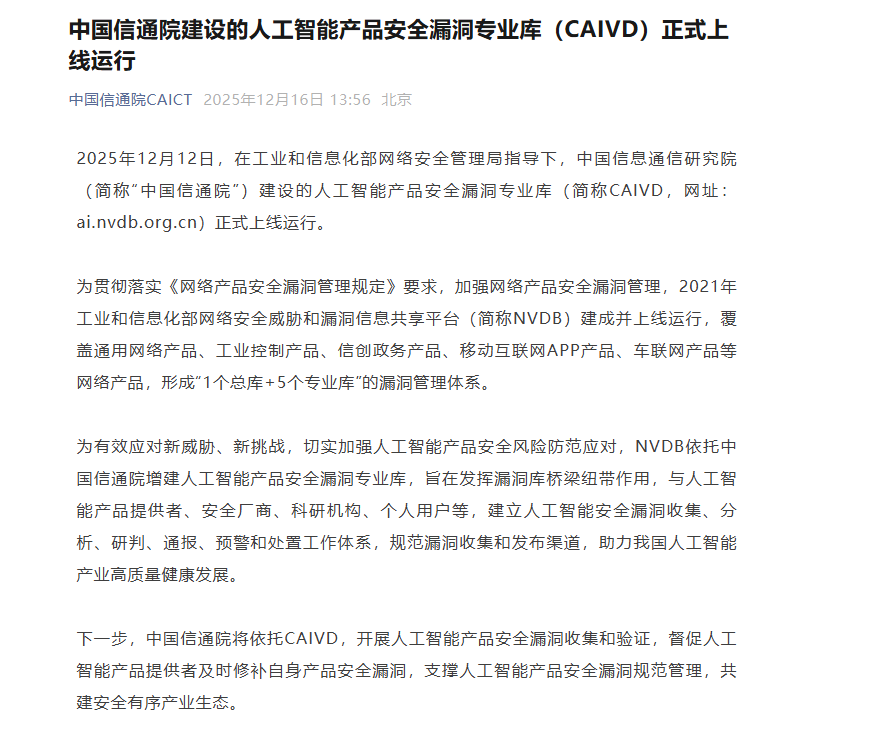
In a move to bolster cybersecurity for artificial intelligence systems, China's Ministry of Industry and Information Technology has introduced the Artificial Intelligence Product Security Vulnerability Specialized Database (CAIVD). The platform, accessible at ai.nvdb.org.cn, represents the latest effort to secure China's booming AI sector against emerging threats.
Image

Closing the Security Gap

The launch comes as AI adoption accelerates across industries, bringing new security challenges that traditional systems weren't designed to handle. "AI systems have unique vulnerability profiles," explains a cybersecurity analyst familiar with the project. "They can be tricked by adversarial attacks or leak sensitive training data - risks that conventional security approaches often miss."

CAIVD forms part of China's broader cybersecurity strategy that began in 2021 with the National Vulnerability Database (NVDB). The system already monitors vulnerabilities in everything from industrial control systems to mobile apps. This new specialized database extends that protection specifically to AI products.

How It Works

The database creates a formal channel for reporting and tracking AI-specific security issues:

  • Vulnerability collection from researchers and users
  • Verification process by technical experts
  • Coordinated disclosure to affected companies
  • Remediation tracking until fixes are implemented

"This isn't just about finding bugs," notes an industry insider. "It's about building trust in AI systems by ensuring problems get fixed quickly and transparently."

Industry Impact

The initiative has drawn support from major Chinese tech firms who see it as critical for maintaining consumer confidence in AI products. Early participants include:

  • Leading AI developers
  • Cybersecurity vendors
  • Academic research teams
  • Government agencies

By standardizing vulnerability management, CAIVD aims to prevent fragmented security practices across different companies and sectors. The database will also help prioritize the most critical threats facing China's AI ecosystem.

Looking Ahead

The China Academy of Information and Communications Technology (CAICT), which operates the database, plans regular updates as new types of AI vulnerabilities emerge. Future enhancements may include:

  • Automated scanning tools for common flaws
  • Best practice guidelines for secure AI development
  • Training programs for security professionals

The move reflects growing global recognition that AI systems need specialized security measures as they become embedded in everything from healthcare to financial services.

Key Points:

  • 🛡️ New database specifically targets security flaws in AI products
  • 🔗 Connects developers, researchers and users to coordinate fixes
  • 📈 Part of China's expanding cybersecurity infrastructure
  • 🌍 Addresses unique risks posed by machine learning systems

Enjoyed this article?

Subscribe to our newsletter for the latest AI news, product reviews, and project recommendations delivered to your inbox weekly.

Weekly digestFree foreverUnsubscribe anytime

Related Articles

News

South Korea's AI Ambition Hits Snag Over Chinese Code Controversy

South Korea's push for AI independence faces unexpected hurdles as domestic models show striking similarities to Chinese open-source code. Three leading tech firms, including Naver and SK Telecom, stand accused of borrowing heavily from Chinese AI projects despite government backing for 'sovereign AI'. The revelations spark debate about balancing innovation with self-reliance in the global AI race.

January 14, 2026
Artificial IntelligenceTech PolicySouth Korea
News

Instagram Co-Founder Shifts Gears to Lead Anthropic's Innovation Lab

Mike Krieger, Instagram co-founder and Anthropic's Chief Product Officer, is stepping into a new role leading the company's internal 'Labs' team focused on experimental AI products. As Anthropic plans to double its innovation team size within six months, Krieger sees this as a pivotal moment to shape AI applications firsthand. Meanwhile, Ami Vora will take over Krieger's product leadership duties as the startup intensifies its competition with tech giants.

January 14, 2026
Artificial IntelligenceTech StartupsExecutive Moves
News

South Korea secures priority access to NVIDIA's cutting-edge AI chips

At CES 2026, South Korean officials announced NVIDIA's commitment to prioritize delivery of next-generation Vera Rubin GPUs to the country. This strategic move comes as part of a broader partnership that includes supplying up to 260,000 GPUs for South Korea's AI infrastructure development. Officials emphasized how securing advanced chip technology early could give Korean tech firms a crucial edge in global AI competition.

January 13, 2026
NVIDIAArtificial IntelligenceTech Partnerships
News

Multimodal AI Sparks Stock Rally as Investors Bet on Tech Revolution

China's A-share market saw a surge in multimodal AI stocks as investors reacted to breakthroughs in technology that combines text, image and video understanding. Companies like Focus Technology and YiDian Tianxia hit daily limits amid growing excitement about AI's potential to transform industries from customer service to content creation. Analysts see this as more than temporary enthusiasm - it reflects real confidence in AI's ability to reshape how we interact with technology.

January 12, 2026
Artificial IntelligenceStock MarketTechnology Trends
News

Tsinghua and Uber-Backed AI Platform Secures Major Funding Boost

Manifold AI, a research platform developed through collaboration between Tsinghua University and Uber, has raised over 100 million yuan in pre-A funding. The platform specializes in streamlining machine learning research with tools for data management and automated preprocessing. Notable investors include Mei Hua Venture Capital and Huawei Habor, signaling strong industry confidence in China's growing AI capabilities.

January 12, 2026
Artificial IntelligenceResearch TechnologyVenture Funding
Musk's xAI Reports Staggering $1.5B Quarterly Loss Amid Spending Spree
News

Musk's xAI Reports Staggering $1.5B Quarterly Loss Amid Spending Spree

Elon Musk's AI venture xAI posted a jaw-dropping $1.46 billion net loss last quarter, doubling down on its aggressive spending strategy. While revenue climbed to $107 million, the company burned through $7.8 billion in nine months - prompting Musk to dismiss reports as 'traditional media lies.' The startup continues raising billions to fuel its AI ambitions, recently securing $2 billion from investors including NVIDIA.

January 9, 2026
Artificial IntelligenceTech StartupsElon Musk