
ChatGPT Solves Decade-Old MTHFR Gene Mystery

AI Breakthrough in Genetic Diagnosis

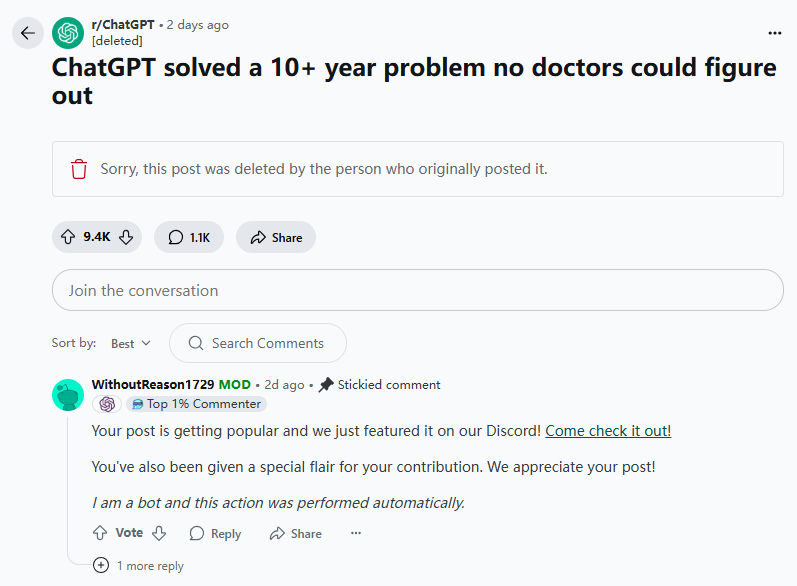
In a striking demonstration of artificial intelligence's medical potential, a Reddit user recently credited ChatGPT with solving a health mystery that eluded doctors for over a decade. The individual suffered unexplained symptoms despite numerous MRIs, CT scans, and neurological exams—until the AI identified an MTHFR gene mutation affecting 7-12% of the population.
Image

How ChatGPT Connected the Dots

The user input their complete medical history, lab results (including normal vitamin B12 levels), and symptom descriptions into ChatGPT. The AI recognized that an MTHFR mutation could impair nutrient absorption regardless of blood vitamin levels. Following ChatGPT's suggestion to try targeted supplements, the user reported near-total symptom resolution within months.

This success story ignited similar reports:

  • One individual discovered their 15-year vomiting episodes stemmed from undiagnosed labyrinthitis after ChatGPT recommended an ENT specialist
  • Multiple users described how AI synthesized scattered symptoms that time-pressed doctors viewed in isolation

Systemic Challenges in Healthcare

Commenters highlighted structural issues contributing to diagnostic gaps:

  • Time constraints: Average US doctor visits last just 17 minutes (CDC data)
  • Overspecialization: Specialists may miss cross-disciplinary connections
  • Rare disease blind spots: Physicians prioritize common diagnoses first

"Each specialist saw me as an island," one user wrote. "ChatGPT became the bridge between them all."

The Promise and Limits of Medical AI

While praising AI's analytical capabilities, respondents emphasized critical boundaries:

  1. Verification required: All AI suggestions must be confirmed by licensed professionals
  2. Data privacy risks: Uploading unredacted medical records violates HIPAA regulations
  3. Error potential: Large language models occasionally hallucinate incorrect information

"AI won't replace doctors," noted a medical student commenter. "But it's becoming an essential second-opinion tool for complex cases."

The FDA has cleared over 500 AI-powered medical devices since 2022, though none yet match ChatGPT's general diagnostic capabilities. Experts predict specialized medical LLMs will emerge within 2-3 years.

Key Points:

  • 🧠 Pattern recognition: ChatGPT connected decade-old symptoms to an MTHFR mutation through holistic analysis
  • ⏱️ Systemic limitations: Healthcare workflows often prevent comprehensive symptom evaluation
  • 🔒 Privacy first: Never input unredacted health data into consumer AI platforms
  • 🩺 Collaborative future: AI serves best as diagnostic support, not replacement for physicians

Enjoyed this article?

Subscribe to our newsletter for the latest AI news, product reviews, and project recommendations delivered to your inbox weekly.

Weekly digestFree foreverUnsubscribe anytime

Related Articles

OpenAI Takes on Google Translate with Surprise Multilingual Tool
News

OpenAI Takes on Google Translate with Surprise Multilingual Tool

OpenAI has quietly rolled out ChatGPT Translate, a new web-based translation tool that goes head-to-head with Google's offering. The free service supports text, voice, documents and even photo translations while maintaining contextual meaning. What sets it apart? Users can refine translations through conversational prompts - a first for mainstream translation tools.

January 15, 2026
OpenAImachine-translationAI-tools
Tsinghua's Smart Glasses Detect and Stop Facial Twitches Instantly
News

Tsinghua's Smart Glasses Detect and Stop Facial Twitches Instantly

Researchers at Tsinghua University have created revolutionary smart glasses that monitor facial muscle movements and automatically deliver relief when spasms occur. The lightweight wearable device, featured in Nature Communications, uses advanced sensors to detect subtle twitches before triggering gentle electrical stimulation. Early trials show the system significantly improves quality of life for people with hemifacial spasm, offering a convenient alternative to invasive treatments.

January 14, 2026
wearable techmedical innovationneurological disorders
Claude AI Gets Medical License: A Game-Changer for Healthcare
News

Claude AI Gets Medical License: A Game-Changer for Healthcare

Anthropic's Claude AI has cleared a major hurdle by achieving HIPAA compliance, allowing it to handle sensitive health data legally. This breakthrough transforms Claude from a tech novelty into a practical tool for doctors and patients alike. Early adopters report significant efficiency gains, with the AI helping organize medical records, summarize research, and improve doctor-patient communication. Privacy remains paramount - Anthropic vows patient data will never be used for AI training.

January 13, 2026
AI in healthcareHIPAA compliancemedical technology
YouTube Reigns Supreme in South Korea as ChatGPT Makes Stunning Gains
News

YouTube Reigns Supreme in South Korea as ChatGPT Makes Stunning Gains

South Korea's app landscape saw dramatic shifts in 2025, with YouTube overtaking local favorites KakaoTalk and Naver to become the most-used mobile app. Meanwhile, ChatGPT's explosive growth - a staggering 341% year-over-year increase in December - signals AI's rapid transition from novelty to necessity. These trends reveal how video consumption and intelligent assistants are reshaping digital habits.

January 9, 2026
YouTubeChatGPTdigital trends
ChatGPT Loses Ground as Gemini Gains Momentum in AI Assistant Race
News

ChatGPT Loses Ground as Gemini Gains Momentum in AI Assistant Race

The AI assistant landscape is shifting dramatically, with ChatGPT's dominance slipping while Google's Gemini makes significant gains. Recent data shows ChatGPT's global desktop traffic share dropped from 86.7% to 64.5% in just one year, while Gemini surpassed the 20% threshold for the first time. Users are increasingly choosing alternatives based on functionality and innovation, putting pressure on OpenAI as it considers introducing ads—a move that could further alienate its user base.

January 8, 2026
AI AssistantsChatGPTGoogle Gemini
ChatGPT Steps Into Healthcare as Ant Group's AI Doctor Hits 30 Million Users
News

ChatGPT Steps Into Healthcare as Ant Group's AI Doctor Hits 30 Million Users

OpenAI has entered the AI healthcare race with ChatGPT Health, launching features similar to Ant Group's popular Afu app. The Chinese platform now serves 30 million monthly users, doubling its base in just one month. Both tools offer health Q&A and smart device integration, though Afu maintains an edge with full medical service connections.

January 8, 2026
AIHealthcareDigitalWellnessChatGPT