

Boston Dynamics Veteran Takes Helm at DeepMind's Robotics Push
Robotics Industry Shakeup: DeepMind Bets Big With Boston Dynamics Veteran
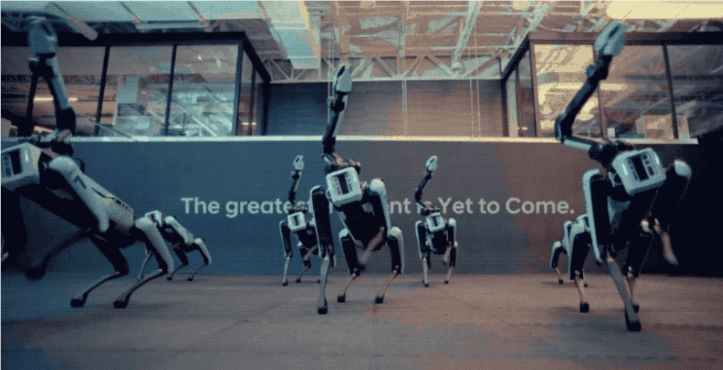
In a move that could reshape the robotics landscape, Google's AI powerhouse DeepMind has recruited Aaron Saunders, the engineering mastermind behind Boston Dynamics' most famous creations. Saunders joins as Vice President of Hardware Engineering with one clear mission: transform Gemini from an AI project into robotic bodies.
From Backflipping Robots to AI Integration
Saunders isn't just any engineer. At Boston Dynamics, he led teams that taught Atlas humanoids to perform gravity-defying backflips and scaled production of the commercially successful Spot robots. Now he's bringing that rare combination of academic brilliance and real-world engineering chops to DeepMind.
"We're not just building better robots," Saunders explained in an internal memo obtained by sources. "We're creating universal intelligence that can inhabit any mechanical form - whether that's a warehouse robot arm or your future household helper."
The Gemini Roadmap Revealed
The ambitious timeline shows how quickly DeepMind wants to move:
- June 2025: First functional release enabling basic robot reasoning
- September 2025: "Embodied reasoning" update linking vision, language and action
- February 2026: Full hardware abstraction layer launch - the key to their Android analogy
The most intriguing hardware development? A palm-sized "Gemini Control Hub" combining specialized chips capable of complex AI tasks while sipping power (under 15W) and responding faster than human reaction time (50ms latency).
Why This Matters Beyond Tech Circles
Demis Hassabis, DeepMind's co-founder, framed it simply: "Imagine buying a robot like you buy a phone today - different brands, same familiar interface." The comparison isn't accidental. Google plans a Play Store equivalent for robot apps launching alongside their 2026 certification program.
Industry analysts see this as potentially revolutionary:
- Robot makers could slash R&D costs by up to 50%
- Startups might enter the field focusing just on mechanical design
- Consumers could finally see affordable home robots this decade


