
BaiChuan's M2Plus Model Cuts Medical Hallucinations by 3x

BaiChuan Unveils Breakthrough Medical AI Model M2Plus

Beijing, October 22, 2025 – AI company BaiChuan has launched its next-generation medical large language model M2Plus, achieving what industry experts call "the most significant reduction in medical hallucination rates" to date. The release coincides with upgrades to its companion application BaiXiaoYing and new API availability.

Superior Performance Metrics

Independent evaluations show M2Plus reduces medical hallucinations (incorrect or fabricated information) by approximately three times compared to existing models like DeepSeek. Notably, it outperforms even OpenEvidence, currently the leading US-based medical AI application.
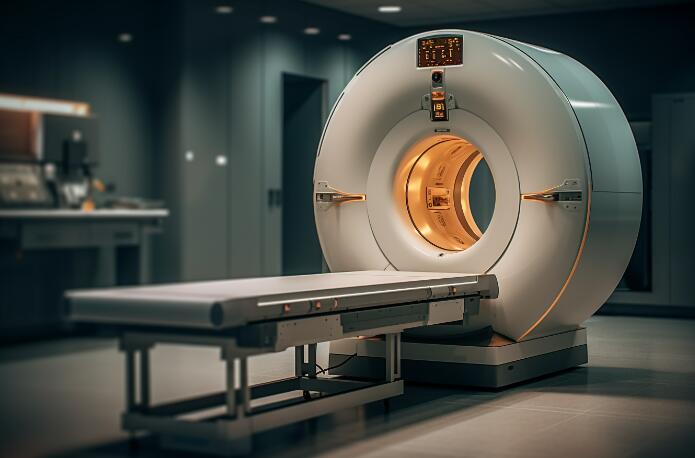
Image Image source: AI-generated via Midjourney licensing

Six-Source Evidence Framework

The model's breakthrough stems from its proprietary six-source Evidence-Based Reasoning (EAR) architecture:

  1. Original clinical research
  2. Systematic evidence reviews
  3. Medical guidelines
  4. Practical clinical knowledge
  5. Public health education materials
  6. Regulatory/real-world data

"This isn't just another chatbot with a medical vocabulary," explains Dr. Li Wei, BaiChuan's Chief Medical Officer. "M2Plus functions as a clinical decision support system, cross-referencing multiple authoritative sources before generating responses."

Technical Innovations

The model employs:

  • PICO framework: Transforms natural language queries into structured clinical questions for precise evidence retrieval
  • Evidence-enhanced training: Requires responses to cite verifiable sources while suppressing speculative content
  • Dynamic quality scoring: Rates evidence reliability using criteria similar to peer-review standards

Real-World Validation

In clinical testing across 12 hospitals:

  • 94% accuracy in diagnostic suggestions (vs. 78% for previous models)
  • Reduced physician verification time by 62%
  • Scored 97/100 on the USMLE licensing exam – surpassing most human test-takers

"The difference is night and day," reports thoracic surgeon Dr. Zhang Yu from Peking Union Medical College Hospital. "When discussing rare oncology cases, M2Plus provides properly caveated answers with clear evidence hierarchies."

The company cautions that M2Plus remains an assistive tool rather than autonomous diagnostician, with all outputs requiring clinician review. ---

Key Points:

Hallucination reduction: Cuts incorrect outputs by ~3x versus competitors ✅ Clinical validation: Achieves near-perfect USMLE exam score (97/100) ✅ Multi-source verification: Integrates six evidence types via EAR framework ✅ Physician adoption: Reduces information verification time by over 60%

Enjoyed this article?

Subscribe to our newsletter for the latest AI news, product reviews, and project recommendations delivered to your inbox weekly.

Weekly digestFree foreverUnsubscribe anytime

Related Articles

Baichuan Unveils Medical AI Model M2Plus
News

Baichuan Unveils Medical AI Model M2Plus

Baichuan Technology has launched Baichuan-M2Plus, an evidence-based medical AI model designed to enhance diagnostic accuracy. The system uses a six-source evidence framework to reduce errors and outperforms existing solutions like OpenEvidence in clinical evaluations.

October 22, 2025
medical AIBaichuan-M2Plusclinical decision support
News

Google Boosts Medical AI with Open-Source Imaging and Voice Tools

Google has unveiled MedGemma 1.5, an upgraded open-source AI model that now interprets medical images alongside text, and MedASR, a voice recognition tool tailored for clinical settings. These releases mark Google's push to make medical AI more accessible and practical for healthcare providers. The tools aim to streamline diagnosis and reduce documentation burdens while maintaining strict privacy standards.

January 14, 2026
medical AIhealthcare technologyopen source
Medical AI Needs Human Oversight, Warns Top Infectious Disease Expert
News

Medical AI Needs Human Oversight, Warns Top Infectious Disease Expert

Dr. Zhang Wenhong cautions against over-reliance on AI in healthcare during Hong Kong forum. While acknowledging AI's potential, the infectious disease specialist emphasizes doctors must maintain critical thinking and verify all AI-generated diagnoses. His remarks highlight growing concerns about blindly trusting algorithms in life-or-death medical decisions.

January 13, 2026
medical AIhealthcare technologyZhang Wenhong
News

Robot Surgeon Makes History With First AI-Driven Autonomous Operation

A surgical robot has successfully performed the world's first fully autonomous operation on a live animal using AI technology. The breakthrough procedure, conducted on a pig, achieved an 88% success rate for critical steps like bile duct clamping. This marks a major leap from traditional robotic surgery toward true AI autonomy in medicine.

January 7, 2026
robotic surgerymedical AIsurgical innovation
AI Use in Cancer Screening May Reduce Doctors' Skills, Study Finds
News

AI Use in Cancer Screening May Reduce Doctors' Skills, Study Finds

A new study reveals that while AI improves colon cancer detection rates, doctors' skills decline when AI assistance is removed. Researchers found a 20% drop in tumor detection accuracy without AI, raising concerns about over-reliance on technology. The medical community is now exploring ways to balance AI integration with maintaining physician expertise.

August 13, 2025
medical AIcancer screeningphysician training
News

Midea Medical Unveils AI That Spots Chest Diseases Instantly

Midea Medical has introduced an innovative AI system capable of detecting tuberculosis, pneumonia, and other chest conditions from X-rays with remarkable speed. What sets this technology apart is its flexible 'dual-level' design - offering both lightweight on-device analysis for remote clinics and powerful cloud-based processing for complex cases. Already tested in hospitals, this homegrown solution promises to transform diagnostic workflows while meeting China's strict medical AI regulations.

December 17, 2025
medical AIdiagnostic technologyhealthcare innovation